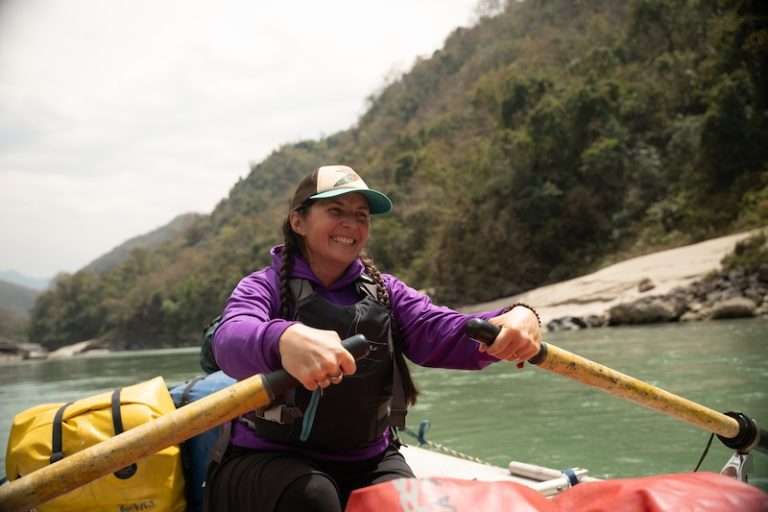
Anna Levesque
Hello, welcome back to the show. I’m super excited because this is the 100th episode of the Discomfort Zone podcast. And it’s thanks to you listening that the podcast has come this far and that we’ve surpassed 50,000 downloads. I’m so excited. So if you’ve ever listened to the podcast while you’ve…
been on your way to the river or walking your dog or driving. Thank you so much because you are the reason this podcast exists. And when I think back to two years ago, it is mind blowing because I was so nervous to put this podcast out. I didn’t know how it was going to go. And I actually sat on the idea of this podcast
for a couple of years because I couldn’t decide on the theme. I had folks suggesting that I talk about facing fear or empowering women because those are things that I’m known for and nothing quite felt right, like in my gut. And then I read this amazing book called Hidden Potential by Adam Grant.
And one paragraph changed everything. And that paragraph is, he wrote, becoming a creature of discomfort can unlock hidden potential in many different types of learning. Summoning the nerve to face discomfort is a character skill, an especially important form of determination. It takes three kinds of courage.
to abandon your tried and true methods, to put yourself in the ring before you feel ready, and to make more mistakes than others make attempts. The best way to accelerate growth is to embrace, seek, and amplify discomfort. When I read that, it was like a huge aha, light going off, and it made me realize, you know, growth is what I’m passionate about changing conversations in whitewater with ourselves, with what’s possible. And the reason that I love kayaking and I continue to stay stoked about kayaking after doing it for 30 years is because it continually puts me in that growth zone, in that discomfort zone, and I learn so much. And I…
observe my clients learning so much, which is why I continue to teach and lead and facilitate and coach. I’m very passionate about it. And I also looked around my life and looked at all of the amazing people that I have in my life from 30 years of doing this amazing sport and who navigate discomfort and are willing to share. And I really wanted to share that
the, you know, some of these pro top of the line kayakers are very open about sharing about how they navigate the discomfort zone, how they face fear, how it helps them grow. And when I came up in whitewater kayaking in the nineties, there was no talking about feelings that was suck it up. was, you know, if you
didn’t have good lines, there was lots of judginess. There wasn’t space for talking about exploring discomfort zone. Like that was frowned upon. Unless it was about running the gnar and like nailing the lines and you know, being cool. So this, I’m very grateful that, well I’m very grateful for Adam Grant’s book, Hidden Potential, grateful for his work. He’s an amazing author.
And what’s also interesting is that now that I look back on that passage, I realized that I’ve engaged in those three types of courage that he talks about, right? Abandoning your tried and true methods. I was very familiar with coaching whitewater kayaking and making instructional DVDs, had no idea how to start a podcast. And I just trusted my gut and really, it was willing to explore this new venue, right? This new way of doing things. And it opened me up to different conversations, learning different folks. so, and
What is also interesting is it continues to facilitate growth in whitewater kayaking and mental agility and empowering women. All things that I’m passionate about. And number two is put yourself in the ring before you feel ready. And I know if you’re a whitewater kayaker, you know the feeling of running a river or running a rapid that you’ve practiced a ton of hard moves in easy water to prepare, but you still
don’t feel totally ready and you peel out of the Eddie and you’re looking at that next move and there you are, there’s no turning back. And I love that feeling actually, even though it feels so scary on Rapids that I’m really nervous about peeling out of the Eddie and like the point of no return. And with this podcast, putting out…
I think I released like five or maybe I released like five to seven episodes all at once and I was really excited about it. It’s really like, I didn’t feel ready. I had stalled out actually kind of in my comfort zone, like pretending I was working on it, but really I was just getting stuck in the, is this technology right? Is that technology right? Like what equipment do I need? Am I doing the right thing?
you know, and all of those things that can, at least speaking for myself, that can stop me. And so sometimes you’ve just got to peel out of that, Eddie, and do it before you feel ready. And I definitely grappled with that. And it was such a relief once I got it out there. And of course then, you know, it was the same thing when I put out my first instructional DVD for women.
I remember being at the Whitewater Symposium and with a bunch of colleagues, like, again, so grateful, the top people in the industry, instructors, athletes, and everyone was watching this video and I was sweating, my hands were shaking, I could barely, like, stand, like, be still. And at the end, I got a standing ovation and I was shocked, shocked that
people appreciated that instructional DVD for women so much. It was the first instructional DVD for women ever made. And yeah, it was again, worth it. I didn’t know what I was, I mean, I knew what I was doing with kayak instruction, but I didn’t know what I was doing, like putting out of, know, at the time of DVD, back when DVDs were cool. So I’ve learned so much.
over the course of my life and putting out content and putting out this podcast about getting into the ring before you feel ready. And the last one was make more mistakes than others make attempts. I can remember a lot of when I was competing in freestyle, know, people would talk about that, you know, like keep practicing even when you’re tired so that your worst tricks are better than
everyone else’s best tricks. And also it’s about being out there and being consistent. There were so many interviews or podcast episodes where afterwards something would pop into my head and it would be, why didn’t I ask them this question? Or, they said this and I could have asked clarifying questions. We could have gone down this
road of conversation that would have been really cool. Or sometimes I don’t feel like I’m in the flow as an interviewer and I still put the episodes out. And a lot of times those episodes actually get really positive feedback. So it’s important to show up. And for me, I’ve learned to put stuff out there and…
it’s okay to make mistakes, you know? And on the show, I’ve had many of the guests have talked about this in kayaking. You’ve got to be willing to make mistakes. If you’re practicing your role, learning your role. If you don’t practice, you’ll never have a role. And if you practice, you’re definitely going to miss roles. They’re not all going to be smooth. And that’s okay, because you’re learning, gathering information.
getting, building underwater comfort. There’s so many things that are, that you’re building in practicing and making those mistakes. So I love that. Just reflecting back for this hundredth episode on the inspiration for this podcast and those three kinds of courage. And also in terms of
being willing to make mistakes of all of this, putting yourself out there before you feel ready, you don’t get to make an impact if you don’t actually try and put yourself out there and put yourself in the ring. And there, I appreciate so much all of the messages and reviews that the podcast has gotten. I receive…
Messenger messages and texts and emails and I’m just so grateful. Thank you to those of you who have posted reviews and sent me messages. It does make a difference. I so appreciate it. That’s very inspiring. And I just want to share two of those messages with you. Thank you, Eric, for writing the information. So.
Let me start that again. Again, be willing to make mistakes. So Eric wrote, the information made all the difference in helping me to get out of my own head and learn how to roll. Not only this, but Anna and the people she interviews have a wonderful way of using practical kayaking situations as illustrations to teach other life skills and mental agility. So that’s why I do what I do. I’m so grateful that
This podcast inspires people on the water and off the water. And Jordan wrote, and this one I was really touched by. He wrote, the work you’re doing and how you’ve truly changed the climate of whitewater kayaking is incredible. Your podcasts have kept me inspired, positive, and hopeful during some difficult times in my life. The river is such an incredible metaphor for life.
and what we go through. And that message right there is why I keep showing up and keep doing what I’m doing. So thank you to all of you who listen. And my questions for you to ponder this week are, where in your life can you break out of your tried and true methods?
Where in your life can you take a risk and get in the ring or on the next river before you feel ready? Or maybe try that next move. Where do you have the opportunity to make more mistakes than others make attempts? So where in your life can you try on these three kinds of courage and move closer to what you say is important to you, maybe move closer to your goals, live.
a life that you’re stoked about. So those are some reflection points for you. And I hope that that inspires you to also get out there and do something in your discomfort zone and make an impact and do something that is meaningful for you and others. So, yes.
I want to thank Adam Grant for his amazing work and writing. And for those of you out there listening, if any of you know Adam Grant or have a connection to him, please put in a good word for me because I would love to have him on the podcast. He would be a dream guest. So just FYI, if you have a connection, hook a girl up and
Again, if you’ve listened to the podcast from the beginning, thank you. If you’ve shared this podcast with a friend, really appreciate you. If you’ve left a review, thank you. And if you’re new to the show, welcome. I’m very stoked to have you here. And of course, deep gratitude for my editor, Brian, for the guests who come on the show. I’m so grateful for
Yeah, having such amazing people in my life who say yes to coming on the show. I’m stoked to put in and run the next 100 episodes and I’m stoked that you are part of my crew. So here’s to the next 100. Thanks again. Yeah, just so much gratitude. And I will see you next week for show 101.