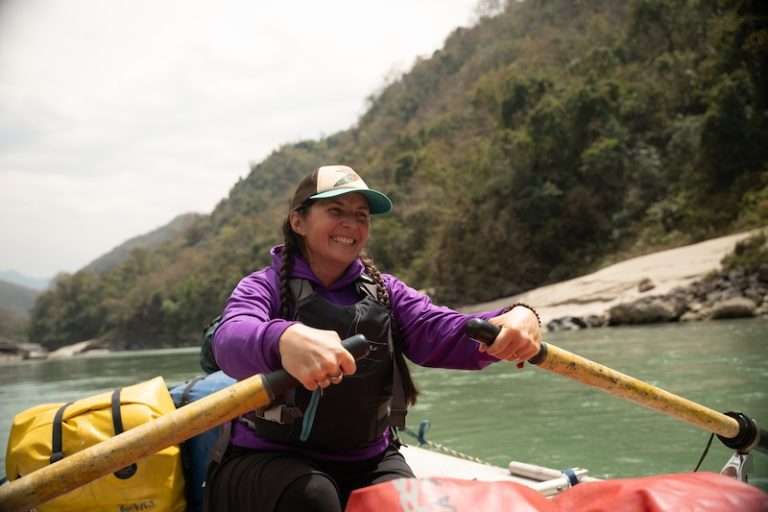
Anna Levesque: Hello, and welcome back to the show. Today I want to talk about rehabbing my back and what that journey was like for me.
I’m sharing this because last year at this time, I still could not sit in a kayak. I was barely sitting in chairs and still experiencing pain. I had to drop my husband Andrew off at the Upper Gauley, wave goodbye, and watch him paddle away. It’s one of my favorite rivers.
This year, I’m back on the Upper Gauley. I’m stern squirting, I’m surfing. Oh my gosh, it’s so joyful. I’m having so much fun. I’ve gotten on rivers like the Cascades of the Nantahala. I just finished an awesome season of kayak coaching on the water, and my back feels great.
Everyone has their own journey. And of course, I’m not a doctor and I’m not giving medical advice. If you are injured, you should consult your doctor and follow their advice.
I’m sharing this because during my own healing, there were times when I didn’t know if I would ever get back into a kayak again. I was in so much pain because the bulge was pressing on my sciatic nerve. It was so helpful to hear stories from people who were able to rehab without surgery and get back to doing the activities they loved. That included my husband, who had a herniated disc several years ago and was able to rehab without surgery. And there are several of you, you know who you are, who shared your stories, and I am so grateful. So my intent here is simply to share what worked for me.
I also want to say that I have friends and family who have had back surgery, and it has helped them. I’m in no way saying that surgery is bad. For myself, I wanted to avoid it unless it was absolutely necessary. So far, it has not been necessary, and I’m so grateful.
This podcast is called The Discomfort Zone, and there was so much discomfort in this rehab journey. First, the actual physical discomfort, which was excruciating. I couldn’t sit for two months. I had to do everything standing or lying down. Those of you who follow this podcast have heard me mention it, especially in the beginning. But I haven’t told the full story yet, which is why I’m doing this episode.
Managing the pain was tough at first. Even when I was in pain, I was walking, hobbling really, because it turns out walking is really good for your back. At least that’s what I found in all the podcasts and books I devoured as soon as I was injured, including the McKenzie Method and the book Back Mechanic, which was super helpful. A bunch of other podcasts also suggested walking.
Even when I was in a lot of pain, I would visualize how I wanted to feel at the end of the healing process. I would bring up those feelings of strength and freedom in my body and focus on that. Was it always easy? No.
In the beginning, I couldn’t walk very far without having to come back, take a break, and lie on my stomach. That’s all I could do, and I accepted that. I would just go back and forth between lying on my stomach or my back and walking.
I gave up kayaking fully for six months. I tried to get back in my boat at month four, and it was a terrible idea. I don’t recommend it. Patience is so key.
So I took six full months off. Then I got back in my boat on flat water. I was pushing myself to get back because my Costa Rica trip is every January, and in December I thought, I need to get back in a boat to see how it feels before this trip. I paddled several times on flat water and it felt okay, and I was so elated. Then I did a week in Costa Rica, also elated that I could get back on whitewater. Once I got back from Costa Rica, I took more time off, and then I had a trip to India. This year was just packed, y’all.
So it was about not getting ahead of myself and being consistent. Not pushing it too much, but also pushing it a little bit to see how things felt, always paying attention to my body and being realistic. My body told me when it was not okay. So there was a lot of mindset work in accepting and paying attention.
When I was most incapacitated and had to lie around a lot, I was bummed about it. But luckily, I had a lot of yoga experience. One thing I learned in yoga is called Yoga Nidra, or yogic sleep. Huberman Lab and some of the scientific community call it non-sleep deep rest. It’s a guided sleep meditation, and I found it very healing. It helped settle my nervous system and helped me focus on healing. I also meditated lying down, because I couldn’t sit yet. When I could sit on my knees with a bolster supporting me, I started meditating in some seated positions. I would also meditate and visualize while I was walking. I would talk to my body and talk to my back about healing.
All of those mindset pieces went along with the physical pieces: seeing a PT, strengthening my glutes, and learning how to breathe, which really blew my mind. I learned that I actually wasn’t breathing effectively, because breathing can either engage the deep core muscles that stabilize your spine, or not. So I learned how to breathe. One of the best resources for me was a program called Core Balance PT. They have a seven-day free trial, it goes over that breathing, and it was amazing. Shout out to Jennifer and Buffy, who told me about it. Again, I was surrounded by amazing friends who shared resources and stories.
So surrounding myself with a team was important. Another discomfort was the investment. I invested in pelvic floor PT, which was amazing, along with chiropractic and massage. My massage therapist, who I’ve seen for years and years, is also a Rolfer. Rolfing, also called structural integration, is a more intense style of bodywork that helps realign the body. None of that was covered by insurance. It was all out of pocket.
I’ve always believed that health is wealth, and I’ve been willing to invest in my health even when it stretches me big time, which it did. I knew the investment in the beginning would pay off, and it did. Finding really good practitioners and investing in them was part of my journey. At first I was seeing them all once a week, which might seem insane to some people, but it helped me feel like I was making progress and doing things to help the healing along.
The other piece was nutrition. I’ve studied Ayurveda, the sister science to yoga, which treats digestion as a pillar of health. According to Ayurveda, your routines, habits, and daily rhythm are central to your health and healing. I was so grateful that I already had experience cooking anti-inflammatory foods and meals that are easy to digest, so I wasn’t overloading my system and it could focus on healing.
All of these things helped me on my journey. Those of you who are familiar with Mind Body Paddle won’t be surprised that it was a holistic approach for me. There was the physical PT, which I still do every day, by the way. It’s integrated into my day because I know caring for my back is a lifelong journey, and I’m good with that.
I already had a morning routine and a solid yoga practice, and I’ve done some episodes on that. It was very humbling to learn that some of the movements I was practicing in my yoga were not actually supporting my back. So my yoga routine has shifted, and I share that with my clients and with people who join my programs and trips. That has been life changing. So the willingness to pivot is very helpful too. Not being stuck in what I was doing, but being willing to see that something wasn’t effective and shift.
So it was a combination of investment, consistent action over time, both physically and from a mindset perspective, and some nutrition and nourishment. Again, this is my journey. Everyone has their own, and I’m just sharing what worked for me.
One of the things that really stood out to me is that already having routines and habits in place helped me so much when things got really hard. I didn’t have to deal with excruciating pain and also try to set and learn new habits and routines. I already had them in my back pocket. They were already part of my life, and that was super helpful in my rehab.
So habits and routines are super important, and that includes sleep. My sleep was disrupted. There were times I was up at 4 a.m. in pain and just had to go walking. But because I already had a solid bedtime and sleep routine, it was easy to get back on track once the excruciating pain passed. Sleep was so helpful in my healing.
I hope this is helpful to you if you’re going through a healing journey.
If you’re interested in learning about routines, habits, easy-to-digest food, and a digestive reset, I encourage you to join my Reboot and Refuel reset coming up in October. It starts October 19th, and the last day to register is October 12th. It’s five days based in habits, routines, and a digestive reset, all grounded in my studies of Ayurveda, with an amazing group of people. It’s open to everyone. Some people have done it with me eight or nine times because it’s so helpful in supporting their kayaking and their energy. If any of this resonated with you today, check it out at mindbodypaddle.com/reboot-and-refuel, and use code DZ10 at checkout to save 10%.
Thanks for listening today. I hope it was helpful. If you have any questions about my healing journey, please don’t hesitate to reach out to me at anna (at) mindbodypaddle (dot) com. And if you have habits or routines that have really worked for your own healing, I would love to hear about them. Please email me at anna (at) mindbodypaddle (dot) com.
Thanks for listening, and we’ll see you next time.