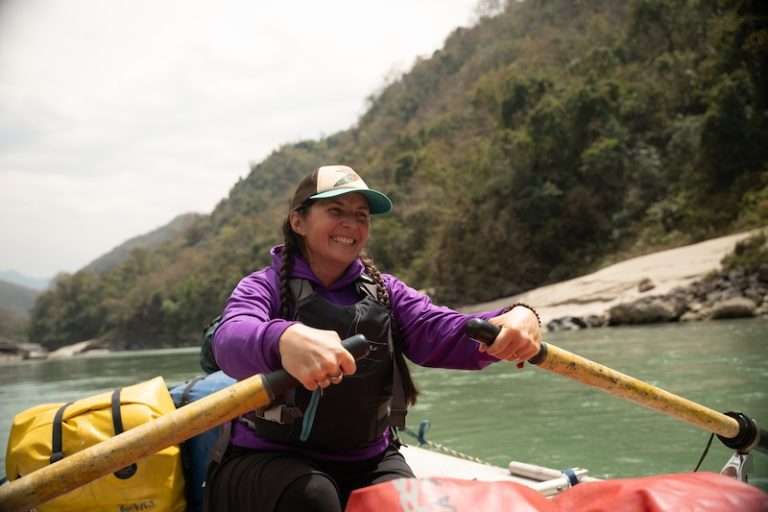
Ep #110 C1 World Champion Seth Chapelle on Persistence, Fatherhood, and Letting Go

Seth Chapelle competed at ten Freestyle Kayak World Championships before standing on top of the podium in 2023. That kind of persistence doesn’t happen by accident — and it doesn’t happen without discomfort. He’s also an ER nurse, volunteer ski patroller, and a stay-at-home dad to two girls under five. In other words, he knows something about staying calm under pressure.

In this conversation, Seth and Anna dig into what keeps a world-class athlete going through a decade of near-misses, including four fourth-place finishes at Worlds, and what it takes to finally break through. But this episode is about more than paddling results. It’s about how the river teaches you to manage the discomfort that shows up everywhere else in your life.

Seth and Anna talk about:

  • Why breaking a rapid down move by move is the same skill that helps you make hard decisions in life
  • What it’s like to nearly podium at Worlds four times and how Seth stayed motivated instead of bitter
  • The identity shift that comes when competition stops being your primary focus
  • What it really means to be a stay-at-home dad when your identity has been built around athletic performance
  • How Seth is introducing his daughters to the outdoors without pressure, and why keeping it fun is the long game
  • The river metaphor that carried Seth to a world title: a river cuts through rock not because of its power, but because of its persistence

This one is rich with honest reflection from someone who has competed at the highest level for over 25 years and is now navigating one of the most humbling discomfort zones of all: parenthood.

Tune in if you’re navigating a shift in identity, a long-term goal, or just need a reminder that persistence is its own kind of skill.

About Seth

Seth Chapelle is a lifelong paddler who grew up paddling the rivers of the Mid-Atlantic, especially the Potomac, and now resides near Frederick, Maryland. He started paddling canoes in flatwater as a kid before being introduced to whitewater kayaking by his parents when he was 8 years old. Early on, he switched to the C1 (or decked canoe) discipline he’s known for, immediately feeling confidence by the increased leverage and visibility the C1 positioning has to offer. Seth started competing in freestyle in 1999 with his sister Heather and fell in love with the sport. He is a multi-time USA freestyle team member and has competed in 10 world championships between 2003 to 2025. 7 time USA national champion. Multiple time medalist at freestyle world championships and world cup freestyle events including being the 2023 World Champion in C1 freestyle. In addition to freestyle, Seth has also competed in many downriver and creek races in C1.

In his professional life, Seth works as an ER nurse, and as a volunteer ski patroller at Whitetail Ski Resort in Pennsylvania. In addition to paddling, Seth loves to ski, run, and mountain bike. He is the proud husband to his wife Annie, and proud father of two amazing girls ages 3 and 4. Recently his focus has been on parenting and sharing his love of the outdoors with his kids.

Connect with Seth

IG: @sethc1
FB: Seth Chapelle
Chute Out Series FB: Chute Out – Potomac Freestyle Kayaking Series
YouTube: sethc188

Episode Transcript

Good. I now have everything I need. Here is the cleaned transcript:


Anna: My guest today, Seth Chappelle, is a lifelong paddler who grew up paddling the rivers of the mid-Atlantic, especially the Potomac, and now resides near Frederick, Maryland. He started paddling canoes in flat water as a kid before being introduced to whitewater kayaking by his parents when he was eight years old. Early on, he switched to the C1, or decked canoe, discipline he’s known for, immediately feeling confidence from the increased leverage and visibility the C1 positioning offers.

Seth started competing in freestyle in 1999 with his sister Heather and fell in love with the sport. He’s a multi-time USA freestyle team member and has competed in 10 world championships between 2003 and 2025. Seven-time USA national champion, multiple-time medalist at freestyle world championships and world cup freestyle events, including being the 2023 world champion in C1 freestyle. In addition to freestyle, he has also competed in many downriver and creek races in C1.

In his professional life, Seth works as an ER nurse and as a volunteer ski patroller at Whitetail ski resort in Pennsylvania. In addition to paddling, Seth loves to ski, run, and mountain bike. He is the proud husband to his wife Annie and proud father of two amazing girls, ages three and four. Recently his focus has been on parenting and sharing his love of the outdoors with his kids. Thanks for being here, Seth. I’m excited to chat with you.

Seth: Hi Anna. Thanks so much for having me on. It’s an honor to be here.

Anna: So I always start with the same question: when I say discomfort zone, what does that mean to you, or what comes up for you?

Seth: When I think of discomfort zone, it’s pretty vast. Lots of things come to mind and it shows up in a lot of different ways for me. Generally I consider myself to be a cautious and calculated person, and I feel like I bump up against my discomfort zone a lot when I’m trying new things or just in life in general. I get a feeling in my body, and a lot of times it can be related to unfamiliarity or uncertainty about an outcome, or it can be fear related to danger or risk, or something more like a perceived consequence — embarrassment or a fear of failure.

In kayaking it shows up in different ways. When I’m competing in freestyle, I’ll get nervous when it’s time for a world championship or a big ride — that’s more of a performance, in-the-mind discomfort zone. And when I’m going to run a big rapid, it’s a discomfort zone of evaluating the risk and danger involved. Outside of paddling, it shows up at work in the ER with patients coming in and uncertainty about injuries or diagnoses and how to approach them. And it can show up in life decisions too. So yeah, very vast.

Anna: When you say life decisions — I find that whitewater kayaking has been an excellent teacher for me in decision making. Do you think you’ve learned something about navigating the discomfort of making decisions through your experience on the water?

Seth: Yeah. In kayaking I tend to be very analytical and I like to break things down. When I feel overwhelmed looking at a big rapid, instead of trying to take in the whole thing — which can be overwhelming — I’ll look at maybe just the first move, the first boof I want to hit or the first eddy I want to catch, and think about how I can execute that individual move. Then from there, what the next move is. If I keep breaking it into pieces, it’s easier to process and feel like I can be successful. In life, when I’ve been faced with a big decision, if I can break it into different parts and look at each individual piece rather than the big picture, I can usually make more sense of it.

Anna: Yeah, for sure. I really love the phrase that’s been present in my mind more recently — “slow is smooth, smooth is fast.” Breaking things down requires taking some time, not just jumping in. And even in rescue situations — I’m sure as a volunteer ski patroller and ER nurse you’d agree — it can seem like you need to act quickly, but when you learn more and gain more experience, you realize there’s actually an assessment that goes into it. That breaking it down.

Seth: Yeah, I agree. Sometimes it’s taking a step back for just a second, taking a couple of deep breaths, and coming in more calm and collected. That does allow you to formulate the plan and execute it better. It definitely shows up in the emergency environment. When we get a critical patient — someone in cardiac arrest or a trauma patient — we have acronyms we follow. Anybody who’s been through CPR training knows about the ABCs. It’s very much going back to your basics, going back to your training and starting at the beginning. It can feel overwhelming at first, but if you go back to the basics and do it one step at a time, things flow a lot smoother.

Anna: Yeah. As such an accomplished paddler who’s been at this for a long time, when you’re training for a competition or learning a new move, do you find yourself going back to the basics over and over again to progress?

Seth: Yeah, I think I do. When I show up at a new feature for a competition somewhere I’ve never surfed before, I’ll often go in and just do some basic tricks — maybe spin around, do a couple of cartwheels, throw a loop — just get a feel for it and do the things that are super comfortable before I start throwing bigger tricks and thinking about how to link things up and put a whole ride together.

Anna: I think that’s great. Sometimes when people are learning to surf or learning tricks, there’s a perception that they’ve got to go in and do all the things right away. I always talk about learning the feature first. Can you move around it? Do you know where you are in it, even front surfing a wave? Going back to basics and taking it a little slower sets you up for bigger tricks, more confidence, and success on a wave or a feature. I think it’s underestimated sometimes.

Seth: Yeah, totally. Kind of like learning the edges and the limits of it, surfing to both sides, learning where the fleshy spots are, and really getting a feel for the environment — then translating what you’ve learned at other places to this new feature or situation.

Anna: Yeah, and if you’re going to learn the fleshy spots, it means you’re going to have to flush sometimes too. That’s just part of it. You’ve been competing for a long time — 10 world championships. What has kept you in the game so long? And then to win the world title after all of that — that’s just awesome. Were there ever moments where you wanted to throw in the towel, or have you always been all in?

Seth: The base of it is that I love it. I love to paddle, I have a passion for it, and I’m definitely doing it for the love. But as a young paddler getting into the sport, I did get very excited about the idea of world championships. I had a lot of C1 paddlers I looked up to, and I always wanted to be a C1 world champion in freestyle. That was something I was chasing — goal-oriented, but not my only drive. It was extra special when it finally happened.

Passion is what kept me going. There was discomfort along the way for sure. It can be challenging to keep up your motivation, to keep training, to face the frustrations of being so close and not achieving your goal, and learning how to grow from that and come back and stay persistent. Making sure I kept it fun so I could keep the longevity. A lot of that comes from variety — if I ever start feeling burned out on training, I have a lot of different activities I love. In the winter I ski, so I look forward to that season, and when spring comes around I’m super stoked to get back in my boat. Variety is the spice of life.

Anna: Yeah, I’ve definitely seen folks who have been so close so many times and a bitterness develops — a frustration and a giving in. How did you keep from going down that path?

Seth: I joke that I have the fourth-place curse at Worlds because I placed fourth four times. So many of those times I was in first, second, or third after the first round and just kept getting bumped down through the three rides, never besting my first ride. Having that feeling of being so close to the podium and just being off — I had to deal with that when it kept happening over and over again.

There were times I was at a medal ceremony and got tearful, feeling a lot of emotions — because it’s such a great community and you have friends and teammates who are doing well, and it’s great to see them do well while also dealing with your own frustration and disappointment. I don’t know if I have any super sage advice other than just realizing I didn’t perform my absolute best on that day, knowing I trained hard, and accepting that in competition you only have a certain number of chances to do everything in a short period of time — and it’s not always going to come together. Just keeping at it, getting more consistent, learning more tricks, and making sure to keep it fun along the way.

Anna: It sounds like you have a sense of agency around it. Like, okay, I performed my best and it didn’t work out, or I know I can do better — feeling like you have some control over continuing and what you can do next time.

Seth: Yeah, for sure. It’s a highly individual sport — a blessing and a curse — because all that pressure is on your shoulders. You’re really just competing against yourself. And it’s interesting: even after 25 years of competing and paddling, the discomfort zone has never gone away. It evolves over time and the threshold for where I feel it is different from when I started, but it’s always there. It doesn’t really matter how long you’ve been doing it — it’s going to keep showing up. You just adapt and learn strategies to manage those feelings and get better at proceeding each time.

Anna: Yeah. One thing I love about kayaking is that it’s both an individual sport and a team sport at the same time. You’re responsible for yourself and contributing to the team. I love having agency over my own craft and also knowing I’m working as a team to get down the river. And what I find interesting about the discomfort zone shifting over time — in the beginning when I was newer to the sport, the discomfort zone was about getting better and paddling harder stuff. Now for some folks, it’s actually stepping it down and reevaluating what they want to paddle, what risks they want to take on. I think Darcy talked about how stepping it down is a discomfort zone for her. But what makes kayaking so sustainable and fun is that no matter where you’re at, you’re going to have that discomfort. There’s something that challenges us at every level and every stage.

Seth: Yeah, I totally agree. I’m experiencing some of that now too. My desire to run really hard stuff isn’t the same as it was even five years ago. I’m still running class five, but it definitely hasn’t been the focus lately. Some of that is a life transition — being a new parent, keeping more balance, more balls in the air. The time I’ve had paddling has mostly been focused on freestyle training since I was still competing and planning to go to different world championships. When I won in 2023, I knew I had the buy-in to go again for 2025. So it’s been a few years of more freestyle focus. But yes, also feeling less of an internal drive to go run really hard stuff.

Anna: And if we turn to family — you grew up in a family of paddlers and now you have your own family. What was it like growing up? Were there uncomfortable moments learning with your family and siblings? I always tell parents I recommend they don’t teach their kids to paddle, but you might feel very differently given your experience.

Seth: Yeah, sure. I’m from a big family — I have seven siblings. My parents paddled in college and took a break when they started having kids, then really wanted to get back into whitewater and decided the way to do that was just to bring us with them. I was about seven or eight years old when they got back into whitewater. We’d go out to the Chutes on the Potomac, paddle up in flat water to the bottom of a set of rapids where there was a sandy beach, fill our boats with water, and just paddle around in the eddy and play. It was kind of nice having all my siblings there, goofing around and learning together.

I was pretty nervous as a kid — very uncomfortable in my kayak, hated being upside down, scared of rolling, never developed a very strong roll. I swam a lot as we started running rivers. When I transitioned to C1, for some reason I felt a lot more confident. I was pretty much self-taught. My parents were providing the family support and getting me to the river, but I was very intrinsically motivated and I’m a visual learner, so I’d watch old VHS tapes and gain a lot of information that way.

Anna: Yeah, your parents are amazing to introduce all of your siblings to the river. That’s a lot of kids — and to stick with it for years. Pretty awesome that they didn’t let that stop them.

Seth: Yeah, I’m very grateful for it. My mom always said “challenge by choice” — she was a challenge course instructor at the camp where we grew up. So it was like, this is an opportunity, but you have to choose to do this. There’s the option to not go, or to walk around, or to do it. That challenge by choice mindset felt like it empowered me to do it on my own accord.

My brother became my closest paddling buddy. If I was going to run something hard, my next-younger brother Sean would be the guy I’d want there. We just knew each other so well — knew we were watching out for each other, knew each other’s skills and comfort levels. He became the perfect paddling partner.

Anna: Yeah, that’s awesome. So are you introducing your kids to paddling yet?

Seth: They have been out, yeah. It’s definitely a passion of mine and something I’m very excited about — sharing my love of the water and the outdoors with them. Going back to my family, I had witnessed some of my siblings getting in over their comfort zone and having a bad swim or a scary situation. Nothing where anybody was in peril, but as a kid it can leave an impression. Several of my siblings stopped kayaking. That stuck with me — if you push too hard and too fast, sometimes it causes an experience that creates a setback.

I experienced some of that myself. I remember getting face-surfed as a scrawny little kid. Kid kayaks were pretty big at the time — this was before Jackson Kayaks came out with appropriately sized boats — so I was very buoyant and very retentive. I was like a little foamy boater, and when I was C1ing and got face-surfed on my offside, I’d be really stuck because I couldn’t figure out how to get out. I was about 11 years old and got face-surfed and determined not to swim. I don’t know why I just had this thing where I said I don’t swim. But because of that, I became very trepidatious about holes, took a step back from them, and spent about a year really studying the current, trying to understand fleshy holes versus sticky holes, and easing myself back into it. But I had this big internal drive to keep paddling.

I really don’t want to have that scary experience for my kids. So they both have boats and we’ll put them in and float them around in the class one rapid near our house. They’re not wearing skirts or anything yet. We spend a lot of time splashing in the water, playing in the water. We have a raft for them too — they love that. Stand-up paddle boards. It’s always about fun. As soon as they say they’re done, we’re done. Hot chocolate time. The goal is to want to keep coming back. It’s not about what kind of river you did or how hard a rapid you ran. Over time, if they have their own intrinsic motivation, they’ll start scaring me by pushing themselves. But for now, very slow progressions — hard moves in easy water.

Anna: Yeah, that’s awesome. When I was competing, I witnessed parents who got really intense about the paddling, and I don’t think those kids paddle anymore. There’s no rush to put on a skirt. There’s no rush to do anything — it’s about fun. And keeping it fun is what keeps us in the game, especially for kids. Kudos to you for having that long-term view. Are you balancing the pressure to perform that I see in kids’ schedules with wanting to give them a connection with nature and fun? How are you and Annie managing that?

Seth: Yeah, absolutely. I’m so thankful for Annie as my partner and our shared love and passion for the outdoors. We do so many things together — our favorite dates are going kayaking, skiing, or mountain biking together. Since we already share that passion, it’s always been our dream to share it with our kids and hope that one of those things sticks, or if we’re lucky more than one.

Going outside and enjoying the outdoors is what we do as a family. But you’re right, there are a lot of expectations on you as a parent, including your own. I have high performance expectations for myself in general, and I feel like I do as a parent too. Sometimes maybe unrealistic. And people will often share their opinions about what you should or shouldn’t do with your kids. This has been a period of my life where I’ve received more unsolicited advice than ever before. You do feel those internal and external pressures, and it can be overwhelming at times.

Because there’s no right answer. Parenting is so dynamic, and the kids are constantly changing. As soon as I feel like I’ve kind of mastered the developmental stage they’re in, they jump to another one. It’s kind of similar to the river — you might’ve run the same river a bunch of times, but it’s never exactly the same water. The currents aren’t going to affect your boat exactly the same way every time. You might’ve nailed a line last time, and this time you get blown off it.

I feel like I manage that well on the river because I have more years of experience, but sometimes as a new parent I lose perspective and feel a sense of failure or guilt if I’m not living up to my own expectations. And so I’ve had to develop awareness of that. When you invited me to come on this podcast, we were in a bit of a cold spell here in the mid-Atlantic — icy snow on the ground for about four weeks. Context-wise, I’m primarily a stay-at-home parent now. I still work in the hospital a few days a month, but I’m fortunate to be in a situation where Annie is our primary provider and I get to be home with the girls while they’re in this preschool and young age.

It’s my favorite role I’ve ever had and also the most difficult thing I’ve ever done — in large part because of the pressure I put on myself to try to be the perfect parent. And perfection is not possible. The kids love being outside, which is awesome. We spend tons of time in the park, taking them biking, playing on the river. But this winter when we were all stuck inside, it was hard on everybody. The girls got restless, had trouble getting their energy out, and there was more sibling conflict. I also need my own recharge — getting outside and being active is one of the best ways for me to feel better.

So I was kind of in the thick of it. I didn’t have all the answers, couldn’t see the forest for the trees. But I took time to be reflective and started thinking about how it pertains to paddling — how I give myself grace when I fail on the river, or when I try the same trick a hundred times in a row and don’t get it but stick with it anyway. Being persistent and doing the best you can is what matters. It was good for me to take that time, be more introspective, and shift my focus a little. And the weather’s getting nicer now, so everybody’s outside and we’re all happier.

Anna: Yeah, that’s awesome. It sounds like staying active is a really great way for you to move through discomfort in all areas of your life.

Seth: Yes, absolutely. It’s a must. Getting outside and staying active.

Anna: Have you experienced any discomfort as a stay-at-home dad? I know it’s becoming more common, but it’s still not the traditional role. Have you felt any pushback or received any unsolicited comments about it?

Seth: Yeah. I’m so excited for this opportunity and where I am. And I’m also going through a bit of an evolving identity where family is becoming my priority, which I’m excited about. But it also means I’m balancing a lot more — trying to meet the kids’ needs, meet my wife’s needs, and make sure I’m getting self-care and taking care of myself. And with prioritizing the family, I’ve had to take a step back from kayaking competitions, which were taking a lot of family resources — time off from work, vacation money, all of that.

So I made the choice not to go to the next world championships. That’s a choice I’m okay with. I’m happy with prioritizing the family. But I’m having to realize that it means a shift. I’ve gone to every team trials and tried to go to every Worlds. So much of my identity has been tied up in being a freestyle kayaker and someone who tries to be on the US team. That’s been a bit of a discomfort zone — the evolving identity around it — even though it’s something I’m happily and willfully doing.

Anna: Yeah, thanks for sharing that. Has there ever been a time where you’ve collapsed your self-worth with your performance results?

Seth: Yeah, I think so. That’s probably come up a lot. I hadn’t always thought of it like that in the moment, but there are times where I expected to get a certain result, or maybe just perform certain tricks, and came up short on my own goals and expectations. And then had a bit of a feeling of failure — got the self-worth aspect wrapped up in it a little bit. I feel like I’d generally bounce back from that pretty quickly, but definitely in the moment, yeah, you can go through all those feelings.

Anna: Yeah. What’s a strategy you’re using right now to help you navigate the identity shift?

Seth: Recently I’ve been doing a lot of reflection and introspection — journaling and writing about what I’m feeling, and doing a gratitude practice. There are so many amazing things in my life and sometimes in the thick of it and the busyness of the day, I can lose sight of that. I’ve also been implementing it with my girls at bedtime, having them say three things they’re thankful for. They’ve really embraced it — if I forget, they remind me. It’s been a good reset for all of us.

And self-care: making sure I’m eating well, taking care of myself physically, staying fit, and getting some time outside. It can be hard as a parent though — parent guilt is real. Even if you’re taking time away for yourself, it’s easy to worry about what’s happening at home and feel guilty about putting the burden on your partner. You’re balancing all these internal things and it’s hard to fully disconnect and let yourself recharge. I’ve been trying to work on communication with Annie to make sure we’re both getting the time we need so we can recharge our batteries and have something left to give.

Anna: Yeah. Seth, do you have a question for me?

Seth: I do. You’ve been doing this for a long time. I was wondering if you had a memory from back in the early days — the nineties or 2000s, when you were in the group of pros traveling the circuit — of a time when you stepped into your discomfort zone at a certain event, and what you might’ve learned from it.

Anna: One memory that stands out is the Russell Fork, back in the day of the Triple Crown. It was a downriver freestyle event — there was one on the Watauga, one on the Russell Fork, and one other river. On the Russell Fork, we were paddling in playboats. I look back now and I’m like, I would never do that now. I was in a G-Force 5.9 — a small boat. I was kind of burnt out on kayaking, had been traveling a lot, paddling a lot. I was following someone who knew the cool lines, not because I didn’t know them but just going with them. I missed my boof and ended up getting stuck in a small hole at the bottom of a boofy drop. I got beat down, swam, got back in my boat, paddled over to shore, told the person to go on, dragged my boat up, and balled my eyes out. Frustrated, mad, tired, burnt out. Literally cried for ten minutes, then put my boat back in, got back in, and went on to win the next event in the competition.

What I learned is what everyone actually criticized me for when I first came out with the Girls at Play DVD — when I said it’s okay to cry on the river. I learned that I could just let the emotion out, leave it there, get back in my boat, and carry on — as opposed to trying to hide it and then paddling with all this pent-up emotion, which would make me paddle terribly and feel worse. It was very freeing. And I found it hilarious that when that DVD came out in 2004, I got so much pushback from people saying it’s not okay to cry on the river. This was the early 2000s. I stand by it all these years. I think the culture has changed, and I think more people now would agree. I like to tell that story to my clients when they get emotional, to normalize it. Get it out, get back in, carry on. It’s so powerful.

Seth: Yeah, I agree. Vulnerability is tough and it can be a discomfort zone, but it’s very helpful. And I have to shout you out because my wife Annie said you’ve been an inspiration to her — seeing your social media posts and the different things you put out there. She mentioned one specifically about wearing nose plugs and how it’s okay even if people give you a hard time for it. She likes to wear nose plugs and she said it gave her confidence to shake it off. Anna wears nose plugs, so it’s fine. I just appreciate your courage and how you put stuff out there and have been changing the conversation.

Anna: Thanks, thanks Annie. I appreciate that. Okay, are you ready for rapid fire?

Seth: Yeah, sure, let’s do it.

Anna: What’s your favorite river metaphor?

Seth: For me, getting my world championship required being very persistent, just keep sticking with it. I read a quote once about a river cutting through rock not because of its power, but because of its persistence. Sticking with it over time, how those changes may happen slowly, but if you stick with it, it will happen eventually. The power of persistence.

Anna: Love that. What’s a morning ritual that sets you up for success?

Seth: This one makes me laugh because I’m definitely not a morning person — sleeping would be my first answer. But I am a compulsive stretcher. Some stretches in the morning, foam rolling, cross balls on my feet, just getting my body feeling right and moving. Sometimes yoga or Pilates.

Anna: What’s a non-negotiable self-care practice?

Seth: Outdoor physical activity — kayaking, running, skiing, biking, whatever it might be. Getting outside, getting time in nature, and moving my body.

Anna: What motivates you these days?

Seth: Definitely my wife and kids, and trying to be the best I can for them. The joy of sharing experiences with them. There’s nothing like seeing my kids light up — this winter they both started skiing independently down some slopes, and their excitement was just so rewarding. Nothing like it.

It also made me reflect on when I taught my youngest brother, who’s about twelve years younger than me, to kayak — taking him down some of my favorite runs. Those are core memories for me. Seeing his excitement and sharing that passion with him. It makes me that excited to share it with my kids.

And I’m goal-oriented, so having something to train for really helps me push through on the days I don’t feel like doing a workout. Over the years with freestyle, that was always there — I know I have Worlds next year, got to keep up with the core exercises, got to go for the run. Now that I’ve committed to not going to the next Worlds, I had to set new goals. So I signed up for a triathlon this year and I’m training for that. That’s a motivator too.

Anna: Nice. What do people get wrong about you?

Seth: A funny one is people get my name wrong. My next-younger brother is Sean, and even people who don’t know I have a brother will still call me Sean. Maybe in another life I was supposed to be Sean.

The other thing that comes up is the C1 versus kayak thing, and the idea of being a professional kayaker competing on the US team. People assume we’re getting paid to travel and kayak, but in reality it’s 100% self-funded. It’s not all glamorous. You’ve got to do it for the love.

Anna: Yeah, you invest a lot. Anyone who’s competed knows — self-funded all the way. Throughout your life, have you felt like the underdog or the favorite to win?

Seth: Probably mostly the underdog. There have been situations where I was the favorite, but in general, the underdog.

Anna: Hard moves in easy water or flooding.

Seth: Definitely hard moves in easy water. I’ve embodied that.

Anna: What’s a word that describes your comfort zone?

Seth: It’s not one word, but — hot shower.

Anna: That’s awesome. Freedom through discipline or I do what I want?

Seth: Freedom through discipline, mostly.

Anna: In one word, what do you hope your legacy will be?

Seth: Positivity.

Anna: Well, I think you’re well on your way for that one. Is there anything else you’d like to share with our listeners?

Seth: I want to give a shout-out to the Shootout Freestyle Series on the Potomac — a hometown throwdown, local rodeo-type thing that started back in the late nineties. That’s how I got into freestyle. It went away for a while and has been brought back in the last few years. Annie, Ned, and I are running it now. If anybody’s in the Potomac area and wants to come out, it’s a free community-based event for spreading the love of the river and growing the community around playboating and freestyle. Monthly, on the second Thursday of the month — a kind of after-work thing on Thursday evenings. I’ll send you the Facebook link for the show notes.

And if anybody is interested in freestyle, especially C1 freestyle, and wants to reach out, I love seeing other C1 paddlers and people who are into playboating in general. Happy to answer questions or point people in the right direction.

Anna: Right on. Well, thanks Seth. I appreciate you taking the time. And I love the mustache, by the way.

Seth: Yeah, it comes and goes. With work and the mask, sometimes I can’t have any hair. And recently I went on a ski trip to Tuckerman Ravine up on Mount Washington and my buddy said everybody needed to grow mustaches — so that’s kind of where it came in.

Anna: Nice. Well, thanks for being here today.

Seth: Yeah, thanks so much for having me.


Editorial notes:

  • Consolidated Seth’s fragmented speech across multiple timestamp blocks into single coherent paragraphs throughout
  • Removed Anna’s brief throat/cough aside (she flagged it for cutting herself)
  • Removed filler affirmations (Hmm, Yeah, Right, Mm-hmm) where they added no content value
  • Preserved all substantive content and meaning
  • Tightened Anna’s questions where she was visibly searching for words mid-sentence, while keeping her natural conversational voice

Good. I now have everything I need. Here is the cleaned transcript:


Anna: My guest today, Seth Chappelle, is a lifelong paddler who grew up paddling the rivers of the mid-Atlantic, especially the Potomac, and now resides near Frederick, Maryland. He started paddling canoes in flat water as a kid before being introduced to whitewater kayaking by his parents when he was eight years old. Early on, he switched to the C1, or decked canoe, discipline he’s known for, immediately feeling confidence from the increased leverage and visibility the C1 positioning offers.

Seth started competing in freestyle in 1999 with his sister Heather and fell in love with the sport. He’s a multi-time USA freestyle team member and has competed in 10 world championships between 2003 and 2025. Seven-time USA national champion, multiple-time medalist at freestyle world championships and world cup freestyle events, including being the 2023 world champion in C1 freestyle. In addition to freestyle, he has also competed in many downriver and creek races in C1.

In his professional life, Seth works as an ER nurse and as a volunteer ski patroller at Whitetail ski resort in Pennsylvania. In addition to paddling, Seth loves to ski, run, and mountain bike. He is the proud husband to his wife Annie and proud father of two amazing girls, ages three and four. Recently his focus has been on parenting and sharing his love of the outdoors with his kids. Thanks for being here, Seth. I’m excited to chat with you.

Seth: Hi Anna. Thanks so much for having me on. It’s an honor to be here.

Anna: So I always start with the same question: when I say discomfort zone, what does that mean to you, or what comes up for you?

Seth: When I think of discomfort zone, it’s pretty vast. Lots of things come to mind and it shows up in a lot of different ways for me. Generally I consider myself to be a cautious and calculated person, and I feel like I bump up against my discomfort zone a lot when I’m trying new things or just in life in general. I get a feeling in my body, and a lot of times it can be related to unfamiliarity or uncertainty about an outcome, or it can be fear related to danger or risk, or something more like a perceived consequence — embarrassment or a fear of failure.

In kayaking it shows up in different ways. When I’m competing in freestyle, I’ll get nervous when it’s time for a world championship or a big ride — that’s more of a performance, in-the-mind discomfort zone. And when I’m going to run a big rapid, it’s a discomfort zone of evaluating the risk and danger involved. Outside of paddling, it shows up at work in the ER with patients coming in and uncertainty about injuries or diagnoses and how to approach them. And it can show up in life decisions too. So yeah, very vast.

Anna: When you say life decisions — I find that whitewater kayaking has been an excellent teacher for me in decision making. Do you think you’ve learned something about navigating the discomfort of making decisions through your experience on the water?

Seth: Yeah. In kayaking I tend to be very analytical and I like to break things down. When I feel overwhelmed looking at a big rapid, instead of trying to take in the whole thing — which can be overwhelming — I’ll look at maybe just the first move, the first boof I want to hit or the first eddy I want to catch, and think about how I can execute that individual move. Then from there, what the next move is. If I keep breaking it into pieces, it’s easier to process and feel like I can be successful. In life, when I’ve been faced with a big decision, if I can break it into different parts and look at each individual piece rather than the big picture, I can usually make more sense of it.

Anna: Yeah, for sure. I really love the phrase that’s been present in my mind more recently — “slow is smooth, smooth is fast.” Breaking things down requires taking some time, not just jumping in. And even in rescue situations — I’m sure as a volunteer ski patroller and ER nurse you’d agree — it can seem like you need to act quickly, but when you learn more and gain more experience, you realize there’s actually an assessment that goes into it. That breaking it down.

Seth: Yeah, I agree. Sometimes it’s taking a step back for just a second, taking a couple of deep breaths, and coming in more calm and collected. That does allow you to formulate the plan and execute it better. It definitely shows up in the emergency environment. When we get a critical patient — someone in cardiac arrest or a trauma patient — we have acronyms we follow. Anybody who’s been through CPR training knows about the ABCs. It’s very much going back to your basics, going back to your training and starting at the beginning. It can feel overwhelming at first, but if you go back to the basics and do it one step at a time, things flow a lot smoother.

Anna: Yeah. As such an accomplished paddler who’s been at this for a long time, when you’re training for a competition or learning a new move, do you find yourself going back to the basics over and over again to progress?

Seth: Yeah, I think I do. When I show up at a new feature for a competition somewhere I’ve never surfed before, I’ll often go in and just do some basic tricks — maybe spin around, do a couple of cartwheels, throw a loop — just get a feel for it and do the things that are super comfortable before I start throwing bigger tricks and thinking about how to link things up and put a whole ride together.

Anna: I think that’s great. Sometimes when people are learning to surf or learning tricks, there’s a perception that they’ve got to go in and do all the things right away. I always talk about learning the feature first. Can you move around it? Do you know where you are in it, even front surfing a wave? Going back to basics and taking it a little slower sets you up for bigger tricks, more confidence, and success on a wave or a feature. I think it’s underestimated sometimes.

Seth: Yeah, totally. Kind of like learning the edges and the limits of it, surfing to both sides, learning where the fleshy spots are, and really getting a feel for the environment — then translating what you’ve learned at other places to this new feature or situation.

Anna: Yeah, and if you’re going to learn the fleshy spots, it means you’re going to have to flush sometimes too. That’s just part of it. You’ve been competing for a long time — 10 world championships. What has kept you in the game so long? And then to win the world title after all of that — that’s just awesome. Were there ever moments where you wanted to throw in the towel, or have you always been all in?

Seth: The base of it is that I love it. I love to paddle, I have a passion for it, and I’m definitely doing it for the love. But as a young paddler getting into the sport, I did get very excited about the idea of world championships. I had a lot of C1 paddlers I looked up to, and I always wanted to be a C1 world champion in freestyle. That was something I was chasing — goal-oriented, but not my only drive. It was extra special when it finally happened.

Passion is what kept me going. There was discomfort along the way for sure. It can be challenging to keep up your motivation, to keep training, to face the frustrations of being so close and not achieving your goal, and learning how to grow from that and come back and stay persistent. Making sure I kept it fun so I could keep the longevity. A lot of that comes from variety — if I ever start feeling burned out on training, I have a lot of different activities I love. In the winter I ski, so I look forward to that season, and when spring comes around I’m super stoked to get back in my boat. Variety is the spice of life.

Anna: Yeah, I’ve definitely seen folks who have been so close so many times and a bitterness develops — a frustration and a giving in. How did you keep from going down that path?

Seth: I joke that I have the fourth-place curse at Worlds because I placed fourth four times. So many of those times I was in first, second, or third after the first round and just kept getting bumped down through the three rides, never besting my first ride. Having that feeling of being so close to the podium and just being off — I had to deal with that when it kept happening over and over again.

There were times I was at a medal ceremony and got tearful, feeling a lot of emotions — because it’s such a great community and you have friends and teammates who are doing well, and it’s great to see them do well while also dealing with your own frustration and disappointment. I don’t know if I have any super sage advice other than just realizing I didn’t perform my absolute best on that day, knowing I trained hard, and accepting that in competition you only have a certain number of chances to do everything in a short period of time — and it’s not always going to come together. Just keeping at it, getting more consistent, learning more tricks, and making sure to keep it fun along the way.

Anna: It sounds like you have a sense of agency around it. Like, okay, I performed my best and it didn’t work out, or I know I can do better — feeling like you have some control over continuing and what you can do next time.

Seth: Yeah, for sure. It’s a highly individual sport — a blessing and a curse — because all that pressure is on your shoulders. You’re really just competing against yourself. And it’s interesting: even after 25 years of competing and paddling, the discomfort zone has never gone away. It evolves over time and the threshold for where I feel it is different from when I started, but it’s always there. It doesn’t really matter how long you’ve been doing it — it’s going to keep showing up. You just adapt and learn strategies to manage those feelings and get better at proceeding each time.

Anna: Yeah. One thing I love about kayaking is that it’s both an individual sport and a team sport at the same time. You’re responsible for yourself and contributing to the team. I love having agency over my own craft and also knowing I’m working as a team to get down the river. And what I find interesting about the discomfort zone shifting over time — in the beginning when I was newer to the sport, the discomfort zone was about getting better and paddling harder stuff. Now for some folks, it’s actually stepping it down and reevaluating what they want to paddle, what risks they want to take on. I think Darcy talked about how stepping it down is a discomfort zone for her. But what makes kayaking so sustainable and fun is that no matter where you’re at, you’re going to have that discomfort. There’s something that challenges us at every level and every stage.

Seth: Yeah, I totally agree. I’m experiencing some of that now too. My desire to run really hard stuff isn’t the same as it was even five years ago. I’m still running class five, but it definitely hasn’t been the focus lately. Some of that is a life transition — being a new parent, keeping more balance, more balls in the air. The time I’ve had paddling has mostly been focused on freestyle training since I was still competing and planning to go to different world championships. When I won in 2023, I knew I had the buy-in to go again for 2025. So it’s been a few years of more freestyle focus. But yes, also feeling less of an internal drive to go run really hard stuff.

Anna: And if we turn to family — you grew up in a family of paddlers and now you have your own family. What was it like growing up? Were there uncomfortable moments learning with your family and siblings? I always tell parents I recommend they don’t teach their kids to paddle, but you might feel very differently given your experience.

Seth: Yeah, sure. I’m from a big family — I have seven siblings. My parents paddled in college and took a break when they started having kids, then really wanted to get back into whitewater and decided the way to do that was just to bring us with them. I was about seven or eight years old when they got back into whitewater. We’d go out to the Chutes on the Potomac, paddle up in flat water to the bottom of a set of rapids where there was a sandy beach, fill our boats with water, and just paddle around in the eddy and play. It was kind of nice having all my siblings there, goofing around and learning together.

I was pretty nervous as a kid — very uncomfortable in my kayak, hated being upside down, scared of rolling, never developed a very strong roll. I swam a lot as we started running rivers. When I transitioned to C1, for some reason I felt a lot more confident. I was pretty much self-taught. My parents were providing the family support and getting me to the river, but I was very intrinsically motivated and I’m a visual learner, so I’d watch old VHS tapes and gain a lot of information that way.

Anna: Yeah, your parents are amazing to introduce all of your siblings to the river. That’s a lot of kids — and to stick with it for years. Pretty awesome that they didn’t let that stop them.

Seth: Yeah, I’m very grateful for it. My mom always said “challenge by choice” — she was a challenge course instructor at the camp where we grew up. So it was like, this is an opportunity, but you have to choose to do this. There’s the option to not go, or to walk around, or to do it. That challenge by choice mindset felt like it empowered me to do it on my own accord.

My brother became my closest paddling buddy. If I was going to run something hard, my next-younger brother Sean would be the guy I’d want there. We just knew each other so well — knew we were watching out for each other, knew each other’s skills and comfort levels. He became the perfect paddling partner.

Anna: Yeah, that’s awesome. So are you introducing your kids to paddling yet?

Seth: They have been out, yeah. It’s definitely a passion of mine and something I’m very excited about — sharing my love of the water and the outdoors with them. Going back to my family, I had witnessed some of my siblings getting in over their comfort zone and having a bad swim or a scary situation. Nothing where anybody was in peril, but as a kid it can leave an impression. Several of my siblings stopped kayaking. That stuck with me — if you push too hard and too fast, sometimes it causes an experience that creates a setback.

I experienced some of that myself. I remember getting face-surfed as a scrawny little kid. Kid kayaks were pretty big at the time — this was before Jackson Kayaks came out with appropriately sized boats — so I was very buoyant and very retentive. I was like a little foamy boater, and when I was C1ing and got face-surfed on my offside, I’d be really stuck because I couldn’t figure out how to get out. I was about 11 years old and got face-surfed and determined not to swim. I don’t know why I just had this thing where I said I don’t swim. But because of that, I became very trepidatious about holes, took a step back from them, and spent about a year really studying the current, trying to understand fleshy holes versus sticky holes, and easing myself back into it. But I had this big internal drive to keep paddling.

I really don’t want to have that scary experience for my kids. So they both have boats and we’ll put them in and float them around in the class one rapid near our house. They’re not wearing skirts or anything yet. We spend a lot of time splashing in the water, playing in the water. We have a raft for them too — they love that. Stand-up paddle boards. It’s always about fun. As soon as they say they’re done, we’re done. Hot chocolate time. The goal is to want to keep coming back. It’s not about what kind of river you did or how hard a rapid you ran. Over time, if they have their own intrinsic motivation, they’ll start scaring me by pushing themselves. But for now, very slow progressions — hard moves in easy water.

Anna: Yeah, that’s awesome. When I was competing, I witnessed parents who got really intense about the paddling, and I don’t think those kids paddle anymore. There’s no rush to put on a skirt. There’s no rush to do anything — it’s about fun. And keeping it fun is what keeps us in the game, especially for kids. Kudos to you for having that long-term view. Are you balancing the pressure to perform that I see in kids’ schedules with wanting to give them a connection with nature and fun? How are you and Annie managing that?

Seth: Yeah, absolutely. I’m so thankful for Annie as my partner and our shared love and passion for the outdoors. We do so many things together — our favorite dates are going kayaking, skiing, or mountain biking together. Since we already share that passion, it’s always been our dream to share it with our kids and hope that one of those things sticks, or if we’re lucky more than one.

Going outside and enjoying the outdoors is what we do as a family. But you’re right, there are a lot of expectations on you as a parent, including your own. I have high performance expectations for myself in general, and I feel like I do as a parent too. Sometimes maybe unrealistic. And people will often share their opinions about what you should or shouldn’t do with your kids. This has been a period of my life where I’ve received more unsolicited advice than ever before. You do feel those internal and external pressures, and it can be overwhelming at times.

Because there’s no right answer. Parenting is so dynamic, and the kids are constantly changing. As soon as I feel like I’ve kind of mastered the developmental stage they’re in, they jump to another one. It’s kind of similar to the river — you might’ve run the same river a bunch of times, but it’s never exactly the same water. The currents aren’t going to affect your boat exactly the same way every time. You might’ve nailed a line last time, and this time you get blown off it.

I feel like I manage that well on the river because I have more years of experience, but sometimes as a new parent I lose perspective and feel a sense of failure or guilt if I’m not living up to my own expectations. And so I’ve had to develop awareness of that. When you invited me to come on this podcast, we were in a bit of a cold spell here in the mid-Atlantic — icy snow on the ground for about four weeks. Context-wise, I’m primarily a stay-at-home parent now. I still work in the hospital a few days a month, but I’m fortunate to be in a situation where Annie is our primary provider and I get to be home with the girls while they’re in this preschool and young age.

It’s my favorite role I’ve ever had and also the most difficult thing I’ve ever done — in large part because of the pressure I put on myself to try to be the perfect parent. And perfection is not possible. The kids love being outside, which is awesome. We spend tons of time in the park, taking them biking, playing on the river. But this winter when we were all stuck inside, it was hard on everybody. The girls got restless, had trouble getting their energy out, and there was more sibling conflict. I also need my own recharge — getting outside and being active is one of the best ways for me to feel better.

So I was kind of in the thick of it. I didn’t have all the answers, couldn’t see the forest for the trees. But I took time to be reflective and started thinking about how it pertains to paddling — how I give myself grace when I fail on the river, or when I try the same trick a hundred times in a row and don’t get it but stick with it anyway. Being persistent and doing the best you can is what matters. It was good for me to take that time, be more introspective, and shift my focus a little. And the weather’s getting nicer now, so everybody’s outside and we’re all happier.

Anna: Yeah, that’s awesome. It sounds like staying active is a really great way for you to move through discomfort in all areas of your life.

Seth: Yes, absolutely. It’s a must. Getting outside and staying active.

Anna: Have you experienced any discomfort as a stay-at-home dad? I know it’s becoming more common, but it’s still not the traditional role. Have you felt any pushback or received any unsolicited comments about it?

Seth: Yeah. I’m so excited for this opportunity and where I am. And I’m also going through a bit of an evolving identity where family is becoming my priority, which I’m excited about. But it also means I’m balancing a lot more — trying to meet the kids’ needs, meet my wife’s needs, and make sure I’m getting self-care and taking care of myself. And with prioritizing the family, I’ve had to take a step back from kayaking competitions, which were taking a lot of family resources — time off from work, vacation money, all of that.

So I made the choice not to go to the next world championships. That’s a choice I’m okay with. I’m happy with prioritizing the family. But I’m having to realize that it means a shift. I’ve gone to every team trials and tried to go to every Worlds. So much of my identity has been tied up in being a freestyle kayaker and someone who tries to be on the US team. That’s been a bit of a discomfort zone — the evolving identity around it — even though it’s something I’m happily and willfully doing.

Anna: Yeah, thanks for sharing that. Has there ever been a time where you’ve collapsed your self-worth with your performance results?

Seth: Yeah, I think so. That’s probably come up a lot. I hadn’t always thought of it like that in the moment, but there are times where I expected to get a certain result, or maybe just perform certain tricks, and came up short on my own goals and expectations. And then had a bit of a feeling of failure — got the self-worth aspect wrapped up in it a little bit. I feel like I’d generally bounce back from that pretty quickly, but definitely in the moment, yeah, you can go through all those feelings.

Anna: Yeah. What’s a strategy you’re using right now to help you navigate the identity shift?

Seth: Recently I’ve been doing a lot of reflection and introspection — journaling and writing about what I’m feeling, and doing a gratitude practice. There are so many amazing things in my life and sometimes in the thick of it and the busyness of the day, I can lose sight of that. I’ve also been implementing it with my girls at bedtime, having them say three things they’re thankful for. They’ve really embraced it — if I forget, they remind me. It’s been a good reset for all of us.

And self-care: making sure I’m eating well, taking care of myself physically, staying fit, and getting some time outside. It can be hard as a parent though — parent guilt is real. Even if you’re taking time away for yourself, it’s easy to worry about what’s happening at home and feel guilty about putting the burden on your partner. You’re balancing all these internal things and it’s hard to fully disconnect and let yourself recharge. I’ve been trying to work on communication with Annie to make sure we’re both getting the time we need so we can recharge our batteries and have something left to give.

Anna: Yeah. Seth, do you have a question for me?

Seth: I do. You’ve been doing this for a long time. I was wondering if you had a memory from back in the early days — the nineties or 2000s, when you were in the group of pros traveling the circuit — of a time when you stepped into your discomfort zone at a certain event, and what you might’ve learned from it.

Anna: One memory that stands out is the Russell Fork, back in the day of the Triple Crown. It was a downriver freestyle event — there was one on the Watauga, one on the Russell Fork, and one other river. On the Russell Fork, we were paddling in playboats. I look back now and I’m like, I would never do that now. I was in a G-Force 5.9 — a small boat. I was kind of burnt out on kayaking, had been traveling a lot, paddling a lot. I was following someone who knew the cool lines, not because I didn’t know them but just going with them. I missed my boof and ended up getting stuck in a small hole at the bottom of a boofy drop. I got beat down, swam, got back in my boat, paddled over to shore, told the person to go on, dragged my boat up, and balled my eyes out. Frustrated, mad, tired, burnt out. Literally cried for ten minutes, then put my boat back in, got back in, and went on to win the next event in the competition.

What I learned is what everyone actually criticized me for when I first came out with the Girls at Play DVD — when I said it’s okay to cry on the river. I learned that I could just let the emotion out, leave it there, get back in my boat, and carry on — as opposed to trying to hide it and then paddling with all this pent-up emotion, which would make me paddle terribly and feel worse. It was very freeing. And I found it hilarious that when that DVD came out in 2004, I got so much pushback from people saying it’s not okay to cry on the river. This was the early 2000s. I stand by it all these years. I think the culture has changed, and I think more people now would agree. I like to tell that story to my clients when they get emotional, to normalize it. Get it out, get back in, carry on. It’s so powerful.

Seth: Yeah, I agree. Vulnerability is tough and it can be a discomfort zone, but it’s very helpful. And I have to shout you out because my wife Annie said you’ve been an inspiration to her — seeing your social media posts and the different things you put out there. She mentioned one specifically about wearing nose plugs and how it’s okay even if people give you a hard time for it. She likes to wear nose plugs and she said it gave her confidence to shake it off. Anna wears nose plugs, so it’s fine. I just appreciate your courage and how you put stuff out there and have been changing the conversation.

Anna: Thanks, thanks Annie. I appreciate that. Okay, are you ready for rapid fire?

Seth: Yeah, sure, let’s do it.

Anna: What’s your favorite river metaphor?

Seth: For me, getting my world championship required being very persistent, just keep sticking with it. I read a quote once about a river cutting through rock not because of its power, but because of its persistence. Sticking with it over time, how those changes may happen slowly, but if you stick with it, it will happen eventually. The power of persistence.

Anna: Love that. What’s a morning ritual that sets you up for success?

Seth: This one makes me laugh because I’m definitely not a morning person — sleeping would be my first answer. But I am a compulsive stretcher. Some stretches in the morning, foam rolling, cross balls on my feet, just getting my body feeling right and moving. Sometimes yoga or Pilates.

Anna: What’s a non-negotiable self-care practice?

Seth: Outdoor physical activity — kayaking, running, skiing, biking, whatever it might be. Getting outside, getting time in nature, and moving my body.

Anna: What motivates you these days?

Seth: Definitely my wife and kids, and trying to be the best I can for them. The joy of sharing experiences with them. There’s nothing like seeing my kids light up — this winter they both started skiing independently down some slopes, and their excitement was just so rewarding. Nothing like it.

It also made me reflect on when I taught my youngest brother, who’s about twelve years younger than me, to kayak — taking him down some of my favorite runs. Those are core memories for me. Seeing his excitement and sharing that passion with him. It makes me that excited to share it with my kids.

And I’m goal-oriented, so having something to train for really helps me push through on the days I don’t feel like doing a workout. Over the years with freestyle, that was always there — I know I have Worlds next year, got to keep up with the core exercises, got to go for the run. Now that I’ve committed to not going to the next Worlds, I had to set new goals. So I signed up for a triathlon this year and I’m training for that. That’s a motivator too.

Anna: Nice. What do people get wrong about you?

Seth: A funny one is people get my name wrong. My next-younger brother is Sean, and even people who don’t know I have a brother will still call me Sean. Maybe in another life I was supposed to be Sean.

The other thing that comes up is the C1 versus kayak thing, and the idea of being a professional kayaker competing on the US team. People assume we’re getting paid to travel and kayak, but in reality it’s 100% self-funded. It’s not all glamorous. You’ve got to do it for the love.

Anna: Yeah, you invest a lot. Anyone who’s competed knows — self-funded all the way. Throughout your life, have you felt like the underdog or the favorite to win?

Seth: Probably mostly the underdog. There have been situations where I was the favorite, but in general, the underdog.

Anna: Hard moves in easy water or flooding.

Seth: Definitely hard moves in easy water. I’ve embodied that.

Anna: What’s a word that describes your comfort zone?

Seth: It’s not one word, but — hot shower.

Anna: That’s awesome. Freedom through discipline or I do what I want?

Seth: Freedom through discipline, mostly.

Anna: In one word, what do you hope your legacy will be?

Seth: Positivity.

Anna: Well, I think you’re well on your way for that one. Is there anything else you’d like to share with our listeners?

Seth: I want to give a shout-out to the Shootout Freestyle Series on the Potomac — a hometown throwdown, local rodeo-type thing that started back in the late nineties. That’s how I got into freestyle. It went away for a while and has been brought back in the last few years. Annie, Ned, and I are running it now. If anybody’s in the Potomac area and wants to come out, it’s a free community-based event for spreading the love of the river and growing the community around playboating and freestyle. Monthly, on the second Thursday of the month — a kind of after-work thing on Thursday evenings. I’ll send you the Facebook link for the show notes.

And if anybody is interested in freestyle, especially C1 freestyle, and wants to reach out, I love seeing other C1 paddlers and people who are into playboating in general. Happy to answer questions or point people in the right direction.

Anna: Right on. Well, thanks Seth. I appreciate you taking the time. And I love the mustache, by the way.

Seth: Yeah, it comes and goes. With work and the mask, sometimes I can’t have any hair. And recently I went on a ski trip to Tuckerman Ravine up on Mount Washington and my buddy said everybody needed to grow mustaches — so that’s kind of where it came in.

Anna: Nice. Well, thanks for being here today.

Seth: Yeah, thanks so much for having me.