Anna
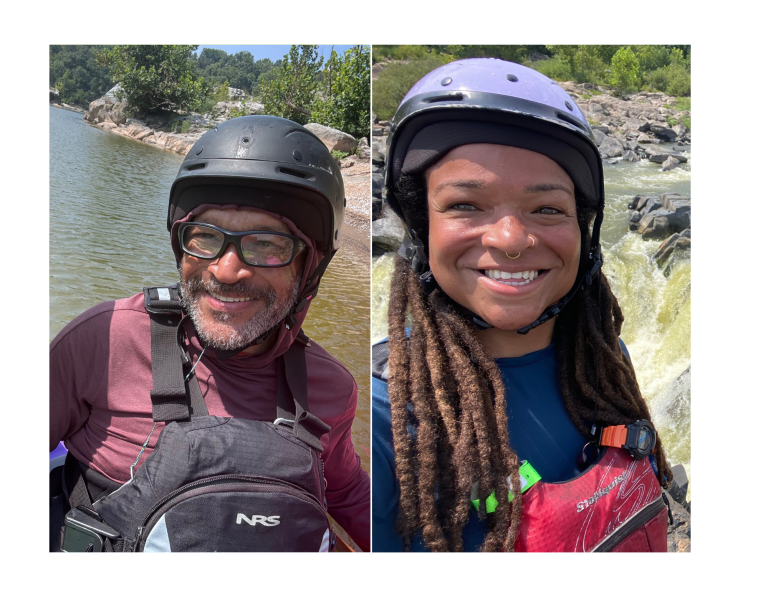
Hi everyone. Welcome back to the show. I have with me Sommerville Johnston, who was actually my guest on episode nine, which was an excellent episode. You might want to go back and listen to you. Somerville is a licensed professional counselor, somatic experiencing practitioner, wilderness guide, yoga instructor, and founder of Aspen Roots Collective. And we
wanted to come together to do an episode in the recovery stage of Hurricane Helene. We both live in Asheville and we wanted to have a conversation about mental health because some of you might have listened to my previous solo episode and all of the feels that I was expressing. And it’s nice to have a professional like Somerville.
to have a conversation with, not only for folks who live here in the area, but also for folks who don’t live in the area, but have been watching from afar. So we’re going to get into what we get into. Actually, I was going to say exactly, I don’t know what we’re going to get into, but we’re going to have an authentic conversation about, I guess, how we’re feeling and…
hopefully give some strategies and resources for folks in the affected areas and outside of the affected areas. So thanks. I’ll stop talking there. Thanks Somerville for being here. I appreciate you very much.
Sommerville
Thanks, Anna. I’m grateful to be here and see where our conversation can go. I think that we’re all looking for ways to help and the help happens at so many different levels. So even a podcast that gets, I don’t know, normalizes our experience or gets resources out to folks feels valuable right now.
Anna
Yeah. How are you navigating this discomfort zone? This very large discomfort zone.
Sommerville
Hmm. Yeah.
Well, moment to moment, I would say. So we’re what two weeks after the hurricane hit and things have changed so much in that time. And so I personally, I’ve been learning a lot. I’ve been learning a lot about my nervous system, about the way that my body responds in these circumstances and
Right now where I am is in a place of, to develop a rhythm of like going out to help others and then coming back in to tend myself. It wasn’t, I did not feel like a rhythm at the beginning, but today it’s feeling like a rhythm that is sustainable. And I’m really grateful for that. Yeah. And I’ll, think just to orient folks like,
I feel extremely fortunate. No property was damaged. My, and my loved ones are, are safe. And it’s been at home navigating, you know, disconnection from others and power out and water out and, know, over time developing systems to navigate all those pieces, powers back on. Internet’s slow, but back on water is not, but, you know, those day to day pieces are not nearly as stressful or heartbreaking as what we’re surrounded by. And that’s the piece that I think will be ongoing and a stressor and a little wound that we’re going to have to heal from collectively.
Anna
Hmm.
Yeah, I know for myself that I’ve, there was a lot of feels in terms of, you know, you’re talking about going out to help and then coming back in for self care, my word, self care, and that that is sustainable. And I think I’m seeing and hearing from folks,
And folks are calling it survivor’s guilt. I know I experienced guilt when, you know, after, you know, five days of the no water, no power, no cell service, we left for West Virginia. And I felt extremely guilty. Now that I’m back, I see that that was my process. And it was actually very helpful. And since I’ve been back, I have felt really empowered to volunteer and
go out and help. And I’m seeing even now like two weeks out, I’m seeing folks saying the same thing that they feel guilty or they’re not doing enough. And do you wanna speak to that? Yeah.
Sommerville
My gosh, please. I would love to. It’s on my mind so much. so, so first to normalize, I think at the beginning, so many decisions had to be made constantly. And so we were all struggling with like, what’s the right decision? What do I do here? While trying to figure out where do I get water? How do I manage my waste? know, how do I flush my poop? You know, what?
Anna
Yeah.
Sommerville
Decisions around, now resources are just starting to show up. Do I take advantage of those resources or are other people a priority? Like so many constant decisions needing to be made, which is exhausting. And we’ve never been here before. So we’re not oriented to, we’re not oriented. We’re completely disoriented. I think in the process of making decisions that that was a toll as
like on top of the other tolls of the disaster. And so watching folks decide like, do I stay, do I go? In my mind, there wasn’t a right or wrong answer and that we really needed to identify like, what is my nervous system need? What’s gonna help me to feel stable enough to tend self?
And then to eventually, like once basic needs are met, to eventually start to develop enough capacity to tend community. I think the guilt piece, know, guilt can have a function. Guilt can tell us what we value and it can help motivate us. But then it can get out of balance, right? So I’m trying to observe guilt as, okay, there’s a function to this feeling that’s helping me want to tend my herd, we are herd mammals. Where we can get, where the guilt becomes a problem is when it’s occupying the mind and it becomes the tiger, right? It becomes the threat in and of itself. And that drains our energy and we’re staying wired and activated in our sympathetic nervous system response and then becoming ineffective in the attempt to help. This is where
Well, I’ll pause and I’ll say after our first podcast session, I remember thinking, you know, we didn’t really touch on the idea that the discomfort zone and choosing to go into the discomfort zone is a privilege. And so, you know, here we are where we haven’t chosen it. are in it. We’re launched in it. And I’m finding that that leaning on the practices, whether that’s the practice of exercise and completing the stress response or a practice of meditation or the practice of observing myself has been a huge asset right now. And that’s due to really my privilege of being able to develop those practices in the past. And so that’s helping me observe like, the guilt mentality. But I think
I think everyone to some degree is struggling with it. And it’s really natural and it will fade over time, but it’s hard. It messes with our heads, right? And it becomes a drain in and of itself.
Anna
Yeah. Yeah, I was observing when you, I appreciate what you said about it. It can tell us what we value. And when I was seeing folks really jump into action and especially folks in the paddling community, which were amazing because they are very connected. Some folks are very connected down in the Green River Cove and then up on the Nolichucky and some folks you know, really jumped into action, which was so inspiring, right? And folks here also, there were paddlers here in town who did the same. And part of me really wished that I was that person. Like, and then I was making myself wrong for not being that type of person. And so when you’re saying like you learn a lot about yourself, it’s…
Yeah, know, learning that I process things a little more slowly. And also, here’s the other thing is that in my immediate neighborhood, you know, we did go around and check. Like if our neighborhood were flooded, and we needed to get in our boats and paddle around and save people or assist people, I should say, we would do that. And I think
That was the interesting thing is our neighborhood was okay for the most part. And we did jump into action to go check on Andrew’s Grandfather, which is when we realized that the flooding was so bad trying to get to their condo, which we did. And so it’s funny because I was comparing myself to certain people doing certain things and not
And I’m just actually realizing this as I’m talking to you now in this conversation, which is why conversation is so important. I’m realizing that, actually I did jump into action in my immediate circle and I totally didn’t even really take a moment to recognize that. I was just comparing myself to others and what I was doing didn’t seem as heroic or as like…important in the moment.
Sommerville
my gosh, totally. I think you’re again, not alone in this and I’ll have so many thoughts. One is that we live in an era of social media and our comparison mindset is just on fire, right? We have these imagined stories of what matters, what people are doing, what we see, what we think is happening out in the world. And it’s taking us out of our current moment of like where our feet are on the earth. Right? Literally what is happening with my neighbor, with my folks down the street, what is happening in my own body? And it’s this pull towards orienting outward. And so that’s one element. Another element that’s
We haven’t spoken, you and I, whole lot about this in the past, but when we’ve talked about the nervous system response, like the fight, flight, and freeze, there’s also the fawn response. And the fawn responses, you know, it is healthy in moderation because it helps us tend each other. Just like fight, flight, and freeze, they all have a function that is healthy. When we get stuck there though, if fawning, worked for us in the past is when we over-orient to others’ needs and numb ourselves to our own. So just as an example, if I were a child who lived in a home where there was some chaos of some sort, there was maybe a lot of fighting, and I felt like in order to be safe, in order to minimize danger in my nervous system, I needed to make sure that everyone else was okay then I would kind of numb what I feel in me and over tend and orient to others as a way to make sure I would be safe. That makes sense. And so, so a huge portion of the population, that’s what our like go to nervous system response is. And so when we have a disaster like this, it gets cranked on, right? And I certainly found myself doing that of where am I needed? Where do I go? Is it enough? And I mean, it felt kind of crazy making. And so I started to bring in the practices, right? Of, how do I get back in my rhythm? I also started to write down like, what did I do today? And this is the technique I’ll use with clients who will, when they orient to all that they’re not doing. So let’s start writing down, like, what did you accomplish today? What goals have you met? Even what partial goals? And so both is like a kind of record keeper to remember this time, but also for myself. I started to write down like, what did I accomplish today? What’s the, I filled up the flush buckets, right? Or I brought a meal to my neighbor or I, any number of things to help orient to what we are doing, help orient to the grain of sand we are moving. You know, I’ve had this image of an ant pile getting kicked and all the ants just like, scurrying around to repair the ant pile. That’s where we are, right? And every grain of sand we move very slowly rebuilds our home. Every, I was doing a little, I finally got to do some labor, which felt good, and I was doing some shoveling, and each shovelful felt so tiny, right? It felt so tiny in the scheme of all the mud. And each, like a room, felt so small in terms of the whole community and the community feels like one community in the whole region. But that’s the pace that we have to work with. and if we start comparing, like we’re orienting to, we’re orienting to threat instead of safety, we’re making up stories that aren’t true. And we do have to do that practice, right? Of continuing to come back to this moment, my feet on the ground.
What’s the next step?
Anna
Yeah, I think that we are all kind of butting up against each other’s nervous system, dysregulation or our habit patterns like you’re saying are our coping mechanisms. So whether that’s fight, flight, freeze or fawn. And I’ve witnessed some folks get into some conflict or there’s the fight might look like my way is the right way and you’re wrong and so there’s been a little bit of that that I’ve observed and I think it is important for us to understand that we are leaving our green of sand in the best way we know how and to have compassion for each other because it’s like you said, what I heard you say, you know, is that our, whatever our coping mechanism is, whatever our habit pattern is, or our responses is kind of on overdrive because it’s, you know, because of the, it’s a big trauma, I guess. I don’t know if that, you know, and so I think if we can be aware, like you say, observing, okay we’re all having a response. It’s not necessarily who we want to be always in the moment. And so I can have compassion for myself and for this other person.
Sommerville
Mm-hmm. Right. Right. And you know, it’s because we’re going through it together, there’s hopefully room, as you said, for compassion for ourselves and for others. And there’s also this positive aspect that you use the word trauma. When communities go through trauma together, there is a higher rate of recovery, which I think is helpful just to hold like, yes, we are in this, there’s no doing it perfectly. There’s no like being Zen in this moment. It is a practice, we are using our practices. And some people who are doing huge heroic efforts, that’s their systems are wired for it. And that’s our society benefits. But we also, and we also need the folks who are doing the small little things that don’t end up on a screen somewhere. We need all of it and we will recover better as a result if all members of the community do get to participate. Because I think for a number of reasons, we don’t feel alone in it. It is shared and just that. So much of individual therapy is undoing the aloneness of an experience. And so the fact that we have each other in this experience is a huge resource. And then I think also, I think also, well, I guess I’m kind of losing my thought there. Yeah.
Anna
Yeah, when you were saying the small grains of sand, when I was volunteering at one of the donation drop points, when we were there and we were under the tent and we had the chuck and we were kind of waiting and I was like, man, I could maybe be doing something different. And then actually one of the other volunteers was like, I think I’m going to go find something you know, see if I’m needed somewhere else, which I totally understood. And for me, I felt good there. I was enjoying the people. and I totally understood where they were coming from. And then when trucks did pull up, we needed all hands on deck. Like people were showing up with a lot of stuff and it reminded me of, again, sometimes we can get in the mindset of we need to be doing something to be useful all the time. And sometimes you need to have patience and we need to do what is required of us. And sometimes that’s sit around for 20 minutes and then be like full on for 45 minutes and then sit around for another 20 minutes. You know what I mean? And that taught me a lot.
It reminded me of like, yes, okay, know, show up, be there, be ready, because we don’t get to choose when the need is.
Sommerville
Right, absolutely. I just read a poem. I’m curious if I have it on me, but I don’t know that I do. I just read a poem in the yoga class I led Wednesday morning by David White called Start Close In. And it is so beautiful. But one of the things at the bottom, at the end, he writes, start right now, take a small step you can call your own.
Don’t follow someone else’s heroics. Be humble and focused. Start close in. Don’t mistake that other for your own. that be humble and focused. And I actually think our nervous systems respond better with that approach, right? If we’re grasping, if we’re like, where do I do the big heroic thing? Where am I needed to do the most? most likely going to burn out more quickly versus slowing and listening to like, what is my next step? What is my first step starting close in and tending as you described tending relationships while you waited for deliveries to show up and then you were needed and then you rested. Our, our organisms need to pulse. We need to expand and contract our, our lungs go out and they come in.
Right. And similarly, we, we can tend like go do the action and then we pause and we break bread together and we rest together. And it’s, cause this, you know, we’re, we’re hearing it a lot. This isn’t the sprint. It’s a marathon. Truly all of life, right? All of life is a marathon and to pace ourselves, actually helps us, I think ground more into safety then stay at a pegged level that is a fight or flight survival response.
I remember what I was going to say earlier about navigating this in community. and it has to do with grief. I just recently, actually with another of your, interview, another of your guests with Chris Grotman’s, got to facilitate, a grief weekend retreat. And it’s so odd to think of this now, cause it was just a few weeks before the hurricane and it was a group of paddlers coming together to tend their grief to honor the loss of loved ones on the river. And now here we are in this place of the river, right, has taken so many lives. We don’t know how many at this point, so much more than has been reported so far, of course. And in the wake of this, we’re
We’re in the early stages of grief, but we will be navigating grief for a very long time. And when we work with grief, I really do believe that we have to work with it together. That grief, really working with grief, honoring grief doesn’t happen in isolation. And Francis Weller’s book,
The Wild Edge of Sorrow, and he recently was interviewed by Anderson Cooper on his podcast on grief. Highly recommend his work, but it highlights the value of coming together to grieve and ritual around grief. So the fact that we are navigating it together, I think will set us up to have more group ritual, group processes that help us metabolize the experience, us grieve, help us honor the loss of that which we love.
Anna
We moved here to this area for the recreation. There’s the loss of rivers. All of the rivers have changed. And I understand that that is secondary to these, obviously, loss of life and property. And it is something that folks are navigating and will be navigating. The Green River is completely different, different rapids. Nolichucky, the same pigeon, some folks, a few folks have been out there. And so there’s, like you said, there’s many layers of grief and what folks are going through. And I have a friend whose mom is dying right now.
And I have friends who have been going through health challenges. so in addition to the hurricane hitting and the devastation, there are also other things going on in people’s lives and we just don’t, you never know what’s going on. So many layers of grief.
Sommerville
my gosh. Yes, included, and I think you’re hinting at this or pointing towards it, including the life you thought you would have. I think when we lose, whether we lose a person, a job, a business,
It’s, we thought life would look a certain way and none of it is guaranteed. And this kind of event really forces that to the forefront. We, we will also have to grieve. It’s kind of, it’s called ambiguous lost this sense of what we thought we would have and it doesn’t look the same and it’s going to be disorienting. And when it comes to natural spaces and places.
there’s grief there too, whether it’s at the level of where we go to feel awe and beauty, which I think is a huge resource that we need in our lives. So if we lost, you know, I just am sort of picturing, you know, rapids changed, but also like the riverbank scoured, right? just the, it’s like after a forest fire, that sense of loss and destruction. And yes, we know that
Life will continue. but have we lost a place to go be in awe? Additionally, this is feeling so connected to climate change. And so there’s the grief of what is the head? And this is sort of maybe an anticipatory grief, you know, especially as we saw just Milton come right in after Helene and what’s happening to our climate that might lead to more and more destruction. that’s those are also layers of the grief. And you know, I think I think it’s worth saying, and I would imagine a lot of people know this, but I like to say it anyway, grief is not something we like do, and then we’re done. Grief is ongoing. And it is a, it’s a huge part of life. Martin Prechtel has a book that’s called the smell of rain on dust and it’s grief and praise and how grief and praise that grief is a way to praise that which we love and have lost and how diving into grief together helps us to really save our life, be more attuned to and appreciative of the things that we have that we will inevitably lose.
Anna
Hmm. Yeah, that’s beautiful.
Anna
Can you say again the two books that you…
Sommerville
Yes, so Francis Weller, his book, The Wild Edge of Sorrow, and Martine Prectal, The Smell of Rain on Dust. And both are about grief. They’re different from each other. But I highly recommend both, especially Weller’s book.
Anna
Thank you for that. So what are some strategies that you can offer?
I guess to navigate grief, to navigate discomfort and for folks who are in it. And also I know that there’s folks who are listening who are far away and they feel helpless and they’ve just seen video and photos of the disaster and just, you know, know tons of people have sent help. The area is so appreciative. So do you have strategies that you can offer?
Sommerville
Yeah, definitely. That poem, Start Close In, I think that’s the strategy is to really start immediately in this moment, you know, feel your feet touching the ground. And this is for folks who are living locally and afar. Our bodies in a state of stress kick on the mind, the brain, to orient a threat to say, find the tiger. So to help bring awareness down and in into our bodies can help ground in the safety of the current moment. Right? So feeling your feet on the ground.
Identifying what resources are in your life, what supports, you know, that can be the house around you, that can be water to drink, that can be a loved one, that can be someone who sent you a text message to check in on you, that can be the dog in the room with you, it can be, you know, step outside and feel the air on your skin. But to feel in this current moment,
your body in the in the space that you’re in and identify resources and supports. That’s an immediate way to tend your nervous system. And even if you don’t live locally, you’re thinking, well, I don’t I don’t need that. Well, maybe you do. Maybe this desire, the overwhelming flooding desire, like, well, I want to be there and I want to help and I can’t do enough. Your body is also experiencing this threat.
You can look at it as vicarious trauma, secondary trauma, where maybe it’s just that you’ve looked at Instagram images for so long that your nervous system is bound up and tight. And so again, coming into this moment, putting the screen down. I think that’s one immediate tuning in. And it sounds so simple and yet to really practice it is foundational to being feeling safety in our body.
In addition, for those, well, for those here and not here, rhythm and routine. Right? So I know, I think I probably thought of you on like day three and I was like, I bet Anna’s doing her morning routine every day.
Anna
Mm-hmm. Yep, you’re speaking my language.
Anna
you that you know what, a few people have been like, are you, I bet you’re still, a few people actually reached out and were like, I bet you’re still drinking your lemon water, you know, or I hope you get to, and I was, of course I was because the routines helped to ground me. And that’s why I love to talk about the routines are not for when you’re not doing like, you know, for when you’re not doing well or when you need not only for when you need support, doing the routines all the time, then they’re just there for you when you do need the support and the structure, the groundedness, the steadiness that comes with routine, the comfort that comes with routine.
Sommerville
Right, it’s orienting. So we just have a moment where like the snow globe got flipped upside down, right? And we’re disoriented and our nervous system needs to be oriented. So when we have rhythms and routines that tell the body, they cue the body, I know what to do now. Then we’re not constantly making decisions. We’re not having to go, well, what’s next? What’s next? What’s next? So I got thrown off for a few days, but certainly while I was observing my nervous system having its running anxious mind, it’s moments of irritability and then like the tearful kind of collapse with, well, I don’t actually know if it’s collapsed. I’ve had some moments of really letting emotion run through that have felt cleansing. Maybe I’ll come back to that. After a few days, you know, even with the power out, right? Cause the power’s out, it’s staying dark till later in the morning. So.
It’s kind of easier to go, well, my body needs sleep. I’m not sleeping. So I’ll try to sleep in. Well, my wake up call is even if I try to sleep in, I’m not going to sleep well the next night either. So might as well get up in the dark, light the candle and sit and do my morning meditation and give my, my body that rhythm back. That is helpful. this is what I’m not saying is now’s the time to start a meditation practice if you’ve never had one. Maybe now is the time to start like five minutes of stretching in the morning, right? Or like what’s the low hanging fruit that you can actually do but that will give your body a little bit of rhythm so that it knows where it is in space and time. So grounding into the present moment, finding that rhythm and routine.
Sommerville
And trying to, well, you know, another strategy is really planning your day. Like I can feel that pull. I just saw a new volunteer opportunity or, gosh, my friend needs this or like planning my day in a way that I’m tending my basic needs, which for me also, I guess more than basic, I’m including exercise. It’s not, doesn’t look exactly the same but I’m definitely helping my body, healthy stress, right? I’m going for a run or something that then on the other side of I pause and slow. So that helps you complete a healthy stress response and come back down, which it means you’re giving the nervous system a rhythm of, you know, activation, settling, and then trying to not add too much to a day. So how do I simplify?
because things will inevitably pop up and I want to have the spaciousness to say yes or no to those opportunities. And then finally, I’ll go back to just talking about emotion. how do I want to say this?
Grief has many emotions. I would say grief has all emotions encompassed in it. And no matter what emotion might be coming up for you, if you can take some time to let your body feel it, if you can feel like, especially if you can do this with another person, I think that’s really valuable in this space. Letting some tears come or letting some anger arise that
that that helps us metabolize and move forward versus pressing the emotion down where it’s going to get stuck and kind of fester and come out in a different way. Yeah.
Anna
Mm-hmm.
Yeah.
Yeah. There is, go ahead. Well, I was going to say the allowing, what I hear you say in that last bit too is an allowing and that can feel scary. Like to allow emotion to come over you. And this morning I was driving through town and I saw the
Sommerville
And then, go ahead.
Anna
emergency vet. It was a Texas A emergency vet. Like they had a trailer, a response team or something like that. And I just started crying because I was like, my gosh, know, like people are coming from all over also for the pets, you know? And it was so interesting to have that response, you know, just I was like, in a way it felt kind of like weird. And then I was like, it’s fine. know, it’s, yeah, it’s like, I was just so moved by, I mean, I’ve been moved by many things. And then that the sight of that vehicle, like coming from so far away and wherever they were going, just really, yeah, move me with gratitude. So it can also come at the most interesting times, times when you’re really not not expecting it.
Sommerville
Yes, what a beautiful example. I had a similar moment learning that there was a well being drilled at the school down the street so that the kids could go back to school. Right? That sense of being incredibly moved by humanity and what is possible. There’s so much happening. And I love the word allowing. Because you’re right, it can come unexpectedly and there can be a fear, I think, that if I let myself I’ll get stuck in the feeling when actually the opposite is true. It’s when we allow the emotional process to move through us to sequence that we then don’t get stuck in it.
Yeah. And I, you know, I think too, to speak to like, what are things that we can do for folks who aren’t here, who might be feeling this pulled, like make a grand gesture. It doesn’t have to be grand, right? It can be, I mean, the mail is getting delivered, right? It can be a note to a friend. It can be, even since like spending time with photos of places in this area that you’ve been before, that you love and lighting a candle and sending energy out or prayers out or love out for the people and the places that you hold dear. Taking the time for that I think is just as valuable.
Anna
Yeah. Yeah.
There is a…
I think it’s in the Bhagavad Gita, which is a yoga text. Geez, need Michael Johnson here to back check me. Yes, thank you. In the Bhagavad Gita Hindu text, it says something, this is a kind of a basis for yoga that
Sommerville
you
It’s a Hindu, Hindu text.
Anna
I can’t remember the exact something like it’s better to live your own Dharma, your own path imperfectly than to try to live someone else’s perfectly. And I just wanted to bring that up as well because what we’ve been speaking about earlier in the conversation of we each have unique gifts, unique talents, unique contributions to the world and to our communities.
And it’s important to remember that. Like for instance, it’s important for me to remember that even though I wasn’t boots on the ground right away, jump into action, I have other things that I’m contributing. And sometimes it takes a minute. And I think again, it comes back to that patience, the allowing, the sitting with it know, grounding and allowing ourselves to take a bit of time. And I get it in life-saving situations, time is of the essence. And that’s why, like you said, some folks has nervous systems and some folks are wired for that. And I am so grateful for them, you know? And to be honest, I guess,
Sommerville
Right, right.
Anna
I don’t even know if I am or not wired for that because like I said, everyone in my neighborhood was fine. And so again, I’m making judgments or opinions based on not what is reality. And I think that’s also important for me and for others to remember.
Sommerville
Right? Yeah, I hear and I can even feel right when we go to that place of isn’t enough or comparison mindset, I feel like the grasping nature of that. feels tight, it feels contracted. And so even there, it’s like come back to feeling your connection with the earth, feeling like gravity pulling you down in a sweet way, the sweet hug of gravity that brings you into this moment, right, to try to help soften the nervous systems grasping. And then the poem that keeps coming to mind as we’re talking is with that sweet moon language by Hafiz, where he talks about like, all walk around saying with our eyes, love me, love me. And why not be the one that walks with a sweet with a moon in each eye, giving every other eye in the world what they want to hear. I’m paraphrasing the exact wording, but it’s, know, if we can soften in our own nervous systems and be in a state of safety, then we can look out and love what each other person is offering and feel so grateful for the people who, you know, jumped into that First responder mode. And we can hopefully also feel so grateful for the gifts that we each bring because they are needed. You know, yours and everyone’s, they are so needed by the community and they will come in different methods of delivery and at different times. And some will be public and a lot will be private, right? A lot will be in a moment that cannot be captured, will never be displayed.
And yet it will be a moment of connection. And that’s what we need. We need each other. We need co-regulation. We need that stability that you provide so many. and it’s, yeah, I’m feeling like a lot of gratitude right now. Just thinking about a couple of neighbors who were those steady resources from day one or are emerging now. Right. It’s, we’re going in waves.
Anna
Yeah. Or even an experience that I had yesterday or the day before volunteering. And I speak Spanish and so that can be helpful. So I was helping someone out at the donation drop point who speaks Spanish only. And she shared with me that she had lost some family members.
And I am very committed to being present with people. And so all I could do was like, I not look away, you know, and really be with her. you know, she started crying and of course, and then, you know, there’s in my, and just being with her, providing that space. And I’ve always said there’s sometimes, and I even say this in kayak instruction, is we underestimate sometimes our presence, what our presence can do or how our presence can help Sometimes we put too much stock in what words can do. we need to, I think, recognize the power of presence. That’s something I learned, or I felt.
Sommerville
Absolutely. Yeah. Yeah. Yeah, thanks for sharing that. am thinking of a mutual friend I saw last week who said, she’s like, you know, and I don’t know this research, but she said research shows that when communities like are with each other, after a disaster, they heal more quickly. And I
You know, and of course I have many loved ones who have needed to leave, right? For a short time, a long time, it’s not about right or wrong, right? And just by being here for a little time, or just by connecting in from a distance, the presence is undoing the aloneness for others. We need that.
Anna
Thanks for being present in this conversation. Somerville, I appreciate you so much.
Sommerville
Thank you, Anna. Same goes for you. I appreciate you and just a chance to come together and talk. I mean, something that I really love that you offer is you pull back the curtain to what’s happening inside, which I think can help normalize for others, their internal experience. And, you know, we’re all, all humans trying to do our best. And really when I zoom out, and I look at what’s possible, we are doing so much collectively. Yeah. Thank you for inviting me to join you in this space.