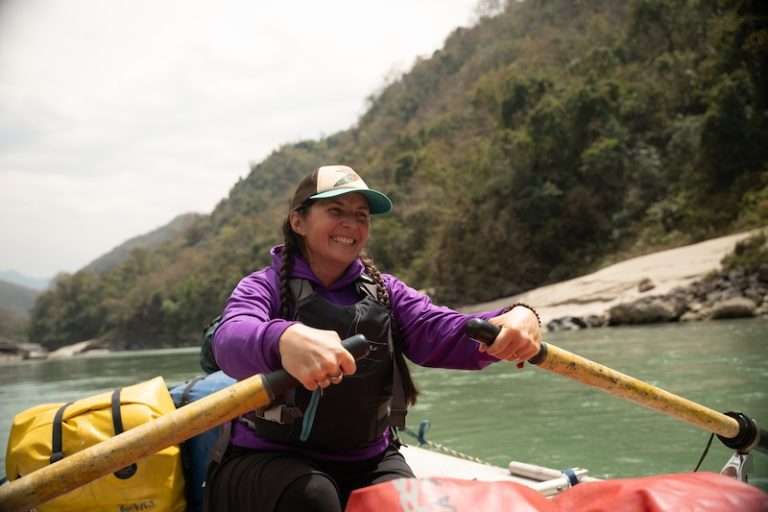
Anna Levesque
Hello, welcome back to the show. Today I’m doing something a little different. I have two guests and all of us have been kayak instructing since the 1990s. And they are colleagues of mine that I hold in very high esteem. And so I have Jordan Taylor with me. He is an instructor, trainer, educator for the American Canoe. So, well.
Jordan
Thank you.
Anna Levesque
He is an instructor trainer educator certified by the American Canoe Association. He is an instructor trainer educator in whitewater kayaking and whitewater canoeing. He’s an instructor trainer in swift water rescue, and he’s an L5 whitewater kayak instructor trainer. So I know all the American Canoe Association certifications can seem a little complex. Essentially, he is an instructor trainer educator and instructor trainer at a very high level in multi-disciplines. And he has taught for kayak schools such as NOLS, Calleva, and Madawaska Canoe Center, and currently works for himself and his company, Paddle Sports Institute. So welcome, Jordan.
Jordan
Thanks so much, Anna. It’s great to be here.
Anna Levesque
So stoked to have you. And then I have also Anne Sontheimer, a good friend of mine as well as colleague who’s been, really has taught me, you know, when I think of Anne, I think of solution oriented in the times that I’ve had an opportunity to teach with her. And she’s been teaching for the Nantahala Outdoor Center for many, many decades now.
And she is also an instructor trainer educator in whitewater kayaking, an L5 instructor trainer educator and instructor trainer. And so thanks, Anne, for being here.
Anne Sontheimer
and I’m honored to be here. Thank you for having me. This is awesome. Appreciate it.
Anna Levesque
Yeah. Excited for this conversation. I’m also an instructor trainer educator for the American Canoe Association, or not for. I’m also an instructor trainer educator certified by the American Canoe Association in whitewater kayaking and in standup paddle boarding. So how I want to frame this conversation is I always ask the first question is when I say discomfort zone, what comes up for you?
And in this conversation, I really want to frame that in the context of leadership because Anne and Jordan are both exceptional leaders. And so let’s get into it. So, Anne, I’ll start with you. When I say discomfort zone, what comes up for you?
Anne Sontheimer
Well, you mentioned leadership and it’s interesting as a leader, also the chair of the ACA kayak committee. And I, you know, I’m a trainer for our paddling or paddle squad NSE. And, know, it’s intimidating being a leader. There’s a lot of expectations that we have on ourselves. So I say my discomfort zone would be trying to put those expectations in an area where they can more thrive than make me uncomfortable.
And I find that pretty challenging, but I think we all kind of navigate that and look for pathways to help other people thrive as well. yeah, that expectation area is pretty challenging.
Anna Levesque
I hear you. you talking about like expectations for yourself versus expectations or expectations that other people have of you?
Anne Sontheimer
Good question. I would say both. I think sometimes when you feel like there’s expectations of, for example, myself, sometimes I think that might be a situation where I might be projecting that of expectations I have my students. There’s like crossover there. So yeah, it would be the expectation to perform, but sometimes I feel like that is something that you’re projecting on other people as well. So it’s interesting to reflect on that and wonder if there’s that self-talk that’s, yeah, that we’re trying to figure out how to put in a place that we can navigate.
Anna Levesque
Yeah, I can relate with that because when other people showing up with expectations of who they think I am or what I would be stoked on or not stoked on or how I would approach teaching is really interesting. And I like to set that framework to have that conversation kind of right off the bat. So yeah, that’s a good one. What about you, Jordan?
Jordan
The first thing it made me think of was a moment in a rescue course I taught this last weekend, where we were practicing some tethered rescues and we’d done a few rounds and it’s like, okay, like just to highlight this person who you’re practicing swimming out to to retrieve is being very kind to you and humans are actually the most unpredictable part of this system. you know, when you’re using this out in the world, just be aware this person could try and climb on top of you, et cetera, et cetera.
So I just thinking about how both the joy and the stress of leadership is that humans are the most unpredictable part of anything that humans do together. that whatever my plan is, the best experiences I’ve had as a leader or as an active follower come from there being something that isn’t going according to plan where we need to stop treating people as like, if we input the stimulus, we will see this reaction and to start being like, okay, but what do these people really need now? Or what do I really need now that I am here and can see what things actually are instead of maybe as the two of you were talking about what I expected them to be.
Anna Levesque
Yeah. Yeah, that’s, yeah. Thanks for sharing. Absolutely. Yeah. think, you know, leadership is really about being present, self-aware for me. This is for me and being able to, like you said, do what the moment and the group or the person requires in that moment rather than
Anne Sontheimer
It’s beautiful.
Anna Levesque
I think that sometimes we can think of leaders as, they have it all figured out. They know all the answers. it’s really, leadership really shines when, like you said, things aren’t going according to plan A and you have the ability to shift into plan B, C, D, or E, F.
Yeah, it’s also, Anne, what you were saying, like tempering, you know, when I was a newer instructor, I didn’t have that unconscious competence. And so was more like sticking to a script. Like, this is what I teach. This is like to teach kayaking, this is what I need to teach. And there wasn’t a whole lot of awareness of like, wow, my person really isn’t ready for that. So we need to like do these other things, whether it’s like swimming around in the water first or spending more time on the lake or class two or whatnot.
Anne Sontheimer
And I would just, well, I just, the idea again that comes to me is, and I wrote some words down that stood out to me, that idea of being curious, improvising and adapting and how those areas are really the beauty and the human condition. And that’s where people thrive and being relevant in that moment or those situations is what we try to foster.
Jordan
I do love, go ahead, Anne, please.
I love the image of you taking people swimming, That seems like a solid move.
Anna Levesque
Yeah, absolutely. Especially for me coming from, I came from an athlete background where I competed at the highest level of competition in freestyle and extreme racing. so for me at that level, sometimes it’s really like education is not necessarily my background, right? The competition training for competition and was my background. so there were things that I took for granted and I can actually remember presenting at Canoe Copia, one of the big consumer shows for paddle sports in the country. And I would give a talk about like kayaking 101 and this was towards recreational boaters, right? And I would go over like super basics, how to lift and carry your boat, how to load like strategies for loading your boat for getting in and out of your boat. And I remember thinking, this stuff is so boring. Like, I wonder if this is gonna be even interesting. And like hundreds of people showed up. And not only that, but year after year. And that really taught me like the importance of basics, basics, basics. And don’t ever as a leader make assumptions about what people know, don’t know what they want to learn or
You know what I mean? Is that relatable?
Jordan
It is. It is. Yeah, I think the one school that I was at for a while, we talked about the concept of comfort will lead to control. And so what I hear you talking about is like, here’s how you’re going to sit in this thing. Here’s how you’re going to get it off your car. Like, here’s how to be comfortable at the beginning of your day, at the beginning of your learning so that we can stretch later.
Anne Sontheimer
And to add to that, just you look into your students for takeaways, like what works for them, or again, people you’re with. Sometimes I high lows, I do that a lot with the family. What was the best part of your day? And where was an area that was complicated to navigate and just getting, making them feel relevant that they’re part of the process of being in the team.
Anna Levesque
Yeah, absolutely. Because being a leader is not about like, think of sometimes it can, when the majority of us maybe think of a leader, we think of a person out in front, leading like in charge. Being a leader is, being an effective leader, I think requires a lot of collaboration and connection with the group and even, developing your skills at leading from behind, empowering others to lead within your group or your context.
Anna Levesque
Any thoughts on that one?
Jordan
Yeah, I think there’s a favorite quote of mine is from an author, Bell Hooks, which is a pen name and I’ve never heard what her actual real name is. But she wrote about, and I’m paraphrasing about the idea that as educators, we can’t expect lots of like vulnerability and open sharing and risk taking from our students if we’re not also like showing that we are willing to do that and are doing that. And sometimes when I’m, especially if I’m like training instructors, it’s like, well, how, how like, messy do I want to seem? How vulnerable do I want to be? And the number of times that I’ve said, I’m going to do this a different way, bear with me, it might be awkward. The number of times that I’ve gotten feedback of like, that was like really helpful for me to hear that you’re trying something new in this space for me to try something new in this space.
And so in the end, the product of that, I tried something new and different. I didn’t necessarily love it or maybe it went great. But my hope is the product of that is all these other people are like, cool, well I can try the thing that feels new to me. And so then the product is this thing that isn’t about what I had to offer so much as opening the door to the newness of it for everyone.
Those are the good days.
Anna Levesque
Yeah, absolutely. That vulnerability, which, you know, what I hear in this conversation is as leaders, also, you know, we talk about the discomfort zone is the growth area and there needs to be a comfort zone, a level of comfort within that growth area because folks don’t learn if they’re in survival mode.
None of us learn if we’re in survival mode. so creating that comfort, that trust, that connection, that collaboration, that vulnerability provides that comfort within the discomfort zone of pushing limits. Here we’re talking about leadership and instruction on the water. And then also that…
that discomfort as a leader of being vulnerable. And like you said, it’s uncomfortable. Like how messy do I want to be, or want to look? And I’ve had similar situations when things, when I’m just like, yeah, this isn’t going as planned. Let’s take a moment and pivot. People are really grateful for that. And instead of just pushing through, well, this is what was planned and I’m not going to change because of whatever, you know?
Anne Sontheimer
And just to add to that, that’s why reflection is so powerful too. mean, again, those moments you can take the opportunity at the end of the day or at the end of that moment to, you know, depending on timing, on reflecting on again, what you appreciate about what happened and maybe something you tweak, but including the group in that process and maybe having them write it down later in a journal or again, just keeping those moments, you know, and reflecting and trying to build on the reflection part as well.
Jordan
Nice.
One of my favorite super pithy mini debriefs or pause for reflection you’re highlighting, just, I’ll ask, would everybody be comfortable with playing around of guess what Jordan was thinking? What was the point of what we were just doing? Cool, and what are you thinking? What are you actually taking away? It’s like, cool, you’re taking that away. Let’s explore that a little further.
But also if they’re taking things away that are like, I actually don’t know what the point of this is. It’s like, okay, let me rewind. Let me be transparent about what my aims were because clearly I wasn’t. And that’s all responding to this idea of pausing to reflect, pausing to understand what your impact is related to your intention.
Anna Levesque
Yeah, the debrief is, I love how Lily Otoo, who worked for the American Canoe Association in recent years, she put together a how to give and receive feedback sessions. And I really appreciated her giving, so giving feedback, the four steps I think were get a micro yes, meaning ask for consent. I think that’s one of the worst things about… I don’t know if you… I’ve definitely experienced people offering an unsolicited feedback to me and it sucks. And I will admit I’ve been that person in the past giving unsolicited feedback. And people didn’t… I might’ve had good intentions, but…
Again, we have to, and that’s another one of her steps. So let me just go through them. was get a micro yes. I think it was stick to a data point, meaning it’s about the situation or the stroke or the, you know, this what’s going on, not about the person. It’s about, you know, the data point and then assess your, or be aware of your impact just cause you have good intentions doesn’t mean that the person’s going to hear you. And also that your,
Feedback should actually have an intention behind it, not just feedback for the sake of hearing you talk or feeding your own ego. And then end with a question, which I think is great. is micro yes, data point, impact, and end with a question, which I thought was so great. And I think that’s been helpful for me.
I definitely, I feel as a leader and we fall into our systems, right? We fall into our habit patterns just like as humans, we have habit patterns. And I think it was helpful for me to reflect on that process.
Jordan
That makes me want to ask the two of you a question. Does now feel like an okay time for that? I’m super curious thinking about the structure for feedback of Lilies that you just recapped, Anna. Super curious to hear from the two of you about how does your structure or style of feedback change and evolve based on context. And like one example that I’m thinking of, I’m running this Swiftwater instructor course this coming weekend and someone is co-teaching it as part of becoming the instructor trainer and they’re a former paratrooper and they’re just like whatever I’m doing wrong you just got to tell me right away. It’s like that’s not how I have like I’ve spent years not cutting to the chase on like here’s the one thing you need to change like here’s all these things I want you to keep the same and so I’m sitting with this idea that I might
And there are a number of former military people taking the course, sitting with the idea I try and adapt what I normally do to meet what they say they want. But I’m still, I have this belief that humans value being seen for the specific things are doing well. And I’m just curious how all of that resonates for the two of you and how your feedback style might change across different populations or cultural contexts.
Anna Levesque
Hmm. Anne, do you want to go, you want to go first?
Anne Sontheimer
Yeah, yeah. Again, my nature is to improvise a bit. I looked again, try to look to that person for, you know, what they thought went really well. again, kind of getting their sense of a self-assessment to some degree of that helps. And then again, depending on the skill or the situation.
You know what worked well and some things that, know, again, I would like to see happen to some degree as far as managing risk or supporting somebody’s learning by encouraging, giving them one thing to try or setting up a self discovery moment, to try to illustrate whatever, you know, again, they’re kind of accomplished. Or if again, you’re coaching an instructor trainer, kind of setting up framework. I don’t know if that really helps it’s getting kind of out there, but,
Jordan
I do find self-assessments incredibly valuable for their own sake, but also it’s like really telling me, you know, what is this person aware of or not aware of and what they’re doing. So I like that a lot.
Anna Levesque
Yeah, absolutely, self-assessment is key. I had to like train myself to not jump in actually. That was my process and to, you know, have someone self-assess first. And I actually do cut to the chase though with my feedback and I’m a big believer in acknowledgement, Jordan. So like what you’re saying, throughout the course, you know, and I don’t just wait for like feedback loops necessarily, but like I’m acknowledging people for not only what they’re doing, but hopefully like who they are. And while also just cutting to the chase of try this, you know, or I see this is happening, you know, try this other thing or, know, what helps me is this or whatever it is, I do still find myself sometimes if I get really excited, I’ll be like, don’t do that. And I’ll be like, okay, I mean, try this, get that, whether it’s the paddle a little more vertical or whatever it is. So yeah, I’ve also worked with veterans and they do love the direct feedback.
And I don’t think that, you know, there’s this, when I first, you know, started with the ACA, there was this thing about the crap sandwich, say something nice or positive, something negative, something positive. And I just don’t like contrived stuff like that because I feel like it takes away from…
If I do say something like that, it’s because it’s really in the moment and I’m connecting with the person and that’s how it comes out. I don’t like to have contrived, like, it’s good to have strategies, but then you’ve got to be with the person and with the situation fully present. I think that’s the most beneficial feedback.
Jordan
Right. I think one of the ways that I’ve had good success without a contrived structure, like affirming, affirming, affirming, affirming, try this is like, when I sometimes, and this could be like a limitation on how I’m doing this, but if I say, like a little bit straighter arm on your sweep stroke, you’ll get a little more leverage on the pivot point of your boat. Something else will change too. And so sometimes I’m like, this the same, this the same, this the same, try this. And that’s like low key affirmation, but also like really trying to focus the shift or the change. At the instructor trainer level, that gets more nuanced and complex because it’s not a physical skill in space in the same way.
Anna Levesque
Right. Yeah, I like the distinction because we’re talking about…
I mean, we hold as instructor trainer educators, we hold three levels, right? There’s the instructor, is coaching, teaching skills and mindset in my mind. And then training instructor, then there’s the instructor trainer who is training instructors, right? And so there’s that.
job and that is, you know, guess the way I see it is training instructor candidates on kind of like the stuff we’re doing, how to have feedback loops and be present. And then there’s like the structure, the container of the course and how to create a session and how to
have fun. For me, it’s a lot of like how to connect with people and build trust. And then there’s the instructor trainer educator, which is mentoring instructor trainers. And to me, that is the most difficult. In my personal experience, instructor, yeah, mentoring instructor trainers to where you’re…
Yeah, it’s a lot about leadership and holding space and empowering someone else to be the leader and step up while maintaining standards. And yeah, I don’t know what y’all want to say about that. It’s a lot.
Anne Sontheimer
It is. I think everybody had, like you mentioned with the style and technique and be, you know, we all have what we know. And again, these folks, you know, at different levels, especially the IT level, you’re trying to be okay with them managing not only, you know, the team, but they, you know, trying to manage the risk to the students and the environment so that there’s a good outcome. There’s an outcome. And again, you got to be okay with the outcome.
Again, managing the risk part is going to be what it’s going to be and letting the students maybe provide the insights too with that environment so that IT can again, not only get some feedback from us as ITEs, but the students are involved in giving that IT good perspective as well as what it’s like to be a student. And also they’re out there to have a good time as well. And that’s the big picture is it’s a good time managing risk with the goals that everybody’s looking for, whether it’s the students or for that matter, the IT has goals as well to pass. I think, you know, keeping space for that it’s an evolution that we build wisdom. sometimes the, the idea of learning is a process and it’s not pass fail. It’s, building on, I mean, there is a past part of it, but it’s interesting how, when we get in the certification level, it gets more complicated navigating the gray spaces of, you, there’s, need more time to develop or, know, there’s more wisdom that you need to develop. here’s why.
Trying to again build that into it. Does that resonate a little bit?
Jordan
Sure does, yeah.
Anna Levesque
yeah.
Anne Sontheimer
Yeah, that’s an interesting area. That’s an uncomfortable zone sometimes for all of us, for me at least.
Jordan
Yeah, I think as an educator broadly, not necessarily an instructor trainer educator, but like, just as a person who loves being around people learning, it’s like, I don’t want you to show me what you know, I want you to show me that you can grow. That’s a phrase that came out of some of my classroom training. And but when there’s a credential at stake, a series of criteria that someone needs to show me that they can a dress effectively. Trying to wear both hats at the same time can be awkward and messy. ultimately, like, I just don’t like disappointing people, but part of the role of assessing an instructor trainer ultimately may very well be disappointing someone’s expectations about their timeline. And I think you said it really simply, like, you just need more time. You need to do this more times, you more repetition.
Anna Levesque
Yeah, and that points to having difficult conversations is definitely something that an instructor trainer and an instructor trainer educator need to have growth in and get skilled at because there’s always going to be folks in certification classes that don’t meet the criteria and having that conversation is so important. So how do you all approach difficult conversations?
Jordan
Do want to start, Anne? I have a couple things I could say.
Anne Sontheimer
I Again, trying to get them to self-assess and hopefully the conversation I have with them is that my feedback to where they’re at and how it’s going is going to align somewhat with their self-assessment. And if not, trying to clarify the expectations and what needs to happen and kind of where. And trying to help support them and tell, you know, address that they can be where they’re at. Like again, that expectation part, like this is where you’re at. And in order to to, grow or to get a higher level or to get the certification, you need, you need some more time to develop this, these skills with repetition.
Jordan
I also use self-assessment a lot, especially self-assessment of video, if I’m talking about like, your paddling skills up to standards? Here’s you doing that stroke, here’s me doing that stroke. But the first thing that bubbled up that I feel like is actually really relevant is a kind of self-awareness piece that…
reminded me of something you said at the very outset, It’s this idea of like, that in difficult conversations, I’m trying to adhere to some of the principles of psychological first aid. And one of the first principles is like calm yourself first, if you’re trying to offer someone else a way to like deescalate an upsetting situation. And so one of the first cues I have that I’m likely to need to have a difficult conversation is that I get anxious or antsy and so then it’s like, what’s going on with that? And then there’s a way that another concept of psychological first aid is like to create connection and that can be with me or often I’m able to make people feel more comfortable with an assessment level that’s lower than they thought, for example, by saying, look, like if you were hired at this paddling school, like this is the stretch of river that
Europe would be empowered to instruct that with the certification we’re talking about. Not everybody needs to be taking someone down Brown’s Canyon in their first season of instruction. And so then it’s like, I actually belong in a place. And so those are the two things that I think about a lot is like, am I coming into those conversations with the kind of calm and good feeling that I want them to come out of it with? And can I create a sense of belonging for them wherever they leave the conversation?
Anna Levesque
Yeah, yeah, I love that. Yeah, I like to think of before going into a conversation, what do I want this person to leave with at the end of this conversation? And if I hold that in my mind, and so if the conversation starts going off the rails of that, I have a benchmark to bring it back. so, and I think that what we’re pointing to too, and especially in like Whitewater, which is…
You know, an extreme sport, is, and the culture, the paradigm that has existed for decades is, you know, that the harder, the better, you know, like that if you are, in right now, our certification levels are tied to venue. So if you’re L four, it means you can teach in white in class three. If you’re L five, you can teach in class four.
And that is kind of a…
You know, there are excellent instructors at L2 that are just as good as L4, L5 instructors. They’re just not in that venue, right? So no, it’s true. Their kayaking skill or comfort or canoeing or whatever, stand-up paddle boarding is not up to the comfort of being able to teach and manage risk. However, they are…
just as good, if not better, educators. And I think that unfortunately, that this idea that the higher the level, the better I am, kind of does a disservice to where, you know, like in stand up paddle boarding, I’m really stoked to be an L2 instructor, trainer, educator. I love teaching L2 and I’m a good, you know,
L2 instructor and I get a lot of joy out of it. I actually have thought about pursuing higher levels, but then I’m just not that interested. It has nothing to do with like, am I a good educator or not? And the same thing actually, I’m a level five whitewater kayak instructor, but not IT because I just don’t have a desire to become an IT or an ITE at L5. I already have…
you know, enough going on. so it, you know, for folks to hone in on, I guess what I’m saying is all of us as leaders in, in cert, if you’re in the instructor certification realm, I think we need to acknowledge more and think differently about what
You maybe even take away the like, is good or better because it’s harder, you know, to, I guess, normalize being an excellent instructor, instructor trainer, instructor trainer, educator at any level.
Jordan
We can.
Yeah. One of the things I’ve really been appreciating about the rescue curriculum is that the different levels of instruction aren’t tied to specific venues. more like, like it’s pretty easy to point to the level four and level five curriculum and the ACA American Cognitive Association’s rescue skills and be like, as the number goes up, the frequency of use goes down. So like, why do you want these things that are less commonly used?
Like, why is that important to you? And that usually resets people to be like, it’s not better. Like, I can be a great instructor teaching the skills that we use 95 % of the time. And yeah, totally.
Anna Levesque
Right, which will help a lot of people. Yeah.
Anne Sontheimer
And it kind of makes me think again with the students, know.
It’s really about being in the place that you thrive in and you feel relevant in. as instructors again, or instructor trainers, or, again, just trying to help people calibrate their expectations about what the outcome is and to really like, like you say, it’s about growing what Jordan you mentioned and trying to keep that prevalent in people’s mindsets, whether it’s the students or the, ITs that it’s about collaborating and growing and
supporting each other through this adventure, or the certification, or just being on the water, and how that’s the goal to some degree. again, the certification is part of the process, but being intentional about being a team in the moment and supporting and growing.
Jordan
And something that makes me think of it, I really appreciate that perspective. I borrowed this idea from somebody and I wish I remembered too so I could credit them. But someone once said to me, when you’re taking an instructor course, and this was about me and taking my NOLS instructor course, it doesn’t, it’s not gonna like crush your chances to get work if you swim on your instructor course, unless you let that swim like ruin your day.
Like, and if you’re swimming lots and lots, that’s a problem. but, if you, like this idea of like when, as an instructor or a trainer or whoever, when we mess up, like, is that going to ruin our day? Is that going to ruin our client’s day? and, and yeah. And so I think this idea that came up a few minutes back of like, well, where is your joy? If you’re in, if you’re in terrain or in contexts in which you’re already experiencing joy, then the swim is going to be joyful too.
And so then everybody around you is going to be more likely to have fun. If you’re stressed, that vibe just seeps outward no matter how much you try and contain it.
Anna Levesque
Yeah. You know, it’s, remember when I was getting, it was my co-teach for my, standup paddleboard instructor trainer process. And, we had Buies set up and I was teaching and then demoing like pivot turns. And so I went out and, I was like, okay, watch me. Here’s, here’s the drill that we’re practicing.
And I totally biffed it. Like I didn’t fall off, but I did. Like it was just not great. It was not up to L2 SUP standards pivot turns. And I came back in and I was already an instructor trainer. So I already had some experience in this, but I came back in and I said, okay, that was terrible. Let me try that again. And I was kind of laughing. And so then I went back out and
and did it very well. I did a nice demo, came back. And my instructor trainer educator at the time in our debrief, he said that that made all the difference for him in wanting to check me out. The fact that I totally biffed it and was able to just come back and be lighthearted about it and then be like reset and go back out and do it again, right? And have a good run. So to your point of
You know, not letting it ruin your day, not letting it ruin your confidence, not putting that pressure on yourself to have to have it again, perfect or know all the answers all the time. You know, if you make a mistake, then it, you know, clean it up. And that is very powerful and it’s very powerful role modeling because who of us have not messed up a demo? Everyone, all the time, you know? So.
Anne Sontheimer
Well, that’s how we learn. mean, again, the idea that it’s mistakes or opportunities and you want to create pathways for people to grow.
Anna Levesque
Exactly.
I am curious, so I think we’re at 40. So instead of rapid fire, I would like to hear maybe your…
Anna Levesque
Let me see. Actually, no, I do want to do rapid fire.
Okay. I want to do rapid fire in this context. Okay. So, all right. And rapid fire is designed to have like a one, like short answers, one word, one sentence, sometimes. Yeah. So keep that in mind. So, right. It’s getting you out of your comfort zone, Jordan. Okay.
Jordan
That’s my kryptonite, by the way.
Anne Sontheimer
I love it though, I love it.
Jordan
Thanks for that.
Anna Levesque (40:47.384)
So when it comes to leading on the water, what’s a morning ritual that sets you up for success?
Jordan
playlist.
Anna Levesque
Playlist, nice. What’s on your playlist, Jordan?
Jordan
I’m not sure how to describe it, but one of my one song that puts me in the right vibe is Chapel Roan’s Pink Pony Club.
Anna Levesque
yeah. Love it. Okay. What about you, Anne?
Anne Sontheimer
I guess for me, just again with the team I’m with, just remembering what their goals are. mean, again, I just kind of go through my people, my teams in my head and think about where they’re at and what I can do for them.
Anna Levesque
Great. Okay, again, in the context of leadership, what’s a non-negotiable self-care practice?
Anne Sontheimer
I guess I would say self-care is just being proactive and productive and positive, just being a good mindset.
Anna Levesque
How do you get yourself into a good mindset,
Anne Sontheimer
That’s a good question. I’m not sure I can answer that. Just thinking and trying to stay in good thoughts. Again, just a thinking, good thought process.
Anna Levesque
Okay, got it. What about you, Jordan?
Jordan
Caloric intake is a really easy one for me. So like five small meals a day, this works way better for me. But like a little more theoretical might be like frequent communication, frequent check-ins, frequent feedback.
Anna Levesque
Hmm.
Mm. Got it.
So I have a whole morning ritual every morning morning routine. So that’s always the same. And my non-negotiable self-care practice is taking moments for myself throughout the training. It can be as easy as like, I just go to the bathroom or I take a walk or, you know, I give everyone some time and just take some deep breaths, check in with myself, how am I doing? Again, relating back to you, Anne, of staying in the positive, staying in the… For me, I guess it would be staying grounded.
Anne Sontheimer
That’s good. I agree. That’s great.
Anna Levesque
Yeah. Okay, is there a leadership book or talk that you would recommend? That you love?
Jordan
Referenced one earlier, so it’s the first one that pops up, Bell Hook’s Teaching to Transgress.
Anne Sontheimer
I do lot of podcasts. mean, again, it’s been fun to listen to your podcasts. You know, again, I find myself, but I don’t have one that I would recommend or remember. I mean, that’s not. what I got.
Anna Levesque
That’s okay.
Yeah, I like Adam Grant. I like his book, Think Again, and I like his book, Hidden Potential. I think they’re great, and I’m sure there’s others, but those are the ones that stand out, because he’s an organizational psychologist, so he has a lot to say about leadership and uncovering your own potential and other people’s potential.
Anna Levesque
Okay, what do people get wrong about you? What do you think your students or clients get wrong about you?
Anne Sontheimer
I guess that I’m fearless maybe? I don’t know. That would be one. People think… Yeah.
Anna Levesque
Mm. Mm-hmm.
Jordan
People think you’re fearless.
Anne Sontheimer
I mean, sometimes to some degree, I don’t know.
Anne Sontheimer
I am little fearful at times. Mostly of people than of actually doing stuff. I’m really powerful at doing things. It’s more people.
Jordan
That’s amazing. That’s relatable on several levels. Yeah.
Anna Levesque
Right.
Well, that relates back to where the conversation originally started with Jordan saying that humans are the least predictable, right? Yeah.
Anne Sontheimer
Mm-hmm. Mm-hmm. Mm-hmm.
Jordan
least predictable part of Whitewater. Well, I wasn’t, I’m not sure how much to expand on this. I use he and they pronouns. And I can talk about more about why that is. But it’s super easy for folks to see me more in the he end of things for reasons that I totally understand. And I am rarely hurt when someone chooses he, but I think the most common kind of thing that comes up with that is people are like, hey, man, blah, blah, blah, blah, or, you’re a good man. And it’s like, that shirt doesn’t quite fit me. And so I think there’s ways that I’ve been able to signal to folks to question that or have curiosity about it some of the time, but not most of the time.
Anna Levesque
Right.
Mm-hmm. Yeah. Yeah. Thanks for sharing.
Anne Sontheimer
Mm-hmm.
Anna Levesque
I asked that question, now I’m like, I’m not sure. I feel like nothing’s come, I’m drawing a blank except for, I think that sometimes people think that I wanna talk about kayaking all the time. And I really don’t wanna talk about kayaking all the time. Like in terms, I wanna talk about people, I wanna like get to know people, connect. And a lot of times I’m less interested in what’s going on like with the top paddlers and like this move or that move, you know. I do like that sometimes, but Yeah, and I know it’s a point people want to connect with me. And so like, that’s the point of connection, right, is kayaking. And just sometimes I just want to be like, yeah, let’s just talk about something else, like what’s going on in your life or, you know, kind of thing. Yeah.
Jordan
Yeah, nice.
Anna Levesque
Hard moves in easy water or flooding?
Jordan
Hard Moves and Easy Water.
Anne Sontheimer
I tend to do both. I’ve definitely been skiing, mountain biking, and kayaking where I’m like, I don’t know what’s going to happen, but I’m going to go find out and improvise and adapt.
Anna Levesque
Yes, totally.
Anne Sontheimer
So I have mixed feelings, know, like on a Zambezi, we were out there last year and I was like, I don’t know, I’ve heard of this river and I’m just gonna see what happens, you know?
Anna Levesque
Yep. Yep. Yeah, I like the hard moves in easy water so that I can do the flooding piece once in a while, you know, because it’s helpful when your skills are up to like jump into something. That’s a bit scary.
Anne Sontheimer
I would say I’m with you on that, Anna.
Jordan
The other easy answer to that for me is like, just depends who I’m with more than anything else. Yep.
Anna Levesque
Sure.
Anna Levesque
Yeah.
Okay, what’s one word that describes your comfort zone?
Anne Sontheimer
I would say curiosity, if that can be applied to that.
Jordan
Routine.
Anna Levesque
Mm-hmm. Mine is baked goods.
Anne Sontheimer
I can relate to that.
Anna Levesque
Yeah. It’s just such a comforting feeling. Hazelnut croissant. Anyway. Yeah. Sure.
Jordan
Is it okay to give a second answer? This is really out there, think. I traveled in Japan in 2023 and one of my favorite moments was visiting a temple in Kyoto where they make their own flavor or fragrance of incense. And I got a thousand sticks of that. And that’s enough for like one for every day for almost three years. And yeah, like while that particular fragrance is burning.
Anna Levesque
Hmm.
wow.
Jordan
I’m like a different kind of chill than any other time.
Anna Levesque
Nice. That’s awesome.
Okay, freedom through discipline or I do what I want.
Anne Sontheimer
I tend to be a do-what-I-want person.
Anna Levesque
Yeah.
Jordan
I think I like to think of myself as freedom through discipline, but I’m probably just doing what I want. A little bit of discipline is what I want right now. That doesn’t feel so good anymore. I’m going to do something else.
Anna Levesque
Right.
Anna Levesque (50:24.334)
Yeah. I am a freedom through discipline so I can do what I want person. Like there’s the, yeah, that’s my answer. I can do what I want within the context of discipline, which works for me. Yeah, like for instance, like what I want, like if I ate baked goods all the time, for instance.
Like I would not feel comfortable in my body anymore and I would probably feel lethargic and it wouldn’t align with like my goals. So having the discipline to, you know, not to eat healthy most of the time and enjoy the baked goods sometimes, maybe more than sometimes at times in the year.
Right? It helps me to align with my goals. And then I feel like I can do what I want. Like what I want to do, kayaking, skiing, surfing, know, mountain biking, traveling, all that good stuff.
Anne Sontheimer
The discipline helps support that. Yeah, you need the discipline to be able to do what you want.
Anna Levesque
Okay, last question. In one word, what do you hope your legacy will be?
Anne Sontheimer
Get outside, do stuff.
Anna Levesque
Hmm. Mm-hmm.
Jordan
That’s a hard one.
Anne Sontheimer
Hmm.
Anna Levesque
I know.
Anna Levesque
And just because you say it here on this podcast doesn’t mean you can’t change it later. So much pressure, I know.
Jordan
Okay, Pressures off a little bit then.
I think what strikes me in this moment is how…
how contentious social media has gotten, how contentious politics has gotten, how divisive things feel to me. And it’s my hope that my legacy is, even if that increases or continues, that I’ve…
made spaces and helped people learn how to make spaces where the river can wash a lot of that away and we can still meet each other as humans and find joy and curiosity in things bigger than us that are moving under us.
Anna Levesque
Mm-hmm. It’s a lot more than one word, but it’s good. It’s good. I know. No, none of us, we’re all failing on the one word because I’m about to say, my words would be empowerment and changing conversations.
Jordan
Yeah. So sorry. I forgot that there was one word requirement on that.
That’s much better on the one word. All played.
Anne Sontheimer
I like both of them. It’s awesome.
Anna Levesque
And they could change tomorrow, everyone, just so you all know. We’re not holding people to a moment in time. So it’s just a reflection. OK, any last words on leadership? And of course, yeah, any last words on leadership?
Anne Sontheimer
I mean, I would just say everybody’s a leader in their own way. And again, the idea that you can empower other people to be want to be in your team and just to really encourage folks to collaborate, be empathetic and, you know, be curious because it’s really joyful place to be.
Jordan
Yeah, I was going to emphasize curiosity also. Like how might this go? How might this go differently? What would you do here? Those are all really engaging questions in where I’m at as a leader right now.
Anna Levesque
Yeah, I love it. And I’ll just build on what you both said that, you know, it’s, I always encourage folks to change limiting statements to questions. So I can’t afford that turns into how could I afford that? Or I’m not confident enough to do that could turn into, well, how could I become more confident? How could I become confident enough to do that? Right. And so I think, yeah.
What y’all are saying is really powerful. Curiosity, asking questions is a path to growth and learning and helping others grow and learn. Same thing. Don’t put your, if you are an instructor, don’t put your students in a box of like, you know, if you decide that, that’s just how they are. And then you listen to them from that context, they can never change. So instead asking questions and being like, how can I support this person? So anyway, I think the curiosity is really powerful.
And I want to invite any of you who might be interested in becoming an instructor trainer to, or if you are an instructor who wants to up their game, honestly, you want to, I want to invite you to come take our instructor trainer development workshop that Jordan, Anne and I are teaching in May in Western North Carolina. I’ll put the link in the show notes for y’all. Would love to see y’all and you would love to have you join and learn and grow with us. So thanks for being here, Anne and Jordan. I look forward to that workshop in May. It’ll be really fun.
Jordan
Me too, I’m super stoked and Anna, thanks so much for having us on your podcast.
Anne Sontheimer
Yeah, I know. And Jordan, thanks for being on the team. Good to see everybody.
Anna Levesque
Yeah, it’s a good team. Come join our team.