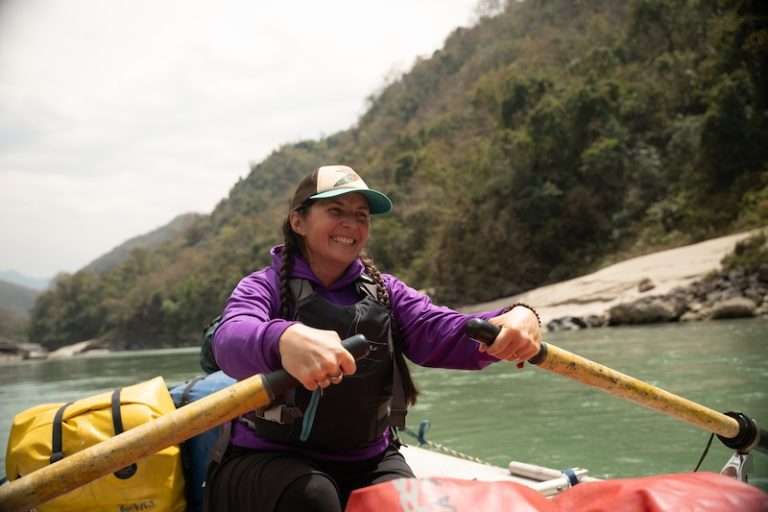
Anna Levesque
it as audio. So, all right. My guest today, Todd Wells, grew up in the Columbia River Gorge and early on was mentored by some legendary and incredibly supportive paddlers. Over the last two decades, he’s participated in whitewater kayaking expeditions around the world, competed in numerous competitions and races, and has been fortunate enough to see some of our planet’s most spectacular river corridors.
Producing films like For the Love, Zamora, and the Coast Mountain Chronicles series, and contributing to others, including Frontier Firsts, Tears of Shiva, and the Patagonia Triple Crown has been a big part of his career. Whether through film, writing, photography, or speaking engagements, he is passionate about sharing and consuming adventure stories. Professionally, he is Dagger Kayak’s team and sports marketing manager and a builder.
He’s contributed to numerous volunteer initiatives and is currently on the board of the White Salmon Boat Library and co-organizes the Little White Salmon Race. Thanks for being here, Todd. I’m excited for this conversation.
Todd Wells
Yeah, thanks for having me, Anna.
Anna Levesque
Yes, so when I say discomfort zone, what comes up for you?
Todd Wells
Yeah. So for me, the discomfort zone is somewhere where I’m feeling kind of stressed out and out of my element and like I’m somewhere that I shouldn’t be. And I know that a lot of times, you know, in your podcast, you’re talking about the discomfort zone as being like a positive space. But for me, honestly, the discomfort zone is kind of a negative place and somewhere where I am seeing signs that what I’m thinking about doing or what I’m about to go do might not be the best decision. So I think I have a different perspective a little bit on that discomfort zone, and that’s just from the experiences that I’ve had over the years.
Anna Levesque
Yeah, can you say more about that? Because I’d like to, because you have done some really hard challenging stuff on like, not only in kayaking and skiing, I feel like in like maybe everything you take on. And so I’d like to know, like say more about like discomfort zone being not where you wanna be, but, and then also like you have a drive to challenge yourself.
Todd Wells
All the way.
Yeah, totally. Of course.
Yeah, and I would say there’s kind of like a healthy discomfort zone too that I can tap into where I’m recognizing the fears and the potential consequences. But also just tapping in, feeling good, feeling confident, just having a good aura, I guess. That can be like this healthy discomfort zone. But then if you’re at the top of a rapid, or maybe the top of a ski line or wherever it may be. And there’s something that just isn’t sitting quite right. It’s taken me a long time to learn this, but I think that that feeling is really something that is important to listen to and recognize and just understand where that’s coming from. Is it pressure from the group around you?
Is it this fear of missing out on something? Is it because your shoulder’s a little tweaked and you’re not quite feeling it? So for me, I just think it’s really important to recognize that, listen to that, and maybe likely change your course of action moving forward.
Anna Levesque
Hmm. What, cause you say it’s taken you a long time to like get to this point of understanding for yourself. So what has, like, why do you say that? Like, has there been a lot of times where you’ve felt that it wasn’t quite right and you’ve done it anyway, and then like bad things have happened or like, yeah, say more about that.
Todd Wells
Yeah, totally. Yeah, I think that over my years of kayaking and, you know, biking and skiing and doing all of the activities, I’ve definitely had a lot of crashes. And when I look back at those now, I think that each time there was signs that were telling me that like, you are pushing it a little bit too hard or you’re making a decision for a reason that isn’t healthy and isn’t like kind of the right reason to be doing it. Maybe it’s like pressure from something else, someone else. So it’s, yeah, I would say that I’ve been kind of hard headed about a lot of those experiences and just like pushed past that and been like, okay, you onto the next. But, you know, I feel like maybe just making a little bit of a transition in my life. I’m recognizing that like, yes, those, those signs were there and I could have listened to them and moving forward, I’m definitely going to be more in tune and listen to those, you know, pieces of feedback or kind of evaluate the nerves that you feel and, and, think about those and analyze them a little bit more thoroughly.
Anna Levesque
And why do you think like, because it sounds like it’s like learning the hard way sort of, which I think we all do. mean, all of us, every person is going to learn that way because that’s how we build awareness to some extent. So what do you think? Why were you not paying attention to those signs before or what had you yet not changed your behavior?
Todd Wells
I’m not totally sure. I’m still trying to understand that a little bit better. But I think that in part, I just would have an injury or have a crash and just kind of shake it off and move on and not really give a big debrief or analysis and think back about it. And I think, yeah, I think that I just wasn’t feeling that.
I think that’s just part of my personality has been like to shake off like the rough things that happen or the conflicts that happen in my life and just like move on and move forward. And I think, you know, in part it could have been to just like the, like the people that I was around and I had so many Epic mentors, but like there’s always just like a push to, or not a push, but just like support and in moving forward and progressing. And I think it’s also good to just have someone that’s keeping you in check a little bit. I don’t think I really had that as much. Or if I did, I just wasn’t paying attention to it as I should have been. Yeah.
Anna Levesque
Right, right. Yeah, sure. Yeah. Yeah, what you’re pointing to is important. Like the idea of a debrief, like you mentioned the word debrief. And I think as an instructor, that’s a really important part of like what I do with people. Like at the end of the day, you know, just checking in, how did that go? What’d you learn? Or sometimes it’s, we do like silly stuff. Like what’s a color or a dance move that represents your day? Like, you know, it can…
It doesn’t always have to be like serious, like soul searching. But sometimes it is, it just depends. But I do think that that’s how we can learn is by looking at what has happened and like, how did that go? And having open dialogue. Actually, that’s why I do this podcast to be honest, which is so that there is like more open dialogue and there is more conversation around, yeah, how do we do things? How do we approach fear? How do we go through the comfort zone or not you know, just to have more examples of that because everyone’s different. And like you said, and the other thing that I find really interesting is that like, you know, our habit patterns serve us well. So habit patterns that we cultivate as young people. So your ability to shake things off and just keep moving served you really well. Like, you know what I mean? For a long time in doing what you did and accomplishing so many amazing things. And then at some point in life, do typically, most of us will run up on like, yeah, this habit pattern is actually causing me more problems or is like not helping me out. And I think the freedom and like what I love to teach with my clients in terms of like mental agility is it’s not about that there has to be one formula. It’s that at least you can recognize your habit patterns and like you’re saying, decide in the moment to take a like, okay, what do I want to do with this information right now? Right? Like I could go one way or another way. What is going to best align with like the outcome I desire? That’s the power. It’s that self-awareness like you’re talking about. It’s not that every, you know, our old habit patterns or that have gotten us into trouble are bad.
They were really good for a long time. It’s just that they may not serve us anymore.
Todd Wells
Yeah, for sure. And definitely, the way in which I processed things and made decisions, definitely has allowed me to achieve some incredible things that I’m really, really happy about. And I think, yeah, that was part of my interest in joining this podcast, was just to share my perspective. And I think that as I’m evolving from a really kind of like progressive paddler to someone who’s more of just like a mentor and someone who wants to like have positive influence on the next generation. Like I just want to, you know, include this and share this. And, you know, I think that just generationally we’re moving from a place where communication was more, you know, restricted and now it’s becoming more more open. So I think there’s like, I think that’s all positive. And I think there’s nothing wrong with like sharing what we’ve been through and applying it towards how we’re going to influence the people around us that we want to see succeed and go far and do big things.
Anna Levesque
Yeah, yeah, absolutely. Okay, so I have a couple of questions. One is, I know that you’re healing a big injury right now, and I don’t know if you wanna go into it or not, that’s up to you. with this injury, did you have that feeling before, like you skied the line or that you might not, maybe you shouldn’t do this and maybe talk about what happened if you want, if you’re open to it.
Todd Wells
Sure, yeah, and I think that I’m still kind of soon after this injury, so still kind of in like the processing myself stage. You know, I have a number of kayaking incidents I’d be more than happy to talk about, but yeah, in the scheme one too, like there were signs that were telling me like that maybe this wasn’t the right time or place. And I definitely looked past those. And I think that one of the main things I was feeling was just like this fear of missing out and kind of I call it the froth, you know, like I was frothing for to go ski some big sweet line and and yeah, I just wasn’t like in the right place to be doing that. You know, I hadn’t skied a ton this season and ended up in a really big crash and an avalanche and yeah, I broke my pelvis broke two vertebrae compression fractures and yeah, I had like the biggest crash of my life my body’s definitely changed through this crash and I don’t think it will ever be the same. So, yeah, I think fully in a place where I’m reflecting and analyzing a lot of past decisions and the crashes that I’ve been in over the years and the situations that have unfolded before and following those incidences.
For me, there’s been a lot of them, honestly. I’ve had a lot of crash and burns. And I think that I’ve been really hard-headed about it and hard, I’ve not been the best about feeling those feels before something happens and maybe just unfortunate in what has happened as well in a number of situations. And at end of the day, it’s all good. I’m happy, I’m stoked, and I’m really looking forward to many more adventures in my kayak and on my skis and yeah you just learn from it and that’s okay you know.
Anna Levesque
When you’re, when, I mean, I know you’re still working through this, but when you’re like, what is your strategy? Like, what do you think will help you move forward?
Todd Wells
I think that just reading those feelings a little bit better is like what I hope to apply in my decision making process and risk analysis as I continue onward skiing and doing things that take risk and where we make kind of important decisions. And yeah, I think just reading that gut feeling, like understanding, do I feel good? Do I feel good mentally? I feel good physically?
And if so, then yeah, channel that and utilize it and apply it towards how you’re going to paddle this rapid or how are you going to take on this next challenge in life. But if you’re not feeling it, be real with that and be OK with stepping back. And I think that that’s hard to do in a lot of situations. It’s hard to like, not put on a river when you’re there with all your best friends. It’s hard to, you know, hike back down to the bottom of a ski line if you’re not feeling it. But I really think it’s okay and it’s cool. I’ve seen people do that around me and I’ve definitely been impressed by it. And yeah, I just think that there’s something to be said about that. you know, through those… instances, maybe you step away from, you know, once in a lifetime opportunity, but your longevity in being able to practice and do what you love will continue because of
Anna Levesque
Yeah, yeah, longevity is so key. It’s funny listening to you because I feel like I am bit of an opposite because I have like no problem. I’ve always been a bit more conservative of like no problem, not running this. And you know, the reason I’m bringing this up is that it, there’s no right or wrong. And I think that
Like there are things that I haven’t run that I’m like plenty good enough to run and I’ve chosen not to and I’ve watched people that are not as experienced or not as good as me run them. And that sometimes stings, but I have to be like, okay, but you’re deciding like you’re too scared and you don’t want to do it for whatever reason. And I think that you know, that for me, that is how that has helped me. does keep me stoked. And like, I’m very, like, I haven’t paddled class five in a while. I’m very happy as a class four boater. Like, I haven’t had any problems doing that. but then at class, I say that, but then like the thought of me being like giving up class four is not okay with me right now. So like, my ego is definitely there to a certain extent, right? And like, yeah, so I want to be able to
Or when I was just in Chile, like hiking into the Upper Palguin and at first being like, my gosh, I don’t want to run this. Be like, no, no, you’re going to run this. Like you can do it. So I think that what I’m saying is that there’s no right or wrong. And it’s important to know. I think what’s great about the kayaking world more recently is that there is like, it’s more accepted to be right or wrong, even among high performers. Like you’re saying of like, you know,
Like we need the people who are pushing themselves and who like want to push themselves and run like really hard stuff and maybe ignore all those signs like you’re saying for a while and like accomplish like amazing things. And then we also need folks who are, know, have a different way. And so, because everyone is different and to make whitewater kayaking a sport for everyone where it’s okay to like back down, it’s okay to like push through and then
The key is, this is where I’m really ultimately getting to, is there’s choices and there are outcomes. And I think that in life, we tend to label things like good, bad, but really there’s just like, you make a choice and then there’s an outcome. And if you don’t like that outcome, then you make a different choice. And I feel like what I hear is that you’re, that’s the process you’re going through right now.
Todd Wells
Yeah, totally. mean, I think just a little adjustment in like this, decision making process is happening in my life. and it certainly is cool to look around at like the other class five paddlers who are really pushing the sport. And I’m lucky to have spent a lot of time around some like really amazing paddlers. And, you know, when I think back to the last time I was back in Washington and the gorge and the rivers were raging and, you know, many of us were out there at like higher flows and I was making at that time, you know, wasn’t feeling it 100%. So I think I was listening to myself a little better. and there was, I just wasn’t feeling like the five foot little white relapse and I was letting my friends go out there and get it. And, it was really cool. Like there’s, and I know you had Isaac on recently. He’s such a, you know, I look up to him as being a really positive decision maker and someone who like very much pushes it. He’s running a little bit as high as anyone else, but he’s also like really confident in his decision making and I’ve not really seen Isaac mess up before. Like Evan Garcia is also on that level. Like he’s so confident. He’s so dialed in with his skills. And I feel like every decision he makes, he’s like confident about and feels good about it. And
You know, I see that in a lot of the younger paddlers too. So yeah, I think there’s just so many different decision making processes and every paddler is an individual and, you know, has their own series of past experiences or goals moving forward that are influencing and changing how they make their decisions. yeah, totally.
Anna Levesque
Yeah. Yeah. And it’s good to be supported by a group. You know, that’s the thing is to be in a group where whatever your decision is, it’s respected and, you know, you’re still part of the team and that’s the choice you’re making. You know what I mean? Yeah. Yeah. So in the beginning, you mentioned like your discomfort zone, like when you think of discomfort zone, it’s like a place you don’t want to be. And yet you’ve
Todd Wells
Yeah, 100%. Yeah.
Anna Levesque
you’ve like played the edge. And so what does the discomfort zone you do want to be in look like? I’m just curious.
Todd Wells
Totally. Yeah. And I mean, there’s been so many experiences like standing at the top of an unrun canyon and trying to find my way down. Like that feels so good to me. And I think just like accepting that challenge, you know, feeling good about it, feeling stoked about it, knowing that you’re like going to make positive and conservative decisions. That’s like, that’s when I feel my best. And
Yeah, I think, you know, there’s times at the top of a race course, maybe we’re definitely nerves are like pumping through you. You’re at the top of a big flooded rapid and like you’re nervous for sure about what could go wrong. But I think more than anything, if you are focusing on like what’s going to go right. And you feel that deep down, you’re like, okay, I’m, I’m going to do this. I recognize that that piece of wood is there on the right, but I’m going to go left. And I’m going to boo through that hole, and I’m going to go left. And if you feel that confidence and that like, stoke, then that’s like, those are signs. Those are green light signs that are telling you to like, move forward, send it, go for it. And that is something beautiful for sure when you feel that feeling, when you’re like, confident in your body or confident mentally. And you know, the signs are just pointing towards taking that risk and going for it, that’s cool place to be.
Anna Levesque
Yeah. I love that you said like focusing on what could go right. I think that’s a really important practice. And you know what just came up too, because we’re talking about like, okay, there are signs or feelings that you maybe should back off. And then there’s also the argument that we can develop this skill of like, we call it mindset or mental agility of focusing our attention on what could go right. And are they signs or is that how our mind is interpreting the signs? This is getting a little esoteric here, but you know, like, and is it that, that just today it’s harder to be in that mindset of I’m focusing on the positive or what could go right?
And my brain is just, I just can’t get a handle on my mind right now. I don’t know, I’m just thinking about this because that is a skill. Like some people feel like, people are just born confident. And I believe that it’s more of a skill and maybe they were socialized young to have that skill to, and of course there might be some inherent qualities, but we can.
I mean, that’s the whole point of like mindset coaching or sports psychology is to, you know, focus your mind on what you want to focus on.
Todd Wells
Definitely. Yeah, and I think it’s really important to like, you know, I had a mentor, a friend when I was a kid and he taught me this decision making process. He was a big mountaineer and climber and he said, you got to…
do the probability times consequence equation in your mind. What’s the probability of something going wrong, and what’s the consequence of going wrong? And if that consequence is really high, even if the probability is low, maybe it’s not worth it. everyone who’s a risk taker is, I think, constantly making that little equation in the back of their mind. But also, what’s the probability of everything going right?
you know, how’s it going to feel if everything goes right? So, yeah, it’s funny, like the flow state we seek, we’re making those split second decisions. And that’s what’s so beautiful about it is like, yeah, you’re when it’s, when it’s working, we’re just like, they’re making those split second decisions, you know, deciding whether to go left or right or up or down. And it’s followed immediately after by, by another one of those. And we’re just like, so in the moment that there’s no time to really analyze or fully do the thought process, the thought breakdown, you’re from one second to the next, making those decisions. But yeah, how we’re brought up, if we’re brought up just encouraged to take a lot of risks versus if we’re brought up in a really conservative space where we’re told to not step out of our comfort zones.
That all influences how we make decisions as paddlers, as risk takers. And I think that as you break out of your bubble of however you were raised and start making your own decisions, you’ve got to adjust for that. And just take the influence of the mentors around you and your peers and apply that to how you are going to move forward and where you want to be what you want to accomplish. You just got to analyze that for yourself and make your own adjustments and alterations to it.
Anna Levesque
Yeah. And then if you don’t like the outcome of that, then you change and alter again. Yeah. It’s like an ongoing process for sure. Yeah. When you’re talking about wanting to mentor folks or like coming from like, or what I heard you say, you can tell me if this is not it, but what I heard you say is you’re going from someone who was pushing the limits, piling at a really high level, and now you want to…
put more energy into maybe mentoring others and maybe not pushing the limits of the sport, maybe, or even your own limits as much. Did I hear that right?
Todd Wells
Yeah, I think that I’m definitely making a little bit of a shift. I still want to paddle hard class five, but I do want to focus on the longevity and being able to paddle for decades and decades to come. So that’s what I’m personally most focused on for myself. But certainly I want to have a positive influence on the people around me. I find so much inspiration by the next generation of paddlers stoked to have a lot of really cool paddling experiences with Owen Doyle and Jeremy Nash and a lot of these young chargers who are really going hard and talented and just cool people to be around to. So yeah, I think that just spending time around those folks, I’ve been able to share a little bit of…
my perspective and experience and hopefully it’s helped them and all other folks too. know, like the kids in the Columbia Gorge Junior Kayak Club, the couple days that I’ve helped volunteer there, like I hope that that’s all had some influence and I’m sure it has. And yeah, that’s just like a little more of the legacy that I want to leave is like this positive decision-making process and just stoked for like being outside and having these experiences. Because for me, they mean the world to me. they’ve like, you know, I don’t know who I would be without having paddled the rivers that I’ve paddled and traveling to the places that I’ve been to. It’s kind of like what defines me quite a bit.
Anna Levesque
Yeah. is the most, like when you think of the time you’ve spent with the young paddlers and what is the most common or something that’s come up a lot that, whether it’s advice or something that they’re dealing with that you were helping them with, what’s the most common thing? If you can pick something out.
Todd Wells
Yeah, I think the biggest influence or suggestion that I have is just to find your people that you can talk with and be open with and have the hard conversations with. And that took me a long time to figure out in my life. And honestly, wasn’t until a couple of years ago in my 30s when I started to have conversations with close friends and like, step into subjects that were like hard to talk about and difficult to communicate. And I think we all find that in different ways, but that’s like the biggest influence I think that I’ve had on that next generation is just like, you you guys are in a sport where like, you’re going to have, you know, some, some tragedies happen and some trauma. And even if it’s outside of the sport, maybe it’s like, you know, in a in your relationships that you have or just in things that happen in life. We all face these things. So have that person or those people that you can talk to and don’t be afraid to step into those conversations.
Anna Levesque
Mm hmm. Yeah, what for yourself what have been like, that’s great advice. And what kept you from what do you think in your own personality or thought process kept you from opening up to people or having challenging conversations before?
Todd Wells
I mean, I think maybe a little bit of just like, kind of being hardheaded a little bit, just like dealing with it and moving on and being self-sufficient too. think that like, I definitely, you know, spend a lot of time doing my own thing, paddling solo, doing adventure solo. And I’m just like, you know, I love that space. I love being alone in the middle of nowhere. but I, yeah, I think that just.
For a long time I’ve been like, I can deal with it all on my own and I’m good with those, with where I’m at, but in reality it has helped so much to be able to have those close friends to talk to about the tough things and yeah, it’s really cool to be supported by homies like that and yeah, it’s been huge in my life without a doubt to open those doors.
Anna Levesque
Yeah. What is the biggest, I can relate, because I have a hard time asking for help. I’m getting better. That’s one thing that I am, because I’m the same way. I’ll just do stuff. And actually in my, yeah, that’s, I think evident too. And like how I’ve worked in Whitewater. at one point I got kind of tired of like all of the meat trying to please or what I felt like who I had to be for the Whitewater world. And I was like, I’m just gonna do what I wanna do. And I’m just gonna put my head down and like, you know, and then, yeah, even in my business, it’s like hard to ask for help. So I’m working on that. I think that’s a really good, I also like to spend a lot of time by myself actually. Not necessarily in like, extreme places. But yeah, I do. It is fun to paddle on your own sometimes. I love mountain biking by myself, so can really relate to that. yes, being able to talk things through and the ability to ask for what you need and receive. So guess what I’m saying too is I have a hard time receiving from people, allowing people to contribute to me, especially because I’m such a because I like to contribute. Like I love being a leader. I love teaching. I love being in that position. That is my comfort zone actually, to be honest. Like if I’m in a group of people and I’m the leader, totally comfortable. Yeah, for sure I might feel nervous if I’m speaking, you know, like the typical nerves. But once I get started, but put me in a room just to socialize. And I feel more awkward.
I get nervous. I’m like, what are people thinking about me? And like, I don’t have that when I’m the leader. And so I can like, yeah, I think we can get into these roles or like ways we see ourselves. And like, it can be hard to break out of that. I acknowledge you for like, that’s hard to reach out and start talking to people and having difficult conversations and being open for sure. It is worth it.
Todd Wells
Totally. Yeah, I think I can relate to that, you know, leadership mentality and that’s often where I feel comfortable too. But yeah, just breaking down those barriers, like it’s okay to do, it’s cool to do. And honestly, as I think about this next generation of paddlers that I just like look up to so much, like they do have really cool communication and just support for one another and like community. And that’s really awesome to see. you know.
It’s one of the most important things or like valuable things that we have in this sport is like the community and the support and the friendships. And it’s cool to see that carrying on for generations to come.
Anna Levesque
Absolutely. That connection from the river, the connection to the river, that you can go anywhere in the world and hop on a river with people that you didn’t know before. That’s what drew me to whitewater kayaking. Actually, I studied abroad in Chile when I was in college and happened to get connected with a raft guide and kayaker who had guided in Quebec at the
company. was working in the kitchen in the rafting company. So anyways, I connected with him and we went paddling on the MIPO. It was just on the MIPO and at that time, yeah, and I was just blown away. was like, this is amazing and met all the raft guides there. I was like, wow, anywhere you go in the world, such cool people. It was such an aha moment. I was like, I want to do this. This is what I want to do.
Todd Wells
That’s awesome.
Anna Levesque
forget law school, I’m going to be a rough guide and a kayaker. It’s the best decision ever. So yeah, it is cool. And I do agree, especially when I think of the 90s, the mid 90s when I started, the advice that I was given was like, you better walk or if you’re going to walk, you better be at the bottom of the rapid by the time we run it because we don’t want to have to wait for you. That was literally told to me by someone.
This is high level. was paddling with the best pad. This is when I was first sponsored by Dagger. Or like, if you can’t make a decision in like a minute to run a rapper or not, then you shouldn’t run it. like, you know, stuff like that, that it was just… So imagine if you’re feeling doubtful and you’re nervous and that’s the kind of feedback you’re getting. It’s just, it’s hard to perform.
Todd Wells
Yeah. And I do think that generationally, has really shifted a lot. We don’t bash as hard on people. You listen to the River Runner or watch the River Runner movie. those guys were hard on themselves and hard on one another. I think that listening to that podcast that you did with Isaac the other day,
A couple of weeks ago, like he was like, I ported spirit every time I paddle it. And, you know, he is appreciative and recognizes that like the other, you know, 90 % of the paddlers that he’s with, who are running it, like they don’t give them shit. They just like, they’re good with it. They’re like, yeah, you make your own decision. That’s cool. And we’re fortunate to be like making that, that change generationally. It’s cool.
Anna Levesque
Yep. That’s right.
Yeah, well, and where I was going with that is like, no, when I see the young, actually what’s interesting is I was, okay, so I was at the green river takeover a couple of years ago and I actually was with, I was running shuttle and it was a bunch of young women, like rippers. they were talking about that movie, the river runner. And I said, well, do you feel like it’s changed? And they’re like, yeah, my gosh, yeah. I was like, do you feel supported by the, like the,men, the boys at your age. And they’re like, absolutely. Like they were like, it’s so different. And I really pick up on that vibe in terms of like the guys supporting women, everyone supporting each other, just being more open and patient. you know, yeah, so that’s where I was going with that. was like, so it’s nice to see from like when I started to now that it’s made a big difference and it takes like people like you, like me to like, yeah, to be open. It takes people like Isaac, it takes people talking about it and making it like normalizing it. Like it’s okay to talk about hard stuff. It’s even Chris Gragtmmans and not even, and Chris Gragtmans and Somerville with their like bright shadow work with like the grief retreats that they’re doing for paddlers, which is very open know, from the mental health perspective, it’s really, really great because, yeah, we’re all people and we all deal with stuff, as you said, you know, and it’s easier to process together than by yourself. Because then you’re only stuck in your little tunnel vision, you know?
Todd Wells
Totally.
Yep, yep. Yeah, and we all go through phases. I think that there was a point where I was just like redlining and going from one river, one destination to the next, and that felt good for a time. And yeah, I think now I’m just transitioning a bit and feeling those things that maybe I was ignoring for years while I was on that kind of redline tour and going hard. And I just encourage people to like,
Do those debriefs along the way and check in with yourself, check in with your friends. And for sure, this sport means a ton to all of us. And like I said before, I think almost all of us want to continue doing it forever. We don’t want to burn out. So what are the things that we can do that are going to keep it fun and keep it enjoyable forever? Yeah. Yeah.
Anna Levesque
Yeah, yeah, exactly. Like Andrew’s dad who’s still piling the upper galley at like 76 or whatever. Love that, like that pumps me up. Do you have any questions for me, Todd?
Todd Wells
I guess I was thinking a little bit, how you have had influence on your students as far as their decision-making process. I don’t know, just how you would like to receive, if you’re putting yourself back into your 20-year-old self and thinking about how you want to receive input from your mentors, like how do you wanna receive it? And now that you’re a teacher, like how do you like to deliver it? I’m kinda curious about that.
Anna Levesque
Yeah, well, I think.
I think for my 20 year old self, I have a lot of compassion because on the one hand, I kind of got thrown into it. Like I was a really good freestyle boater at the time. And so I started competing. I didn’t have a lot of experience creeking. So, and then I was thrown in with like in a Dagger Subaru touring with like the best boaters in the world without having
like a progression. So progression is big for me. Like, so I went from paddling and I never got myself into really bad situations and I was a good boater. Like I’ve always been like a really like good, solid boater. But I didn’t have the experience like they have, they had like running class four five for years. kind of like, you know, I learned very quickly.
And so some of the, probably some of the harsher feedback was probably warranted in a way to like get me to wake up and be like, they were like, okay, like you have less experience. You need to like, you need to like learn here. And at the same time, so actually I wanted to point this out a little bit earlier on in our conversation. There’s a book called Hidden Potential by Adam Grant. I really love his work. He’s an organizational psychologist and
He’s talking about how, because we were talking about how you grow up differently, our culture often only recognizes the outcome and the best people. The best, the most amazing things are outcomes or accomplishments. It’s also important to look at where that person has come from. So there’s people…
You know, like he used one example in his book of like a migrant worker who literally became an astronaut, but it took him like 20 years and he became this amazing thing. But like he had so much potential that was unrecognized the whole way because of things, people’s opinions, judgments, what he had didn’t have. So in anything there’s that. And so I feel like for me that that was the case. Like I was at the, was piling with
top paddlers and I had a lot of potential, but I didn’t necessarily have like the mentors at that level to guide me through a progression. was like freestyle, like some class four, you’re good to like you’re paddling class five. And so I would have liked to have had mentors like yourself over a longer period of time to mentor me up to like more solid, like mindset skills for class five. So that’s what I do now.
I try and do like good progression. in my Creek week or in my find your flow or Costa Rica trips, even like any trip, I like to have a nice progression where we’re starting off super easy. Like the first day and I tell people, this is your warmup day. Like it’s okay, we’re going to get there. And that seems to be, so in terms of like giving feedback, giving people like that comfort zone with the, within the discomfort zone that we talked about, like that’s really important to me. And.
At first it might be like, we’re paddling the whatever, a class three river and we want to get to class four. Yeah, but that’s good because we’re going to really work this section. Also giving people, I just show, I want people to be able to show up and no topic is off limit. Being open and you’re having a bad day, let’s talk about it. Or you’re having a great day, let’s talk about it. Or you’re scared, let’s talk about it.
And by talk about it, I don’t mean spend hours. It’s not about, again, being serious and all the time. It’s more like, and I’m sure you’ve felt this, sometimes you just wanna say something. Like, I’m nervous. Like, I’ll say that if I’m on a river with people. If I’m nervous, I just want y’all to know. I don’t need them to do anything for me or fix anything, but just the fact that I can express myself actually helps me be less nervous.
Once I’ve said it, then I can focus on just doing what I want to do.
Todd Wells
Yeah, that’s awesome. Cool. Well, it’s definitely inspiring to know that you do that professionally, teaching and coaching. And yeah, I was just curious how you like to affect the people around you. But yeah, that’s awesome.
Anna Levesque
Yeah. Thanks. Thanks for that question. Yeah, I appreciate that. All right. Are you ready for rapid fire questions? These are designed to be like one word or a sentence.
Todd Wells
Yeah, let’s do it.
Anna Levesque
Yeah. Okay. What’s a morning ritual that sets you up for success?
Todd Wells
some sort of body body engagement movement, like, if it’s a little quick stretch, I have like a stretch routine that takes me 10 minutes that I do pretty much every morning. So get that body moving. Yeah.
Anna Levesque
That’s great. Yeah. What’s a non-negotiable self-care practice?
Todd Wells
go outside.
Anna Levesque
Hmm. Yeah. What’s a favorite motivational book, talk or song?
Todd Wells
There’s an awesome interview on the Tales from the Crips podcast, which is another paddling podcast with William Griffith. And I encourage everyone to listen to it. He’s one of my best friends and he did a really good job of articulating some cool points to that podcast.
Anna Levesque
Okay. Okay.
Awesome.
Anna Levesque
Cool. What’s the name of it again?
Todd Wells
Tales from the Crips is the name of the podcast and it’s with William Griffith.
Anna Levesque
from the Crips. Okay, awesome. Thank you. Okay, what do people get wrong about you?
Todd Wells
I think, you know, we were talking about going solo and I think a lot of people have this perspective that I go alone on everything that I do. but in reality, like the support from my friends and just the community, both large and small, like it means the world to me. And, that’s like one of the most important things in my life.
Anna Levesque
Mm.
Yeah, right on. Over the course of your life, have you felt like the underdog or the favored to win?
Todd Wells
I think usually the underdog, think I really classify myself as like a fourth to seventh place finisher. So never really favored to win, but you know, somewhere in the mix.
Anna Levesque
Hahaha!
Yeah, that’s awesome. Okay, hard moves in easy water or flooding.
Todd Wells
flooding.
Anna Levesque
What’s one word that describes your comfort zone?
Todd Wells
my comfort zone or my discomfort zone? I think just like confident and smiling and just kind of vibing. Like maybe you’re even like dancing a little bit or just moving around. Like you feel confident and stoked and happy. Yeah.
Anna Levesque
Your comfort zone, your comfort zone, like what’s comfortable.
Mmm.
Sweet. freedom through discipline or I do what I want.
Todd Wells
freedom through discipline. And I think that this has been a transition, but something that I’m coming to appreciate and, practice more. Yeah.
Anna Levesque
Hahaha.
Right on. Okay, in one word, what do you hope your legacy will be?
Todd Wells
let’s see. I think driven. Yeah, driven. Yep.
Anna Levesque
Cool. Anything else you want to share with our listeners?
Todd Wells
No, I think this has been a great conversation, Anna, and it’s cool to just like debrief a little bit on the decision-making process and how things change. And yeah, hopefully this interview will go along with all the other ones that you’ve done and have some positive influence on the other paddlers out there.
Anna Levesque
Yeah, I appreciate your time, Todd. Thank you. It’s been a great conversation. I really appreciate you being open and like opening up and sharing your experience. It makes a difference. So thank you.
Todd Wells
Thank you, Anna. The pleasure has been mine. yeah, thanks for having me.