Anna Levesque
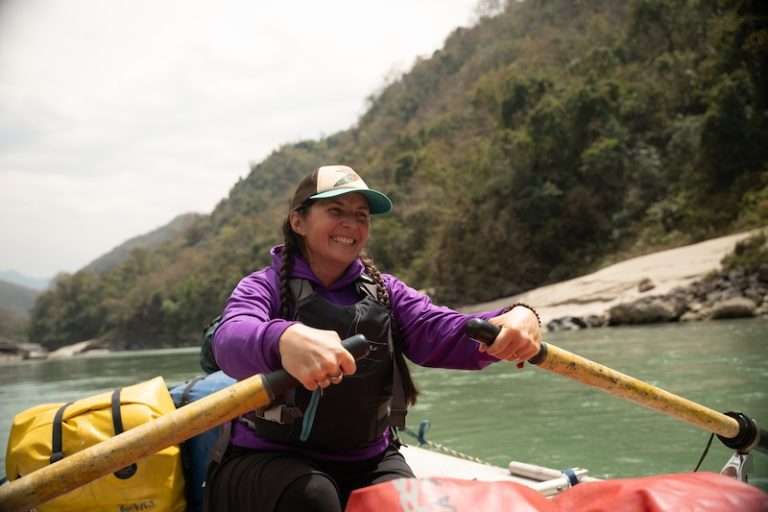
My guest today, Nina Loretto, is a 50-year-old Canadian that used to think she would win music awards, who suddenly found herself at 40,000 feet in a Boeing 737. Although she still loves the music, pilot is definitely her career, and it’s what she’s decided to do when she grows up.
She was never pushed into aviation, but did grow up with it surrounding her, a privilege that is not awarded to many. Her father was a commercial pilot, her mother flew for fun, and there were always airplanes and airplane people around. Aviation is where she met her first husband, who unfortunately took his own life in 2016. She also has aviation to thank for the love of her second life, Russell, who she’s been with since 2020. Although extremely traumatic,
Nina feels that the loss of her first husband did create a large part of who she is today. As her sister so eloquently put it when John passed away, she had just survived the worst day of her life. When she got out of the stupor of grief, she realized that she had nowhere to go but up. Nina loves gardening, yoga, sewing, and fixing up the 1850 brick home she shares with Russ, his daughter Olivia, and their menagerie. Welcome, Nina. Thanks for being here.
Nina Loretto
Thank you for having me.
Anna Levesque
And I have to say also for context, Nina and I grew up together in L’Orignal, Ontario. We went to elementary school together, St. Jean-Baptiste. We were both English speakers going to French Francophone school, which was an interesting experience, at least for me. So talk about a discomfort zone. There was just a lot of discomfort for me. I I talked about this with my Dad.
Nina Loretto
Yeah, it was. Yeah.
Anna Levesque
on our podcast episode about how I got bullied or I feel like I got bullied for being English speaker. And I used to beg like, send me to English school. But he was like, no, you will stay in French school. And now I’m so grateful that he, you and I would talk English, but then we get in trouble. But that’s okay because it’s important to
Nina Loretto
Same.
yeah, we’d get in trouble.
Anna Levesque
learn the culture and yeah, I was good to have some accountability for you’re in a French school, speak French, you know.
Nina Loretto
Yeah, and I definitely do appreciate the different, even though we grew up around it being in a French Canadian environment, just taught us different things. mean, your grandparents from Timmins, that’s in the thick of Franco-Ontario land.
Anna Levesque
Yeah, yes, exactly. And to learn to navigate different cultures too. Super important. Okay, that was a tangent. So all that to say, I’ve known Nina for a really long time. And so Nina, when I say discomfort zone, what comes up for you?
Nina Loretto
There’s definitely two paths of discomfort. There’s the ones that you purposely go out and choose and you’re like, wow, that sounds wild. Let’s go try that. And then there’s the ones that for me, it was 2016. just, you didn’t have a choice. You were there. You got immersed into discomfort. You’ve just lost your husband or whatever. Maybe it could be as simple as a car accident for someone. You don’t choose to be there, but it’s you’re there and you need to either navigate with it, out of it, away from it or some cases the discomfort will lead to better things. But yeah, then there’s the ones that you choose either as a result of the gifted discomfort, I could say. It’s not a gift that you particularly want. But yeah, so there’s the two ones. The two discomforts would be the ones that are thrown at you and the ones that you seek.
Anna Levesque
Yeah, thanks for making that distinction. think honestly, a lot of what we talk about on this podcast is the type that you choose, choosing to put yourself in discomfort through adventure sports, right? Through paddling. And so what do you feel is the biggest, how do I phrase this question?
Like for you, what’s the biggest feeling or like difference? Obviously it’s that you can’t, that you don’t choose it, I get that. What is like, let me ask it this way. What are the strategies that you had to utilize or chose to utilize for navigating the discomfort of losing John so suddenly?
Nina Loretto
Initially, I have to say I did not know how. I was looking at shrapnel and that shrapnel was me. It was lying on the floor. It was lost. I was missing pieces and I didn’t know how to do it. And I will say one of the little angels that appeared was one of the support workers that worked with the police station and the coroner’s office. And they just said, when you’re ready, we have someone for you. And… you don’t know when you’re ready but all of a sudden you’re calling that number. And it was a group called Heartache 2 Hope. So Heartache and then letter 2 Hope. And they were the ones that helped me pick up the pieces. You don’t necessarily find all the pieces by the way. But you fill those up with other things in your life that you can seek out positivity or replace it with something completely new or the other option is just to accept that that part’s never going to be there and that’s okay. But they’re the ones that definitely got me going. So when you start to realize that you are in the most uncomfortable space you’ve ever been in your life, it takes a long time to pick yourself up. And it’s a very gradual thing. And then you find yourself one day, you are humming along to a song in the radio and you feel really guilty, but then you know that, I just picked up a piece and I put it back. So yeah, and then it’s always gonna be uncomfortable, but there’s definitely ways that you can embrace that discomfort, I suppose.
Anna Levesque
Mm-hmm. What are some ways to embrace that discomfort?
Nina Loretto
For me, I have to say putting one foot in front of the other as in running. I don’t run much anymore. I actually went for a little one this morning, even though it’s snowing. It’s not supposed to be snowing. That was the easiest and obviously the most affordable and it required the least amount of thought is just to go out and the running, the rhythm, the one, two, three definitely helped. It’s…
Nina Loretto
I’m sure you’ve already done the square breathing. You breathe in four, you hold four. The rhythm of those things definitely helped. So that was one thing that I tried to piece together the discomfort. And then when I realized that, I’m still here, nothing I did. I mean, I did not buy a squirrel suit. I was not jumping off buildings, but things that made me very uncomfortable. Ballroom dancing, flamenco, whitewater rafting, rock climbing and sailing. I I hate heights and I don’t like water. And here I was, I was purposely seeking things to make me, myself uncomfortable. And I’m wondering if I was trying to do that to accompany the discomfort that I was given when John died, or if I was doing it to be like, I don’t know. It’s not a bandaid by any stretch, but it did help me. All of the stuff that I did that I was like, whew, why am I here, helped me, I think, pick up pieces and gain strength.
Anna Levesque
Yeah, that’s so interesting that it sounds like one of your strategies was to move more towards discomfort. Maybe giving you, I wonder if it was something like giving you agency over choosing the discomfort feels like more in control.
Nina Loretto
Mm-hmm you’re gaining Yeah Yeah, I think control would be definitely what I was seeking because I lost control for so long Yeah, and Yeah, definitely I was I Definitely agree with the control part. It’s it’s I made this choice to be uncomfortable. This was not thrown at me. It was my choice
Anna Levesque
Mm-hmm. Yeah. And then being able to navigate through it is building that resilience, I suppose, maybe on your own terms or more on your own terms.
Nina Loretto
Yeah, definitely the word resilience has come up at nauseam since my loss. At first I didn’t like the word because I didn’t want to be resilient. I wanted to be a puddle of tears and sadness and whatnot, but gosh darn it, resilience kept growing.
Anna Levesque
Yeah, well, do you feel like being, I mean, being a puddle of, know, yeah, a puddle. I mean, there’s stages, right? Like you said, it takes a long time. So resilience is not like, you’re just resilient right away. It’s important to feel things.
Nina Loretto
Yeah, it is interesting you say feel things. There’s the obviously the emotional part, but there’s also the tactility, which is strange without getting into too much therapy sessions. I remember the night you found him and he died. I ended up collapsing and I still feel the grass under my hands. And that was a very strange thing to realize that about four or five months later to realize that I remember what the grass felt like. And that’s, that’s could not be more mean, grounding, how grounding was that? I’m touching grass and remembering what it feels like. So yeah, very strange things that pop up when you’re melting and trying to be a puddle, but there’s still that grounding strength underneath you.
Anna Levesque
Yeah, that’s beautiful. Yeah, haven’t, obviously I’m not a therapist and I do, I have done more reading this year about trauma therapy and like just strategies and, or how it works and talking about how the brain, know, can really, the images when something from my limited understanding when something happens and sleep is part of natural therapy, like the brain wants to process. And so then our memory, it’s a good thing that our memories shift and that we don’t remember things so clearly. Like that is from my, again, from my limited understanding that that is something that means that the brain has been able to process. like PTSD is when the brain can’t process and so those images are super vivid, which then activates your sympathetic nervous system. And so then you’re feeling like you’re right there in that moment. And that’s where the body and the mind gets stuck, is my understanding. And I imagine, what I heard you just say is like that grounding, it was a grounding feeling so remember that grass so vividly might actually be something that is helpful for you.
Nina Loretto
Definitely and the the distraction of putting yourself in a like for example white water when I went on that trip with you my pain first time ever you can’t think about anything else except for that moment and that is amazing like that’s a gift for I think for for ballroom dancing anything that requires your full focus is that it’s you and yourself and it’s awesome
Anna Levesque (
Mm-hmm. Yeah, that was a great trip. We did, it was a Maine salmon trip in Idaho multi-day. was five days, six days. And yeah, that was really fun. And I was really, really honored that you brought John’s, you know, some of John’s ashes and you spread them on the trip. It was really beautiful. And to watch you, so also that you’ve always been, and even today in this episode, you’ve…
always been very open about speaking about it. so has that, did you, like how long did it take you to be able to be open like that or were you always open?
Nina Loretto
Good question. I I do recall being in my therapy group with 11 other, call them sad people. It was my sad group. And I did get a little, I suppose, taken aback that some of them of their loss, they never even told their coworkers about their loss. And I thought that’s not doing the person that’s gone any justice. You do have to say their name. So I think a lot of my… is because there’s nothing I can do. It happened. And if I can offer some semblance of support or a gateway for someone else to talk about it, I don’t mind. And that’s usually how, when it came up earlier, mean, flying in the airplane, you’re stuck in a metal tube with one other person for up to eight, nine hours. Of course, are you married? You’ve got kids. That’s all going to come up. And I couldn’t pretend not to have that happen so I usually prefaced my introduction with, I don’t mind talking about it but, and then they would either go, I’m so sorry and I said I appreciate that but you know I don’t mind talking about it and then oddly enough usually 30 minutes after something they would ask me about it because somewhere someone has been touched by suicide and it’s okay to talk about it.
Anna Levesque
Yeah, yeah, it is okay to talk about it.
What I’m hearing you say is that there are more people than not do you want to talk about it or are interested in hearing your story.
Nina Loretto
Yes, that’s when I recognize the discomfort in the other person is they don’t know how to or they don’t know how to start speaking of it, which is why I’m like, I don’t mind. I don’t mind talking about it.
Anna Levesque
Yeah, you’re so comfortable and just authentic really yourself. And even with this conversation right now in this podcast, there’s a bit of discomfort. I feel discomfort in myself, even though we’ve talked about it before. We spent a whole week together on the river. I know for myself, I have this…
of like not wanting to say the wrong thing. Like that’s a thread throughout my life. It’s not just with this subject. It’s with any quote unquote what, probably with anything, but especially with things that society has deemed like sensitive or taboo. don’t want to say the wrong thing. And how do you, do you pick up on that when people are like, like what is your?
How do you feel when you can tell people are uncomfortable? What’s your response to that?
Nina Loretto
Will usually not pursue it if it’s not something I’ll leave the door open, but I’m certainly not gonna shout and be like no I will It’s simply because John had a lot of friends and family that Did not talk about it at all Almost denied it so and it took them a long time so time is a gift but also out of our power completely so respected and it’ll hopefully treat you well if you respect it and I think that’s Could be very uncomfortable waiting for someone to be ready But that’s that’s their path and it’s not your path. So
Anna Levesque
Right, yeah. Earlier on in the conversation, you mentioned that you found yourself humming along to a tune and then you felt guilty for being, it’s not for being happy, for like, you know, kind of moving forward. So what has that, what was that process of you know, kind of refinding your joy and feeling good about that and being able to move forward in joy and life because you’re still here and you have your life to live.
Nina Loretto
Mm-hmm. I think it comes to the time Timeline again, you don’t know what your timeline is Until I equivalent it to when you leave a book on a table outside the page is just below willy-nilly And you don’t know where it’s gonna stop Sometimes it just the wind might not blow the pages at all, but it to not force the page turning So when a page opens embrace it and I did find myself I guess pushing my discomfort, whether, I guess I wanted to be comfortable. wanted this to, okay, grieving is over, ding ding, time stop grieving. And I pushed myself by visiting people too early, by going back to work too early. I had to take some time. So I went back and then take two steps back and absolutely respect those timelines. it’s, don’t be afraid to push yourself, but if you’ve gone too far, you’ve gone too far in that discomfort zone and it’s okay to step back. And so for me that, joy of humming along with the tune snuck up on me. And it was like the wind was blowing my book open. was like, goodness, but it felt good. But when I like forced it open to chapter eight, went back to work too early, it was like, no, no, no, close that book again. So it’s, it’s definitely difficult to say how far is too far until it’s too far.
Anna Levesque
Right? Yeah. Experience. And it sounds like you have enough self-awareness or you have cultivated self-awareness to know that. And I think that’s huge.
Nina Loretto
Yeah, I’m hoping I do. I’m hoping I remember how to respect that. Because when it’s all fresh in your mind, you feel like, know, wow, I’m winning at therapy. And then, you know, a few months pass and you’ve like, kush, where those lessons go? All right, go back and read them again.
Anna Levesque
Yeah. Well, and just as listeners can hear in this conversation, you’ve always had a hilarious sense of humor, or to me at least, like interjecting kind of fun stuff. has that helped you? Was that helpful or did you lose that for a while and did you get it back or what was that like?
Nina Loretto
It’s funny, I don’t think I did lose it, because I do remember giggling inappropriately through my tears, I think to the corner of all, like it was very like fresh. And, but I also know that John did that too. It was very inappropriate moments we would laugh. So I do think that the humor has hopefully not.
Masked any healing but I think it has supported the healing without being inappropriate. I mean there’s people that you do You know, they’re not ready for a giggle yet But most of my supportive friends that were near Yeah, there was There’s always an ounce of laughter somewheres, I mean we hope it’s not always inappropriate but it does provide maybe even a conduit for healing for some people.
Anna Levesque
Is there anything you want to say to anyone who might be struggling with suicide or have someone in their life or yeah, that have experienced it?
Nina Loretto
I would be more prone to have confidence in asking people who have lost someone to take care of themselves. I will never know what to say to someone who is contemplating it. I suffer, don’t go. That’s, that’s, I’m asking you not to go because the shrapnel left behind is, is really tough. But I’m not, I’m not in your head space. I’m not in your zone.
And I thought I understood John, obviously didn’t. But he thought he was doing the best thing. His note, I still haven’t the heart to get rid of it. Some people burn there as a ceremony, I’ve kept it. So I don’t want to be aloof or condescending to someone who is in the position where they’re at that dark spot. Because I also want to respect their dark spot. But I think where I have the most advice to give is the person who’s left behind.
You’ve got to get help. You’ve got to talk to someone. And you also have to remember the person that you’ve lost. You have to appreciate them, say their name, and talk about them and talk about it. You know, the taboo, I mean, I remember typing out my blog and the darn computer would not let me write suicide. It would not do auto-correct for it. And I was like, I was like, Sassafras, what is this about?
So, yeah, I would have more confidence supporting the person who lost someone. I mean, I would hug the snot out of the person who’s thinking of leaving and I would just say the words don’t go over and over again. And I would hug them as hard as I could. Don’t go.
Anna Levesque
You mentioned that you thought you knew John and understood John, but that you, in your words, you didn’t understand the full picture. How did you move forward with those, like that feeling? Because I know that’s what a lot of folks struggle with afterwards is, what if I could have done more?
Like they carry that guilt of not knowing or not understanding. how did you, did that come up for you and how did you move through that? Or maybe you’re still moving through it today. don’t
Nina Loretto
Yeah, I remember thinking to myself like, did he make that choice when there were so many other choices around? But why do we make any of our choices? Like, there are so many choices today. And I don’t know, I certainly don’t want to make taking one’s own life normalcy and whatnot.
Yeah, this is a tough one because there’s always the what if, oh, what if I’d done this, what if I’d done this? Well, what if you’re holding onto someone that is an absolute misery and you’re forcing them to take a certain path without providing them with the support that I don’t understand. But yeah, that’s the state. mean, I talked to my therapist who is also suicide prevention. She does speak to people who are that they are in that dark spot. And she’s even said,
I thought my life’s work was saving people and she goes, I haven’t been able to save many. That was tough and I thought, but she still keeps going because well, you can still save one or two or she’s helping us, the ones that were left behind. So her life’s work is still very, very important. mean, she was such a pillar of strength and gave us such tools for recovery as well.
But yeah, I’m not sure. I’m thinking of the parents that have lost kids. Like, what if I hadn’t let them go out that night? Well, what about the next night and the next night? so yeah, I’m not sure.
Anna Levesque
Yeah. Yeah. mean, it just, there are no black and white answers or even maybe any answers. And it sounds like you’ve gotten some great therapy and help and doing your own work and self-awareness and has really helped you come through and living your life to the fullest, which you are. Pilot, you have a partner.
And you’re doing, you’re doing it.
Yeah, anything else you want to say about all of that experience or part of your life?
Nina Loretto
No. Yeah, it comes in and out. It ebbs and flows into my daily life. Even, you know, I’m flying and I was chatting to a flight attendant. And yeah, that part came in because she’d lost someone. And then we went back to talking about, are we going to be on time or? Yeah, I’ve got a shortcut. know, air traffic control has given it a shortcut and it’s yeah, it ebbs and flows. But it’s part of me now, like it or not.
But yeah, doesn’t interfere. Occasionally I’ll look out the window and I’ll be like, yeah, John used to fly too. And it’s just part of my life. But yeah, my job keeps me busy and keeps my brain going.
Anna Levesque
Yeah, I think it shows too, like humans, again, there is no right way, like there’s no right or wrong. You know what I mean? Like that’s what I’m really present to and like that in the sense like when we say resilience, like humans are adaptable too. So like you said, that’s part of you now. So you’ve adapted and so like you can talk about it and then you can go back to talking about something else in another instant. And that’s life, right? I think for…you know, any of us.
Nina Loretto
Yeah, there’s so many representations of grief and healing and the one I think I can give my thumbs up to the most, it’s a rock represents your grief and that rock is in a tiny jar and it barely fits. And then a few months later, the jar is bigger, the rock’s the same size. And then the jar is bigger and the rock is the same size. Years later, the rock is just sitting there in this huge, bubble because your grief is the same size, but you’ve let other things come in.
So I think that is a really good way to do it because yeah, the day it happened, I was just one rock. There was nothing else, just a big ball of grief. And then yeah, I was, you oh, okay, I’m gonna go back to work. Oh, my jar got a little bigger and then it got smaller. yeah, whatever you have your grief, whether it be, you know, any kind of grief, it doesn’t have to be a death. It could be a loss of a relationship or a loss of a dream. Your jar is gonna get bigger, but that grief still stays the same size.
Anna Levesque
Thanks for sharing that. I hadn’t heard that analogy before or metaphor. Yeah.
And is flying for you, if we shift to talk about aviation and flying, you’ve been around your whole life. so is that, do you still feel discomfort when you are flying commercially or is it just like run of the mill?
Nina Loretto
It is run of the mill because it’s just, we get trained to, you know, over and over and in our simulator, all the red lights are going and all the dusty switches are being touched and that’s what our training is. And we do go on, pardon the pun, we do go into autopilot if something does happen in the plane. And that’s great. That’s exactly how it’s supposed to be. It’s just like boop, boop, boop. Recently I’ve been, I mean, I’ve been captain at other companies before, but smaller companies, smaller aircraft, but now I’m captain on a, you know, it’s 737 and some of the planes have 190 people on board and that’s definitely different. And I’m looking at my very lovely first officers, but some of them are very young. I’m 50 now, but yeah. And now it’s the discomfort. It’s not a discomfort. It’s a, guess, yeah, it would be, but it’s not in the term of I don’t want to be there. It’s in the, what are we as a crew?
Anna Levesque
Ha ha
Nina Loretto
where are we going together today? And obviously as captain there’s a joke so the first officers have three bars and it’s it’s or it just says not my fault and my captain bar says it’s all my fault. So the four bars definitely comes responsibility that I mean we’re both we’re both pilots there’s no such thing as a co-pilot license so it’s when you’re hired and how you’re hired so you’re start at the bottom and work your way up. But yeah, I’ve been at this company now for 10 years. it’s switching seats with a lot of work and a lot of studying. And it just happened to be in the middle of my move. perfect timing. But yeah, overall, the job itself, the flying and whatnot, no real discomfort there. The challenges occur when an airport’s closed or there’s no gate or there’s an unruly passenger or extraneous to the actual fly all the things that are.
Anna Levesque
Wow, that’s a lot.
Have you always wanted to become a captain or was that something that presented itself?
Nina Loretto
Well, when you start at a company, you will start as a first officer because it’s your dues. You’re the junior man on the totem pole. And then usually it’s with time, you’ll work your way up to the left seat, as they say. And some people are chomping at the bit to do it in two years. And some companies are definitely faster procedure. I mean, we have two types of aircraft at WestJet, but I’m on one type and Air Canada has like
I think five different types. on some aircraft you can get upgraded faster and it’s just your lifestyle choice too. But at WestJet is you just wait your turn.
I definitely, there’s days, you know, when you first started in the first two years, you couldn’t really imagine yourself, gosh, no, not ready. But then over the course of five, six years, you’re like, yeah, I should be in that seat. That’s my turn now. So, and yeah, it’s nice to know when you’re flying with some of the senior captains right before you’re getting your upgrade and they’re like, no, you’re ready. You’re gonna be good. You’re gonna be great. it’s like, okay, good. It’s nice to have the support of your coworkers. So, yeah.
Anna Levesque
That’s a… Absolutely. Yeah, what is the percentage of like female captains to male captains?
Nina Loretto
I would say it’s more of a pilot percentage and I think it’s about 6 to 10 % of airline pilots are female.
Anna Levesque
Okay, so it’s small, like that’s a small percentage.
Nina Loretto
Yeah, it is small and it’s funny. I know the equality and whatnot, but I do think it’s different and it will never be even Stevens and that’s fine. That’s absolutely fine. But it’s given. My beef is to let girls know that they can. So instead of having your job fair at a posh university or whatnot, have it at a community center in a lower socioeconomic area and just let them know that you can. You don’t have to, but you can. And it’s letting kids know of all types that you can. And what do you want to do? Well, whatever it is, you can do it.
Anna Levesque
Yeah. Yeah. I wonder if the barriers to entry for piloting are definitely socioeconomic, right? Because it’s expensive to learn to fly and do that process.
Nina Loretto
Yeah, very expensive. And if you’re somewhere in an inner city or in the middle of nowhere, you have to find a small airport and that could be two hours away. There might not be any buses to get you there. It is a challenge. And I have to say, it’s lucky for me. I never really had to look for it. There was an airplane right there.
Anna Levesque
Yeah. Yeah. Did you fly? You flew often as a kid. I feel like you also rode horses a lot as a kid.
Nina Loretto
Yes, rode horses a lot, developed an allergy, but I’m gonna fight that one, because there’s horses everywhere where I live now. Yeah, I always flew, so it was never pushed in. My mom flew her little airplane. And I mean, think she’s definitely one of the bigger influencers as far as flying, because I know when she was in…
What was it, 1960s, 1950s she was flying. Yeah, in New Zealand it was a little bit more challenging for a woman to do anything other than secretarial work. So she had a good dad that was supportive of her police officers and go do it. So I’m pretty lucky that I’ve got generations of people that don’t put barriers on you, on their kids, which is nice. And yeah, so I flew a bit growing up, but I also didn’t have a very good stomach for my first couple lessons. I got very sick. But not anymore.
Anna Levesque
So that was a big discomfort starting out, going from being sick in your first experiences to now you’re captain. It’s pretty cool.
Nina Loretto
Yeah, yeah. Yeah, there was always, I think everybody that’s out there, you know, trying to, you know, get those coveted hours, there’s always an uncomfortable spot that you’ve put yourself in by your own doing. You’ve either pressed the weather or you’ve pressed the time or you’ve, you know, maybe didn’t do that great a job doing your weight and balance. And yeah, so I think every every new pilot learning makes mistakes that they will never do again.
And that’s why the experience is so important. mean, I’ve got, geez, 24 years, 25 years of flying experience, like 14,000 hours. it, every hour is one that helps your next hour be better.
Anna Levesque
Yeah. What do people get wrong about or like what’s the biggest misconception that people have about like commercial airline pilots?
Nina Loretto
that we don’t do anything. That a lot of pilot thing drives me bonkers. It’s like saying cruise control and you don’t have to drive. Most of us have a ton of experience either in the bush or corporate, medevac. Most of us have a ton of time working up north and it’s not quite paying our dues. Because I think for a point of most of our careers, we thought we would be staying up there because why wouldn’t you stay? It was great. Small company, great aircraft.
Anna Levesque
Hahaha.
Nina Loretto
Yeah, so that’s probably one of my biggest misconceptions that sort of like, it’s not about the autopilot. We certainly appreciate and use it. But as they say, garbage in, garbage out. So the flying I do now is definitely very different from the flying I did up north on float planes. But it’s still flying. And at the end of the day, the airplane is still an airplane. If all of those buttons don’t work, you still have wings and…
Yeah, just fly it. And I’m pretty lucky my, I like the Boeing. It does fly like airplane. There’s nothing, yeah, I don’t know. I really like my plane. So the other misconception is that we always do the same route. No, we do not. gosh, well we’ve got, I think last I counted like, how many destinations do we have?
Anna Levesque
Yeah, how many routes do you do?
Nina Loretto
I don’t know, 200 some 300. I mean, we go all the way. My aircraft type doesn’t, but our company does Japan and then my aircraft type, we go to Europe and then I go as far south as I think we’re doing Roatan in Honduras now. So yeah, in the last month I’ve been to exotic locales like Regina, Saskatchewan and then Samar-10 and I think there was a Vegas in there too. yeah.
Anna Levesque
Yeah. you like, after so many years, do you still like enjoy maybe if you get to hanging out at the destination or is it just more like, yeah, no, I just want to get back on the plane and fly?
Nina Loretto
The sleep part is definitely precious when we go somewhere, especially if it’s Europe and there’s a seven hour time change. Yeah, it is. You definitely try and your sleep, get the most out of that. And then I do like exploring different locations as well, but time is of the essence in some of the spots where it’s sleep and food. And obviously I wander around. You want to get some sort of exercise in there as well.
Anna Levesque
Yeah, that’s hard on the body.
Nina Loretto
But there is a joke that pilots go to work so that they can go home because we get there and we’re like, okay, let’s go, let’s go, let’s go, let’s go. then, but yeah, and then we’re like, okay, let’s go home. But then when we’re at home, we’re like, all right, let’s get to work. So it’s one of those things. We like being on time, that’s for sure. No one is ever late on purpose.
Anna Levesque
Right? Yeah. Y’all have to do it. I suppose, because traveling has gotten, well, especially like recently, there was like a lot of air travel stuff going on. And also it seems like, yeah, there’s just, with delays and all that, do you like ever get yelled at as the pilot? Like, or are people pretty, mellow.
Nina Loretto
No, we get yelled at. We get yelled at. Yeah. We had one in particular. I’m going to say this is very, yes, we were all very uncomfortable. And I know I get uncomfortable. There’s the two different levels. One of them is if I’m doing something to myself, like white water rafting, it’s my tummy. You’re like, you get that butterfly knot feeling. And then there’s the discomfort where something is thrown at me and my hands start shaking. And I’m like…
Anna Levesque
Mm. Mm. Wow.
Nina Loretto (
So I was like, okay, you have to take a deep breath. And yeah, we were basically yelled that it was our fault, the plane broke, all that stuff. we eventually win them over, hopefully. But yeah, we do our best.
Anna Levesque
Yeah, absolutely. It’s a lot. Traveling is a lot. That is really, really interesting that you have the self-awareness of the two different discomfort zones, so to speak, of like when something is thrown at you, you have one physical response that you’re aware of, and when you’re choosing it, it’s a different physical response.
Nina Loretto
Yeah, and it’s funny, I’d say it’s absolutely internal and external. Internal would be my tummy and that couldn’t be any more, you know, centered in your body. That’s when, you know, my first dance competition and I’m wearing sequins and diamond earrings and I was like, what is happening? And yeah, my tummy was just there and then, but yeah, when something comes external, it’s almost, starts at my skin and then comes in. But there’s definitely physical for both of those.
Anna Levesque
Yeah, when you feel those, what is your strategy? Like is it breathing or is it something else?
Nina Loretto
Breathing definitely, and I’ll say thanks to yoga and then as frustrating as it was, mindful meditation, which you can never do right, by the way, which you can never do wrong. So I did a lot of that with the square breathing. For me, counting to eight for some reason is a big thing. that’s just come with me for even when I’m running, it’s counting to eight. The breath definitely is probably, and it’s the most accessible, it’s right there.
Anna Levesque
That’s right.
Nina Loretto
You just, yeah. There is the tactility as well. If you can find something that has a tactile touch to it, like this sweater and whatnot, I’ll start flossing it. That’s a good one, but breathing, it’s a lifesaver.
Anna Levesque
Yeah. for sharing. you have a question for me?
Nina Loretto
Why would, yeah, you’re focusing on what made you choose discomfort as your podcast, your main theme.
Anna Levesque
Because it’s a big part of what I like whitewater kayaking, which is like, you know, kind of my world and I think normalizing fear, like people you get scared, you get uncomfortable and also as a path for learning and growth. So I just am fascinated by people like high performers, and how they work through fear, discomfort to do the things they do well. So I just think that it’s, I like these conversations because I think sometimes, if we get stuck or at least for myself, I can get stuck in a negative thought pattern of somehow I’m the only one that feels scared or that feels discomfort. I want to encourage people to keep going through discomfort and have these conversations be examples of that.
Nina Loretto
True.
Anna Levesque
But yeah, I think also I was reading the book by Adam Grant. I love his work. It’s called Hidden Potential. And he was, he did a whole thing about like discomfort zone and like growth. And there was something in that book that really piqued my interest about that whole process. Yeah.
Nina Loretto
Interesting. Yeah, it’s funny you say that the growth comes with discomfort. And then why would you put yourself in that situation? Why would you purposely make yourself uncomfortable and even have that, you know, shrapnel of fear coming in? But I mean, I’ve seen you on the river and whatnot, and it’s the reward at the end. It’s like and I mean, back to my silly ballroom dancing. It’s silly, it’s fun, it’s great. And why did you walk all the way to the dance studio just to turn around at the door? Just keep going. And you can always give yourself the out of, no, I’m doing it. But why did you get that far? And I think, yeah, you nailed it there is just keep going because the reward is generally quite good when you’ve put yourself in your chosen discomfort. I mean, I don’t know if I’m sure you remember my face at the end of my first rapids that I did with you. I was on fire. It was like the best makeup.
Anna Levesque
Yes. I know it was awesome.
Nina Loretto
And I was like, oh, this is amazing. But I remember talking to the water going, that wave’s okay, that wave was okay. Oh my gosh, there’s another one. And that fear and that discomfort, my gosh, the reward was insane. And yeah, absolutely. I do feel, I absolutely get what you’re Encourage people to, yeah, it’s okay to be afraid because I mean, generally you’re gonna be okay at the other end of that fear and it’s gonna be amazing and totally worth the risk.
Anna Levesque
Yeah, exactly. And that a lot of people go through hard stuff, you like you’re not the only one. you know, take, get some ideas, hopefully people who listen get ideas, strength from the episodes so that they can move forward in their life. yeah. Thanks for that question.
Nina Loretto
Exactly.
Mm-hmm, definitely.
Anna Levesque
You ready for rapid fire?
Nina Loretto
Ta ta ta! maybe?
Anna Levesque
Okay. Should have had a rapid fire. Okay. I have a random question. What is your fondest or what sticks in your mind the most about St. Jean-Baptiste? It’s a random question. yes. Yeah.
Nina Loretto
The carnaval. The carnaval when we used to yell out like you’d be on the blue team or the red team we’re like yeah and we’d be like doing the weirdest games like yeah and then eating toffee off the snow yeah I’d probably say it was yeah carnaval probably because it’s yeah I just finished in Quebec City like a month ago.
Anna Levesque
My gosh.
I totally forgot about that. Wow.
Yeah.
Anna Levesque
Right? I remember sledding down the hill in the winter as recess. That was pretty like, that was like adventure, adventure sport. Like, that was pretty cool.
Nina Loretto
Yeah. Yup.
Safety second. It was. But yeah. Yeah.
Anna Levesque
And then also, yeah, the ice skating. We got to ice skate as kids. How cool. Like walking down to the, at the time the ice rink was not at the school like it is now, I think.
Nina Loretto
Yeah, did. Yeah, there is one there now. Yeah, I guess most of my memories of that school is all winter by the sounds of it. Yeah, pretty much.
Anna Levesque
I know. Well, yeah, because that was the school year. Yeah, or walking to that little restaurant to have lunch. wow, you remember the name. I can’t remember at all. Okay.
Nina Loretto
the Deux Frères. Was it Deux Frères? no! I think it was… I don’t know. No, was Bayview. It was the Bayview restaurant. Okay.
Anna Levesque
Okay, awesome. Thanks for going down memory lane with us, everyone. Okay, what’s up? And we didn’t even talk about VCI, because we went to elementary school and high school together, but VCI, We were, yeah.
Nina Loretto
That was a big change because I was in English school with French courses. And we’re like, yeah, whatever. We’ve been speaking French. Yeah.
Anna Levesque
Yeah, but they did have the Français, Géographie and Histoire track.
Nina Loretto
Yeah, they did. Yeah.
Anna Levesque
Yeah, I took all those classes. Yeah, that was cool. All right, what’s a morning ritual that sets you up for success?
Nina Loretto
It’s funny. I used to actually have a much better ritual when I was sad because I was off work. So my work actually kind of gets in the way of morning rituals. I definitely try. I’ve been I went out for a walk this morning, but I would check the weather. I check the weather like everywhere. I’m ready for it at home. Honestly, it’s very silly. I just go and look for all the pets and I give them a good squeeze. Yeah.
Anna Levesque
interesting.
Yeah, I bet you do.
Nice. That’s a nice ritual. What’s a non-negotiable self-care practice?
Nina Loretto
Reading before bed, a paper book. Always a paper book.
Anna Levesque
What’s a favorite motivational book, talk or song?
Nina Loretto
I like, I cannot recall his name, the book is downstairs, but it’s called Running with the Mind of Meditation. And that just explains the different stages of running and how it will definitely help you.
Anna Levesque
That’s cool.
Nina Loretto
As far as the talk, it might just be my inner voice. Like, yeah.
Anna Levesque
That’s good. I love that answer. And it’s great that your inner voice is motivational. Yay.
Nina Loretto
Yeah, it’s back to me on the river going, that wave is okay, that wave is okay. This wave is big, but it’s okay.
Anna Levesque
Okay, what do people get wrong about you?
Nina Loretto
That I’m not serious sometimes. They mistake my exterior, I guess, light heartedness and yeah, I’m very serious inside, but I don’t see a reason to be stern on the outside, I suppose. Yeah.
Anna Levesque
Got it.
Okay, throughout the course of your life, have you felt like the underdog or the favored to win?
Nina Loretto
Boy. I mean everybody has a little bit of poor me. I’ve definitely been very lucky in like my my privilege. I know that. So I don’t think there’s any underdog part there. But I surprise myself. Jeez kitty.
Yeah, I’ve been pretty lucky, but I also know I’m not always going to win. And I’m OK with that, I guess. That’s a good question. I’m. Yeah.
Anna Levesque
Yeah, that’s good, like, because no one wins all the time. I would definitely say, like, from my perspective, young Anna hanging out with young Nina, definitely favored to win. You could draw, you rode horses, there was airplanes, you lived in like a cool haunted house. Favored to win. That’s awesome.
Nina Loretto
Yeah.
That is true. That is true. Yeah. Yeah.
Anna Levesque
Okay, hard moves in easy water or flooding?
Nina Loretto
I’d say it’s always worth trying the flooding. You can always swim to the shore. And if you’ve got good people around you, they can always lend you a hand too.
Anna Levesque
Cool. What’s one word that describes your comfort zone?
Nina Loretto
Wow, one word, my comfort zone.
Anna Levesque
I guess it could be two words or a sentence.
Nina Loretto
Practice makes perfect, I guess.
Anna Levesque
Whoa. Practice. Is there perfect though?
Nina Loretto
Yeah, it’s funny. thinking of the no, there is not. And that’s just it. We always say yoga practice. It’s never perfect because it’s and I think, yeah, that’s important. But I’m I’m just thinking like. I’ll go back to the simulator when you’re when you’re in the simulator every six months, you get the beats from your trainers to train for every single thing that could happen in the airplane. And you are potentially sweating and whatnot, but because you’ve you’ve you know your procedures, everything. There’s an ease that comes to just zenning out on autopilot. So yeah, my comfort zone would be study until you can’t study anymore.
Anna Levesque
Got it. Got it. Okay, freedom through discipline or I do what I want.
Nina Loretto
That’s a tough question.
I think we just covered freedom through discipline. And at the end, then I do what I want after. Yeah.
Anna Levesque
Okay, yeah. Okay, just checking. Right, exactly. What’s one word, wait, sorry. In one word, what do you hope your legacy will be?
Nina Loretto
One word would be a challenge. guess garden. If I have to do one word, would be garden. 100 years from now, if someone is, say, sitting under a tree as I’m looking out at a beautiful tree, appreciating it as beauty, they don’t need to know I planted it. But I’d like to say that I did plant it. it’s, yeah, I just find everywhere I’ve lived and whatnot, even stayed apartments, I’ve made sure I’ve left some flowers or something just more beautiful outside.
So that would be that. I love my gardens.
Anna Levesque
Mmm, that’s beautiful. I love that.
You know, what I just thought of, okay, random thought, since I was just, came to me another, you know, who I associate our time together with is Cyndi Lauper. So I was like, comfort zone, like girls just wanna have fun. I saw that.
Nina Loretto
yes!
Nina Loretto
That is true. I just, went and saw her again almost 40 years to the day. Yep. It was, it was amazing. She’s 71 and she’s still on fire. And yeah, she is also, she’d be a good podcaster. Cause she definitely faces a discomfort with her causes every day. And she is a hundred percent out there. Everybody that shouted out to her on stage. She just said, love you right back.
Anna Levesque
That looks so fun. Was it amazing? Yeah.
Nina Loretto
Her heart is full of kindness and justice. think she’s got a lot of justice in her. So, yeah, 40 years, I was like, oh my gosh, where’s all my neon?
Anna Levesque
Nice.
That’s cool.
Yeah, I know. Totally. We had a lot of it. Is there anything else you want to say?
Nina Loretto
It’s funny I made notes and I didn’t even refer to them once. Look at me.
Anna Levesque
Yeah, I like that though. I like our conversations to flow. That’s one of the things I like about doing this.
Nina Loretto
Yeah, here’s the little thing. I was thinking about how often one chooses to be in a discomfort zone. I mean, take the romance out of it. It’s not quite, yeah, I won’t use the word callous, but you know when you see the reeds in the wind, they’re bending, they never break because they’re always, I’m gonna say this is quite uncomfortable for the bull rushes and the reeds and the streams, but yeah, the more you put yourself in that situation, I think the more strength you get.
Anna Levesque
Yeah, love that. Thanks, Nina. Thanks for being here. Thanks for taking the time. It’s good to see you.
Nina Loretto
Thank you. Yes, you too. And yeah, this has been I feel like I’ve learned a new chapter about myself yet again.
Anna Levesque
Sweet. That’s awesome. Well, I appreciate you.
Nina Loretto
Yeah.
I appreciate you too.