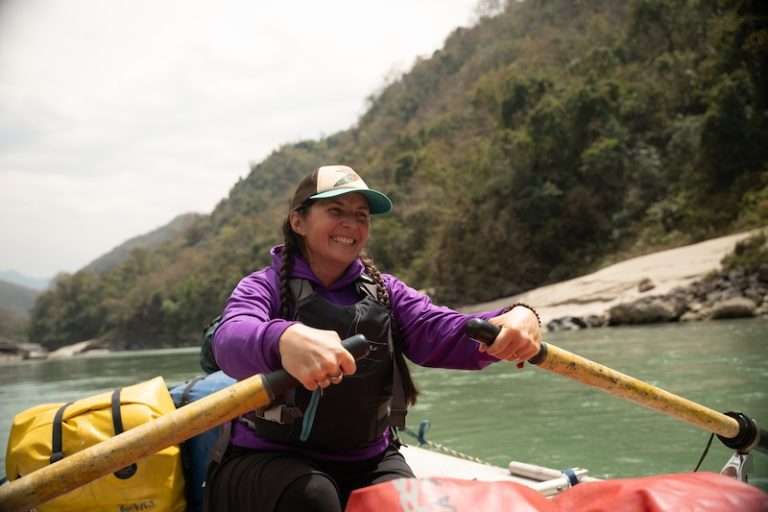
Anna Levesque
My guest today is Joe Pulliam. He began paddling in the late 1960s, beginning with canoe camping trips on the Blackwater Rivers of Southern Georgia and Northern Florida. He started building and paddling kayaks in 1973 while a freshman at Clemson University, and the nearby Chattoga River soon became his lifelong home river. He entered the outdoor industry full-time in 1982 as director of marketing and sales for Perception Kayaks.
In 1988, three others, founded Dagger Kayaks, which became one of the most successful paddle sports businesses in history. Joe led a successful sale of Dagger in 1998, then worked for Watermark Sports, the acquiring company for seven years, and was deeply involved in several acquisitions made by Watermark.
From 2005 until retirement in 2017, he was an independent consultant focused primarily on the paddle sports industry, working with companies like Werner paddles, Nova craft canoe and Jackson kayak. Joe also co-founded the whitewater company, a rafting outfitter on the pigeon river in Tennessee. He has served on numerous paddle sports boards, including the American canoe association, American Whitewater, various national trade organizations, and local river related organizations. Though he remains a consultant to Jackson Kayak, his main job is now being a grandfather in Raleigh, North Carolina. Thanks for being here, Joe. I’m really excited to have this conversation with you.
Joe Pulliam
Thanks Anna.
Anna Levesque
Yeah, so much history in paddle sports. And well, I’m sure we’ll get to that because I’m sure there were discomfort zones for you along the way. But I’m going to start with the same question I start with everyone, which is when I say discomfort zone, what comes up for you? What does that mean for you?
Joe Pulliam
Well, the first thing that comes up is a bad feeling in my gut. That’s where I feel it. it can be, you know, for me, that’s not usually set off by a physical threat. It’s an emotional thing, yeah, maybe we’ll talk about some of the specifics or specific instances of when that kicks in. yeah, it’s been one of the nice things about being retired and not trying to run a company any longer is to not be so much in the discomfort zone.
Anna Levesque
Right. So you feel like you’re more in your comfort zone now that you’re retired. Yeah. That’s great. So yeah, let’s talk about some specifics because I’d like to hear more when you say it’s not, I think, well, I think how our nervous systems are set up, you know, based on evolution to respond to threats and perhaps.
Joe Pulliam
absolutely. Yeah, yeah.
Anna Levesque
back in the day, those are more physical threats. But I think what you’re, and yes, on the river, there are definitely physical threats, or there can be. But I do think what you’re saying is the case for most of us that that feeling, like you said, in your gut, like a bad feeling in your gut is the mind-body connection. And it can be, facing your fear on the river, it can be facing your fear in business, which I’m sure you’ve had to face. mean, in whitewater kayaking. And I look forward to getting into that because I’m fascinated by the industry. I’ve been part of it in a different way for 30 years. And it’s a niche. I feel like it’s a very niche industry and we can talk more about that.
So before I ramble on too much is what, okay, yes, share with us some specific instances and strategies that you use to, when you get that feeling in your gut, to move through that discomfort zone to the results or the action that you wanna take.
Joe Pulliam
Well, let me also explain that for me, saying this is a feeling in my gut probably is a little more literal than with a lot of people. It’s not literally, we’ll get sick. And yeah, it’s a real thing. And there is that mind-gut connection that you refer to as I’ve had these issues for a long time. So I’ve read a lot and studied a bit and it’s a very real thing and it’s very, very real for me and you know I can think of yeah yeah I can think of lot of instances where this kicked in I think I think for example one of the more stressful things for me having to ever ever having to do is fire people and I just you know I can literally get sick before that happens usually once I get into it you know it
I’m okay and and it almost always has Firing people for example has almost always gone better than I expected it to and In fact, that’s one thing I’ve I’ve said for many years that a Problem not too many people have ever fired somebody then have them give you a big hug afterwards and that’s that’s happened to me on a couple of occasions and but
Yeah, that’s a good one that can set me off.
Anna Levesque
Yeah, well, I think that speaks to your leadership style and your communication skills. And I’d love to hear more about that as well.
Joe Pulliam
Well, communication skills goes, you know, as a broad term and another one that can really set me off is public speaking. I’ve had to do a fair bit of it over the years and not my favorite thing to do.
Anna Levesque
No. So when you say you get sick, you get like nauseous? Like, do you actually throw up? Not to get too graphic for everyone, We’re all. OK. Yeah. Yeah. That’s wild. Right.
Joe Pulliam
Yeah, I not want to get too graphic here. But yeah, physically sick. How about we leave it at that? Yeah, not often. No, I mean, that’s not a typical response. But has that happened? Sure. Yeah.
Anna Levesque
Has it happened to you on the river ever?
Joe Pulliam (07:04.16)
No, never, never. Not that I can recall any of Never on the river. So literally it’s more the, yeah, yeah.
Anna Levesque
Yeah, the gut brain axis is real. And in my studies as an Ayurvedic health coach, Ayurveda is the sister science to yoga. focuses a lot on digestion and digestive health. And so that’s to me a very important topic and why I actually run a couple of refuel and reboot seasonal resets every year to help folks from the Ayurvedic perspective reset their gut microbiome because it can be really, really helpful for sure. Yeah. there is something that
Okay, so what was your strategy if you’re going into fire someone to help you get through the feeling sick and to, it sounds like at least a few folks left feeling gratitude for you. So like you said, it did turn out better than you thought. So what was your strategy going in?
Joe Pulliam
Well, one thing is it’s gotten easier over the years because I’ve had, like firing people, for example, I’ve had good experiences where that’s happened and I feel like people have come away with not just negative feelings about everything. And so that’s helped. Strategy going in.
Yeah, I mean and that’s one thing I will do is think about okay. I’ve done this before I’ve been here I can get through this I don’t like it, but here’s what I have to do and and yeah, I’ve I’ve over whether it’s whether it’s paddling and or or or any any kind of stressful or Discomfortable tat discomfort or Discomfortable to ask I don’t know if it is either
Anna Levesque
I like it. I don’t know if that’s a word.
Joe Pulliam
that I have to do. Now I’ve gotten flustered with what I was going to say. I don’t know what I was going to say.
Anna Levesque
That’s okay. You’re going to talk about it whether it’s any uncomfortable task or challenging task.
Joe Pulliam
Yes, uncomfortable might be a better word than discomfortable. I guess I’m using your discomfort zone. Let me think about what I was going to say. I got sidetracked there. Sorry, Anna. Glad you have an editor. What any uncomfortable task I have in front of me, I
Anna Levesque
I like it though.
No worries. Yeah, exactly. It doesn’t matter at all.
Joe Pulliam
you you prepare for. And to me, that’s a real balance of, course you have long-term preparation where you’re, you know, you’ve learned certain skills over a period of, long period of time and through experience. But in the shorter term, to me, it’s a balance. I have bad experiences on rivers and rapids where I’ve, over scouted and tried to get too detailed and think overthink it and then when something as it typically does doesn’t doesn’t go just as you expected then okay I’ve over prepared I’ve thought too much like maybe like a slalom racer and I’m not a slalom racer and so I can’t I can’t go exactly things don’t go just where I want and I don’t do well and it’s the same in for any challenging tasks for me I need to prepare but if I over prepare that typically doesn’t go well for me either so having having that balanced preparation is one thing I like to do
Anna Levesque
Mm-hmm. Yeah. Yeah. It’s true. Sometimes when I’ve tried to be like too conservative on rapids as well, like, there’s something in the middle that I don’t want to hit or something. And then I go way too far right. And then I’m hitting something else that wasn’t even in play if I had just gone right beside the thing in the middle. Right. Yeah. Yeah. Yeah. No, that’s a great analogy for sure. Do you ever…
Joe Pulliam
Yeah.
I can relate.
Anna Levesque
I think building trust over time as well. mean, managing people and I mean, you’ve been involved, you’ve been a leader, a business leader in the industry for so long or you were before you retired. And I think what, how did you build trust with folks? Because I think that that’s also, if you’ve built trust and had clear communication along the way, then if you do have to let someone go or if something changes, would, you know, I know for myself that helps to make difficult, we’re talking about the discomfort zone. And what this is, is really like having challenging and difficult conversations. And that’s true like in business or as an instructor trainer for whitewater kayaking and stand up paddle boarding. If someone doesn’t meet the standards, I have to have a conversation with them of like where they’re actually at, and what the next steps are. And those are challenging conversations. So I guess my question is, you’ve talked about, okay, you go in, you’re like, I’ve done this before. Here’s what I need to do. How do you approach maybe more specific strategy on how you approach challenging conversations in general, not just firing someone, but in general in business or on the river?
Joe Pulliam
Well, thing you said is you do develop a level of trust over time and respect. And respect’s a two-way street there for sure, no matter who you’re dealing with and no matter the situation. that’s important. And I think looking longer term for both your needs your company’s needs, whatever the situation is, and the other party. So for example, if you’re firing somebody, which fortunately I haven’t had to do that that often, but thinking about, how can I help this person longer term? Not just, this is, you’re fired, get out of here. And what can I do to help you get past this and move on to something else?
Going it and not just not just saying that without without really being willing to to offer something to help to help the other person so So, you know, that’s that’s that’s one thing I try to think think think through and and I always try to try to going into Whether it’s a difficult negotiation or or any difficult conversation is okay. What is the other person thinking?
And what do they need out of this conversation? What do they want? And is there common ground? And can we get to that? And that sounds trite, but it’s very real. And definitely don’t want to go into these situations with a total win-lose mentality. I think that’s not.
That’s not my approach whatsoever. I’ve lived through that. I’ve worked with and under people who think that way. And that’s certainly not the way I want to approach things.
Anna Levesque
Hmm. Yeah. And do you do, so do you do research? How do you get to know or what someone else wants or needs out of, out of the situation, whether it’s a negotiation, like, do you come right out and ask them, do you do research? What’s your strategy in gathering that information?
Joe Pulliam
I don’t know that I have a strategy, but yeah and and one thing I remember when we when we first were talking to the people that eventually purchased dagger and Research wow you know that was before the internet and trying to find out I went to the Clemson University Library looking up these people’s names And you know it was really hard to do any research and find out what you know
Anna Levesque
Wow. Yeah.
Joe Pulliam
What are these people wanting? what’s their, what are they gonna do if they were to purchase Dagger? What might happen? That’s a lot easier now and definitely now I would do as much research as possible on knowing who I’m dealing with and what I can find out about them. So yeah, research is a good one. But yeah, and it can be hard to understand what people’s motives are. But sometimes it’s just, you you just have to put yourselves in their shoes as best you can and say, if I were doing this, what might I be thinking? And sometimes you get it wrong, but at least going through those steps and thinking that way can be helpful to me. And I generally go in with the, unless I know differently, I’ll go into a situation thinking that, okay, everybody’s good here. Everybody’s trying to get to the best place here. Now how do we get there? This person I’m talking to is not trying to get me. They’re not trying to screw me over.
They just want to do us right for them and for whoever they’re representing. And that’s what I’m trying to do too. So let’s see if we can find somewhere and work together.
Anna Levesque
Yeah, yeah, it’s like viewing others with generous intent. Yeah. That is something that I have to remind myself a lot I work on because I can get fired up.
Joe Pulliam
That’s more eloquently put, yes.
Anna Levesque
about people or if I’m serving on boards, you know, and so if I feel my, I just think it’s, cause my brain for some reason can go to that place of like, what are they trying to get? What are they, you know, what are they, like, why do they say that? that I’ll get really judgy. Like I do like that. So that’s something in my, in how I grew up that I, so I haven’t written actually in my office, like view people, view others with generous intent so I can remind myself to not go down the path of everyone’s out to get me or there, or everyone is, right.
Joe Pulliam
Or you idiot? Yeah, no. No, you have to, I know when you think of boards, that was, definitely have been there. And then I’ll think, okay, they’re probably not an idiot because they’re on this board and they just have a different perspective than I do. And all right, how do I get beyond this person or how do I get this person to think a little differently or, yeah.
Anna Levesque
Right. You said it, you said it. was, true. I know.
Yeah, yeah, or move or yeah, see the gem in their idea and like how, yeah, that collaboration, know, versus like you said, win lose, like it’s either my way or no way. Yeah.
Joe Pulliam
Yeah, and if anything, I’m probably guilty of not asserting myself enough sometimes in those situations. But yeah, it’s worked. And again, you go back to developing trust. that can be a long-term process. if you’ve treated people fairly and reasonably throughout your career as best you can, they’re always you’re always gonna have some people who don’t like what you did. And I think if you do enough, that’s inevitable. But if you can let the entirety of your body of work speak for itself, for the most part, that can be really helpful in dealing with people.
Anna Levesque
Yeah, absolutely. What has the, because you started paddling and then got into paddle sports business.
Were there, was there anything from the river, like any river lessons that informed you or how you went into business or once you got into business, was there anything like about the river that inspired you? Obviously kayaking inspired you, went into making kayaks. But I’m talking about more like ways of being on the river, yeah.
Joe Pulliam
Yeah, I should have prepared for that question.
Well, one thing that I’ve found very true on the river is while you have to oftentimes adjust your plans because things don’t go as you expect, you still can’t be wishy washy. And I’ve had, in fact, I had a real memorable experience at Woodall Shoals with the NOC staff training day when I was helping teach some there in the summers and changed from going right to going left or vice versa, I don’t remember now. Just, you know, last minute, no reason or bad reason changed my mind and ended up right in the middle had a pretty intense surf. with Pace and Kennedy looking right at me with a rope saying, you want this? Do you want this?
Anna Levesque
So for folks listening, the Woodall-Scholes is a rapid on the Chituga with it’s a stout, it’s a really stout hole, especially if you run it down the middle and Payson Kennedy is the founder of the, one of the founders of the Nantahale Outdoor Center. So just to give context.
Joe Pulliam
Yeah, sorry. So I think that can be very true in business or life in general. While you have to be willing to adjust and you don’t want to too set in your ways, sometimes you have to set a course and stick with it and try to stay on that track and not waiver. So there’s again there’s a balance there and sort of knowing when to adjust versus when to say this is the way we’re going and this is how we’re doing things. That’s a balance that one has to learn.
Anna Levesque
Yeah, that’s a big one. I’ve struggled with that. Well, on the one hand, I’ve been consistent with my business over the years. And on the other hand, I have changed, especially in the last several years, from girls at play to mind, body, paddle. Still the…
common thread of, you know, empowering people, holding space for people to show up as they are. and yeah, it can be, I actually have changed the, changed the mind, body, paddle logo a couple of times. So just listening to you, it’s so true.
How can you give an example? I don’t know if you can give an example of like where you stayed the course and it worked out in an example in business and in the paddle sport industry and a, and a time where maybe you changed course and it didn’t work out so well.
Joe Pulliam
One thing I think about was early in the history of Dagger, and we were struggling. The first couple of years were really, really financially a struggle, and we were very under-financed and really didn’t have a backup plan. where we were going was to be very focused on independent specialty retailers. And we were approached by a large entity that I don’t recall the name of, don’t think it exists anymore, but a big box sporting goods type store wanted to, and we were only making canoes at the time, I think. And they came in with a really big order and would, pay for it in 30 days where a lot of times the terms we had to give to specialty retailers was a lot longer. Wow, know, this was, I don’t know, was maybe 200 canoes. I don’t remember the number. And turning that cash in 30 days was really appealing. you know, I didn’t know what to do. And this was not unique. Other businesses did.
Anna Levesque
Wow.
Joe Pulliam
as businesses have been through these decisions. you know, it’s one thing to make this sit back and make these strategic decisions when you weigh the pros and cons and move on. It’s another to do that under pressure where, know, can we get by if we don’t do this? And in that case, we decided, you know, let’s suck it up. And this is not where we said we’re going. Let’s stay the course and not be wishy washy here. This is what we decided, we’ll find a way. And I don’t remember the details, that was 40 something years ago, or 30 something years ago, I don’t know. And we figured out a way, but it was a challenge.
Anna Levesque
Yeah, that’s it. Thanks for sharing that example. And then, yeah, Dagger became one of the most successful brands in, in whitewater or in paddle sport. I keep saying whitewater cause that’s my bias, but I I’m well aware of the wide world of paddle sports and, the line having paddled for Dagger for 27 years. So, and, gone up to can you copia so, and, shows that have, you know, run the gamut flatwater canoes.
Joe Pulliam
Yeah, me too.
Anna Levesque
but yeah, so that’s, that’s inspiring actually to hear you talk about that of like, the course, you know, even when it’s hard, stay true to who you say you want to become or who you want to be in the space. Yeah. Was there a time where you switched, switched gears fast and it worked out?
Joe Pulliam
Probably but I nothing nothing nothing’s quite come into mind. Yeah, yeah
Anna Levesque
Nothing’s coming to mind. That’s all right. So what were you just along the way or when you first started, you just mentioned some challenges. I would that you mentioned a very uncomfortable situation of having being underfunded and making the choice to stay with specialty retailers. When you all first started dagger, there was only
Was there a kayak many was perception making kayaks at that time or was everyone making canoes?
Joe Pulliam
No, Perception was, well, really by that point, exclusively a kayak company and was doing very well. And they were by far the dominant. And Whitewater pretty much was kayaking at that point. Touring and wreck kayaks pretty much didn’t exist and touring was very small. Whitewater was what kayaking was for the most part. Perception… you know, just dominated the market and probably, you know, probably two thirds of the boats sold at that point were dancers, at least in the US. So, yeah.
Anna Levesque
At that time, what was it? Perception? Was Prion? I don’t know, because this is like before.
Joe Pulliam
Yeah, yeah. When I started at Perception full time, were, Priyan was just, Landis Arnold was just starting to import boats for Priyan. And Vladimir was around doing his thing, but he was very small. And Hydra was a company that came and went long ago. They were a startup at that point, but Perception.
Perception and you know, and there were still there were still some some composite brands like Phoenix But but perception was was very dominant
Anna Levesque
What was your motivation given it was such a small, there was obviously room for growth since there were only a few companies and Whitewater kayaking is still, I mean, now there’s millions of people who participate in the sport, but it’s still a niche sport. I, it’s interesting, cause I was listening to a pod and industry outdoor industry podcast the other day and talking about a, an incubator that for in the outdoor industry for entrepreneurs in the outdoor industry. And one of the questions was, yeah, do you all have entrepreneurs or aspiring entrepreneurs from each kind of vertical segment, like climbing, skiing, you know, and, and the founder answered, Oh yeah, we have everyone she, she named off like all of the sports except for paddling. Like paddling was not mentioned at all. And so we’re in 2025 now. And still, I think in the wider outdoor industry, kayaking paddling is still so small. So what
And I’d love to hear your thoughts on that because I feel like it is a challenging industry to be in. It’s a passion driven industry. what drew you, like what inspired you to start a paddle sport, like a kayak and canoe manufacturing company?
Joe Pulliam
No, and I was smitten by paddling very early on and there was something about rivers, something about white water that was just very appealing to me. And I was fortunate enough to work with Bill Masters and Don Hamilton and some others in the early 70s making boats and that was…
you know, that was making boats for ourselves and for others. And that was really, you know, starting in Bill Masters’ backyard.
Anna Levesque
Bill Masters is the founder of Perception Kayaks for anyone. Yep.
Joe Pulliam
Right, right. And you know, and that was just a really special thing for me that I thoroughly enjoyed. Then I worked, you know, at Perception for five years, I think. And, you know, really was probably the most challenging, maybe even more so than starting Dagger, most challenging thing I ever did, but also it was very rewarding. And I just really…
I really liked the people, became family to me, the people I worked with, in some cases people I competed against, and certainly our customers, be that the retailers that we sold to and their customers who I did have a lot of interaction with. And I wanted to continue that. I didn’t want to…
I didn’t want to, you know, I’d had a real job one time and that didn’t work out so well for me. I mean, I did fine. just, I was bored to death. I worked for a bank. I’m not a banker. And, you know, I wanted to keep doing this. so, you know, there weren’t a lot of, there weren’t just jobs out there at that point. You know, there were only a handful of companies and they were so small that it was, so you know the best option was to you know was to start something and you talk about starting you know what made you want to start off you know go making kayaks and start a company you know we started off making just canoes not kayaks we made canoes for two years before we ever before we ever made made kayaks and that was
And that was really exciting and really new for me because I never really had been in the canoe business. But it was a lot of the same customers. And yeah, it was fine.
Anna Levesque
Yeah, that’s and then when did you start making kayaks? You said two years in?
Joe Pulliam
in 1989 or 90 must have been must have been 1990
Anna Levesque
So then what I hear is like the people, your passion for paddling, and then what kept you in the business once you were in, and what were some of the biggest challenges that you see in the industry? And this could be not just in the beginning, but just throughout the course, you’ve again, worked with many companies.
Joe Pulliam
Well, the good thing about when we came along was that we really did have one competitor. So there were really two players in Whitewater anyhow. There were some new, well, the wave sport was there before we were, but they were really small. yeah, yeah. And they started off making
Anna Levesque
Were they?
wow, didn’t realize, I don’t think I realized that.
Joe Pulliam
They started off importing boats or at least hulls from AC Canoe in England, which had been the perception licensee in England. so they were around. Infinity out in Idaho is a little company that came and went. They were around. But it was still us against perception. And what that meant was really it was
It was a lot easier to have a financially successful company then in this little niche as we are, as you say, especially Whitewater is a tiny niche. It’s a niche within a niche. Whereas now, are half a dozen, the market’s split up between a half a dozen companies and the market’s not really growing. So it makes it, it’s a lot harder now to be financially successful. And so at that point, I felt like we could, felt like, okay, we can, you we’re not gonna get rich doing this. This is, that’s not where we’re going, that’s not the goal, but can we make a company that’s sustainable? Can we make a company that will…
pay us enough to have reasonable lives and we can pay people reasonable salaries and et cetera. And I thought, I think we can. it was, you know, that challenge was, the challenge in and of itself was appealing and being able to feeling like we, know, for me anyhow, certainly feel proving to myself that I could do it was a very strong motivator.
Anna Levesque
Mm hmm. Yeah. There is. was listening, so give me a second. Yeah. And then I lost my train of thought. There’s something. OK, two questions.
Okay, I want it. So when you say, you know, we’re not going to get rich doing this, however, dagger was profitable. Yes. And then when you sold it, it, it, it was profitable. Yes. Yeah. Yeah. Great. And the reason I asked that is I also, I
Joe Pulliam
yes, no, we did well.
Anna Levesque
Coming up, so I’ve been a raft guide, a kayak instructor, run my own, you know, small, very small business. And something that frustrates me or has in the past is I think sometimes in the industry we can all shoot ourselves in the foot so to speak by assuming, like taking that on like you can’t make money. Like I heard this so much, you can’t make money in whitewater. And I’ve actually talked to other folks who own other companies in the industry. like one of them remembers like, thought we were going to come in and be like the Nike of whitewater, you know, and then it was like, it’s hard and it’s challenging and it’s a small niche. At the same time, I do feel like they’re profitable. And like you said, they can make a good living and hire folks to make a good living. think in the raft in the adventure space, there’s too much of, of
you know, well, you shouldn’t make money because you’re having fun, which I can’t stand that attitude because there’s professionals. There’s a difference between someone who’s like me, a 30 year professional and a college student summer job, maybe. So, and then there’s also just the overall, you know, I remember when the price of kayaks has started to go up in the last few years and people have…
You know, gotten frustrated with it. And in my mind, kayaks have been under priced for a while. Like when you’re in business and even my business, which is a service business, you’re more aware of. And you’re, or I would go to shows for, you know, work with dagger at the dagger booth. Like you’re aware of all of the costs of production and design and people. And, and so there’s this.
Anna Levesque
I think it’s awesome that you said that in the same sentence, like, we’re not gonna get rich doing this. And yet you were profitable and I think that’s great. Like I wanna celebrate that. And I want, what I want is for those of us in the industry to be able to make a good living and be profitable while also contributing positively to people’s lives.
Joe Pulliam
It’s one the challenges of any business that’s appealing. I guess if you, I’ve always imagined that the funeral home business is probably very profitable, but it’s something that most people don’t want to do. Things like, so, people, for a few years we started and
I helped, co-founded a little rafting business and we, you know, we had a lot of competitors and the thing you would hear about rafting businesses, you know, you’ve got people who are willing to make a little bit of money in the summertime and sleep in a hollow log all winter and, you know, they don’t, they’re not trying to make money and that’s really hard to compete against and.
And that’s not real, that’s not real healthy. that’s, I’m afraid that’s true a lot in the outdoor industry. you really have to distance yourself from the middle, from the mainstream to get beyond that. And yeah, you’re spot on with your analysis there, I think. It’s what you’re doing stuff.
Anna Levesque
Well, yeah, and I’ve challenged myself, talking about discomfort zone, I’ve challenged myself to actually charge what I’m worth and due to my experience and the results that I get for folks, not based on time on the water or, talk about getting sick, coming back to your earlier comment at the start.
I remember when I started working with a business coach and she really challenged me to raise my prices. And I can remember telling like, okay, I was like, I’m going to try this. And the first client I told of my new prices, I literally felt like I was, I was nauseous. Like I was shaking. I was so nervous because I was like, I don’t know if they’re going to look, what are they going to think about me? What are, you know, is it worth it? And she’s like,
Okay, that sounds good. And like you said, like going over, that’s, it does take getting into your discomfort zone and challenging norms and I’m not out to like get people and charge just to charge. And at the same time, it’s important to…
What I think is important is to value my worth. And I think other folks in the industry and the value of like designing kayaks, right? And having them be well-made and all of that good stuff is also important. You know, I think the biggest challenge now I’m going on, I think the biggest challenge for kayaking, kayak manufacturers, and also because I’m getting older is the weight in whitewater kayaks. And now we’re getting into kind of specific talk for the industry, but I think that that is like, one of the innovations that’s missing. And it’s challenging because we’re boofing rocks and sliding off of rocks and landing on rocks and you know.
Joe Pulliam
Yeah, making the same product for somebody like me who struggles to get a kayak on top of a car anymore. And that same product’s gonna be used for running 50 foot waterfalls. Yeah, it’s tough.
Anna Levesque
Yeah, yeah, it is tough.
So what do you see as the biggest challenge in the paddle sports industry right now?
Joe Pulliam
Well, you know, I’m glad I haven’t had to be too involved in it. COVID sure threw a monkey wrench into everything. And, you know, there was a very short burst of limited supply and extreme demand and everybody thought, wow, this is great.
Then the other side of that came and there was that all turned around. Stores, manufacturers built so much inventory and retailers built up so much inventory and the spigot turned off and that was, know, now, mean, COVID was, you know, five years ago now, but things have not recovered at all.
And it’s been a real challenge with deeply discounted products. And we’re seeing lots of specialty retailers go out of business. Just have heard Next Adventure out in Portland, Oregon, OKC, Kayak in Oklahoma have both just shut down or announced that they’re shutting down. Those are big big accounts and a lot of old school accounts, great stores like Midwest Mountaineering in Minneapolis where the real estate, and I don’t know exactly what happened there, but I suspect it was that the real estate became much more valuable than the business. Rod, the owner, shuts it down, sells the building and moves on. So it’s really challenging times for the specialty retailers in particular.
Anna Levesque
Yeah. What would you say, like what would be your, because you are a consultant, what is your advice? Not just, like, what would you say one to paddling enthusiasts, like about the industry? Like if you could speak directly to consumers, like what would you offer to them right now in terms of how to view?
Joe Pulliam
I don’t know, I guess one thing I see, and I don’t do much social media, but I’ll turn on Facebook every few days and look and see what’s on there. And I see these people, I’m in search of this or I’m in search of that boat. And I’m like, okay, go to your retailer and buy it. And I know some people have limited resources and there are reasons that it’s approached that way. boats are not overpriced. If anything, as you say, boats are underpriced. And if people want continued innovation, if you want companies that are successful enough to support events and support river environmental causes and all those things that we were really able to do in the 90s and 2000s. And you want a local store that’s going to have paddles and spray skirts and et cetera in stock. And you can go and you can talk to somebody and whatever. Go to your local retailer and treat them like they’re real business and buy things from them.
Anna Levesque
Mm-hmm. Yeah. I agree. think, you know, and I’m glad you brought that up because it brings up the other point too of the…
This is also the challenge because yeah, it’s understandable that some folks don’t have the resources and kayaking is a big investment upfront. Granted, once you have all the gear, it’s not like alpine skiing where you have to pay lift tickets, you know, or golf, right? And so once you have that investment, I also understand people going and buying, yeah, used gear.
Joe Pulliam
Yep. Or golf.
Anna Levesque
And at the same time, everything you said is so important. Like if we want the industry to thrive and by industry, mean, like you said, it supports events and stewardship and people that who work for these companies. then the, the industry has to sustain itself or be sustainable. Then the other side of that is the accessibility, because I’ve worked with, you know, underserved communities as well. And there is that, you know, balance, like how do we…
And I’ve had lots of conversations and I don’t know that again, challenging conversations, discomfort zone, because I don’t know the answer because when you look at kayaking, it’s gear intensive. It’s gear intensive. You have your five pieces of gear, plus you need like shoes and,
And you want for whitewater kayaking, as we’ve already said, we want them to be well-made, so they have integrity. So how to do that while also providing access to maybe underserved communities or folks who, low income. And so there’s different programs, right?
So anyways, I don’t have the answers. And I’m not saying that you do. I would just like to get your thoughts on that.
Joe Pulliam
No, I agree, if, I’ll come back, if the manufacturers can sell boats at a set of reasonable price for boats, if retailers can sell boats at those prices and be successful, and a combination of the manufacturers, the retailers.
kayak schools, individuals can help support these underserved communities. And I personally and the businesses that I’ve been involved with have done a lot of that over the years, whether it’s gear or instruction or whatever the case may be. That’s my best answer. I don’t know if that’s the right answer.
Anna Levesque
Yeah. Yeah. I don’t know that there is a right answer. I think it’s, you know, one of the reasons I like doing a podcast is getting to have conversations with folks and by having conversations and putting it out there, hopefully folks, you start to think and maybe the wheels get turning and maybe someone does have a, you know, and I know folks are out there doing good work on this. So it’s,
Like you said, like we mentioned earlier, collaborating and coming together and viewing others with generous intent. And that includes also the manufacturers and the retailers and instructors and everyone who’s trying to do their best and make a living and provide good quality gear, instruction, access for folks. Yeah.
Because you mentioned like the 90s and the early 2000s, I feel like that was like the, yeah, I was there. I’m so grateful that I got to experience like my main competitive years were then and a lot of folks would call those like the golden years of whitewater kayaking. Would you agree with that?
Joe Pulliam
Yeah, you were there.
Oh yeah, yeah, I guess things peaked probably, probably about the turn of the century, 1998, 99, 2000, somewhere right in there.
Anna Levesque
Yeah. What do you think happened? So why was that? And then what do think happened after that?
Joe Pulliam
I think it was all because of me. don’t, yeah, mean a lot of, a lot of things came together. I think the, know, I think it was a really good level of competition at the manufacturer level. I think that was really healthy and, you know, was good intense competition, but I think that was healthy for the sport. we were able to pull a lot of outside money into things and from Nike and Subaru and Chevrolet and all sorts of outside sponsors. that might not have been sustainable, but it sure was fun and it was exciting. And it’s different now and that support’s not there and why is the growth not there? I suspect there’s half the number of whitewater boats sold now that were sold in. I could come up with a lot of potential reasons. But.
Anna Levesque
Yeah, it was.
Joe Pulliam
It’s hard to say.
Anna Levesque
Right. Yeah, those were the glory days. I remember getting to drive a new Dagger Subaru every summer for several years. And had Nike sponsor my first video, my first instructional DVD. Thanks in part to Mike Stack, who used to work for Dagger, who is the team manager. So grateful. And…
Joe Pulliam (54:14.882)
Yeah, yeah, one of the more creative people ever to work in this business.
Anna Levesque
Yeah, yeah, yeah. So thanks for sharing all that, With your longevity in the industry, what is your advice business-wise for, I don’t know, folks doing business in the industry or what about an entrepreneur trying to get into the industry?
Joe Pulliam
I can give you one of your one word answers that’s don’t. It’s, yeah, I think there’s the level of competition, the quality of product or, know, product can be, you physical product or it can be instruction or.
Anna Levesque
That is not very inspiring.
Joe Pulliam
whatever, is really good right now. It’s challenging, so you better be on your A game to make it and or have something new and innovative. that’s harder and harder these days. It’s not impossible. somebody, someday is going to come along with a you know, a better material, a better way to make kayaks or whatever. And it’s gonna be great. shy of something new and better, it’s just a lot harder than it was when I did it. So you really need to be, it was a lot easier to innovate then as well, was so much improvement to be made. A lot of that improvement’s already happened, but I’m sure there will be more, and there will be people who come along and fill niches and get their name established and their reputation established and do well, but it’s gotta be good.
Anna Levesque
Right, because it was so new.
And consistent, I think over time. Good and consistent over time. Yeah. Was it, okay, I have one last question for you then. Well, was it challenging, uncomfortable to sell Dagger when it was kind of like your, and like to move on to other companies? Was there ever…
Joe Pulliam
Yes, I agree.
Anna Levesque
part of you, like, was that hard for you? Or was it clearly like, okay, I’m ready for this, I’m ready for a next step, a new chapter.
Joe Pulliam
No, it was both. was absolutely gut wrenching. And at the same time, was exciting. Going through that whole process was a very interesting time. There were four of us who had started the company and still owned the majority of the company. One was wanting to…
you know, move on and had already left physically and was wanting, you know, wanted money out of the company. So that was a challenge that selling the company helped with. Roy Gwynn was retirement age and it was good for him to move on. you know, we owed a lot. Yeah, we did really well financially, but we owed a lot of money. And that was, there were times when I…
know, personally guaranteed millions and millions of dollars of debt. You know, and I didn’t like that, but it is. That’s stressful and certainly wanted to get beyond that. So there were a lot of reasons that it was good, but was it, is it gut wrenching to give up your baby and not know what the future holds for it and whatever? Sure.
Anna Levesque
Hmm. Yeah, that’s good. Talk about discomfort zone. Yeah.
Joe Pulliam
It’s really hard.
Anna Levesque
Hmm. Yeah. Yeah. What that is. Yeah. That is a big discomfort zone having to, you know, that financial investment. So, yeah.
Joe Pulliam
Yeah, no, was in spite of success, there was discomfort whichever of those paths we chose to go. And in the long run, exactly, it’s that same, it’s that Woodall-Scholes analogy. You choose your course and at some point you go with it. And you can’t, you can’t.
Anna Levesque
Sure. Like on the river. Just like on the river. Yeah. You got to… Yeah. Yeah.
Joe Pulliam
You can’t get hung up on looking back and seeing, you know, did I do the right thing or not? And it’s never, well, usually not. In this case, it’s not real clear cut. you know, Dagger’s a much smaller company than it was, or brand, I’ll say. It’s not really a company now. It’s a brand, and it’s a much smaller brand than it was when we sold it. And that’s…
who knows, but it might have been out of business if we’d have kept it. And I and Steve and Roy and all of us might be bankrupt, who knows.
Anna Levesque
Right, right. Now, yeah, I love that analogy. It’s just like on the river to you. You got to look where you’re going. You got to look where you’re going. You choose, and then you go. Yep. That’s right. Exactly. OK, I have a silly urban myth question about dagger and perception. One time, this is years ago, someone told me that y’all named Dagger, dagger to stick a dagger into perception.
Joe Pulliam
Yeah, yeah. Don’t look where you don’t want to go.
Ha ha ha.
Anna Levesque
And I was like, really? That seems very aggressive, but maybe it’s true. So what do you say? Okay.
Joe Pulliam
Absolutely not true. So the Dagger name had been around for a number of years. Keith Backlund of paddle fame and a guy named Drew, I forget his, Drew was another slalom racer, made a handful of paddles in the 70s, maybe even late 60s and branded them Dagger. And I think it was literally a handful. And that name got resurrected again when I was hanging out with Keith and he was making paddles in South Carolina as a lower priced brand of paddle. Still a very premium brand, but not the very pinnacle that the New World, which was the premier brand where Keith did all the work himself by hand and with Dagger there was gonna be some, you know, some power tools used, et cetera. And so that was probably about 1975. And then that evolved into a business that Steve Scarborough and Brandy Leeson had of making wooden paddles at the Chattooga.
Steve was one of my partners in starting Dagger and we were sitting in Pete Judt’s apartment talking about, should we name this new company that we’re talking about? And I don’t know exactly who suggested maybe we should name it Dagger. And one of the reasons we use that name, was only really, it was a well-known, well-respected brand regionally as a wooden paddles, pretty limited in scope. Steve and Annie did have credit a few places under that name. we starting off, we’re starting a canoe company of all things and trying to ask for credit and whatever with no references. And that was a real help because they had
They had references at the local hardware store and a few places like that. Not much, but it was one little leg up and we needed every advantage we could to make this thing work. So anyhow, that’s sort of the evolution of the dagger name.
Anna Levesque
Nice.
Yeah, that’s great. I like that more than the urban myth. Yeah, right. Funny how those things can grow, those myths. But you know what, I like what you just said because it’s similar now. You know, I’ve listened to some podcasts about writing books and how to get your book to sell out, you know, and niches are super important. So people will.
Joe Pulliam
Stab in the back.
Anna Levesque
or like just have your company grow like your niche, build your niche first, right? Get credit, street cred or monetary cred with your group, then people talk about you in a positive way and know you and then you can grow out from that. So I think that still holds true, smart business decision to go with that. Yeah, it’s cool.
Okay, not that you need my opinion about that by the way, but okay do you have a question for me?
Joe Pulliam
I appreciate it. I like what you’re saying.
So I’ve known you for a long time and I have, we have run into each other a few times over the years on the river. Why have you never taken me paddling?
Anna Levesque
That’s a good question. It’s true we haven’t really paddled together. No.
Joe Pulliam
Not really. I can’t recall that we have.
Anna Levesque
Yeah, okay. Then we’ll have to get out and paddle.
Joe Pulliam
I need some instruction these days, and some help.
Anna Levesque
Nice. I’m here for you, Joe. I’m here for you. I would love that. Yeah, that is so interesting. You know, I think with, since Helene, we’ve been going over to the Chattooga more because the Green isn’t running anymore and things have changed. And I think honestly, before then, it was just so easy to paddle everywhere around Asheville and not go so far. You know?
Joe Pulliam
Yes, it’s not that far.
Anna Levesque
It’s not very far and it’s been so fun and yeah, it’s been great. So, okay, we’ll go paddling, Yeah, Chattooga or somewhere else too. Yes, I’m in, I’m in. And we get Andrew’s dad with us too. He loves to paddle the Chattooga still.
Joe Pulliam
It would be, I do know that I have been on trips with him, but he’s quite the hero and I would love to have him along.
Anna Levesque
Yeah, we’ll do it. We should do a Southeastern, Southern Appalachian Hall of Fame paddle. That could be a really good idea. Yeah.
Joe Pulliam
I literally think that, and we talked about that in the past. think that would be, we talked about doing an events ceremony earlier so that we could tie a river trip in with it. I think that would be really fun, yeah could do it as a fundraiser.
Anna Levesque
I think we should do that. That would be so fun. Yeah. Okay. Let’s do it. All right. Yeah. I love it. Okay. I have some rapid fire questions. So these are just meant to be answered in like one or, you know, a couple of words, a sentence. So, okay. Sounds good. What’s a morning ritual that sets you up for success?
Joe Pulliam
I, if nothing else, I get up and do some level of stretching every morning and some exercise and try to get out if I have time at all, get out and go for a good walk.
Anna Levesque
Yeah, awesome. What’s a non-negotiable self-care practice?
Joe Pulliam
Pass.
Anna Levesque
Okay. What’s a favorite motivational quote? Okay. see you didn’t pass. Okay. Breakfast. That’s a good one. I’m with you on that one. Okay. Favorite motivational quote, book, talk or song?
Joe Pulliam
Breakfast.
Ha ha ha.
I’d probably go back to Yvonne Chouinard’s book, Let My People Go Surfing. That’s a good one.
Anna Levesque
Great book. Yeah. Okay, what do people get wrong about you?
Joe Pulliam
that I’m some really smart business person. Very, very wrong. Right place at the right time.
Anna Levesque
Really? Because… Okay. Okay. All right. I’m not sure that’s true, but we’ll go with it. It’s your answer. Underdog… Throughout the course of your life, have you felt like the underdog or favored to win?
Joe Pulliam
underdog is a much better position to be in.
Anna Levesque
Yeah, why?
Joe Pulliam
You know, when you’re the favorite, everybody’s shooting at you. You’re the underdog. You’re looking up at them, shooting at them. It’s a whole different, it’s a much better perspective to me.
Anna Levesque
Okay. Hard moves in easy water or flooding?
Joe Pulliam
Well, these days and really hard moves and easy water for sure.
Anna Levesque
Okay. What’s one word that describes your comfort zone? I think you already answered this. Retirement.
Joe Pulliam
Yeah, you know, how about you know, thought about this and a little a little more than one sentence answer what I said I wrote down San Juan River I did a trip last year on the San Juan River canoes my son in the in the boat with me and Five days Lots of lots of people, you know are on the trip and probably knew everybody on the trip and it was that was
Anna Levesque
Nice.
Joe Pulliam
That was about as good as it gets.
Anna Levesque
Mm, love that. I can hear it in your voice how good it was. Like just so good. Yeah. Mm. Yeah, river trips are magical. Okay, freedom through discipline or I do what I want.
Joe Pulliam
Yeah, you know, class two, white water, beautiful scenery, camping, great friends. Yeah, it was really, really good.
That’s a balance. Yeah, I am not really disciplined, but I have to try to be. I have to work on that. And I do work on it, or at least I did less so now, yeah.
Anna Levesque
Yeah.
Okay, in one word, well this is an interesting question for you because you, okay I’m gonna ask the question then. Okay, in one word, what do you hope your legacy will be?
Joe Pulliam
You know, I love I love the term Riverman and I’m not I don’t know that I’ve earned that but I think that would be that would be a good
Anna Levesque
Thanks, Joe. Well, I know, for me, you’re leaving a legacy of Dagger, like some of the best years of my life.
you gave through Dagger because of Dagger. I mean, I wouldn’t be here doing this podcast. I mean, I might be, maybe I’d be doing it, but I doubt it. Like the opportunity when I approached Dagger for sponsorship and y’all said, yes, that was in 1996, I think, or seven. It opened up a whole new world for me. And so, just,
You know, for me, your legacy is opportunity, you know, providing opportunity for others, for myself, to grow in this space and to eventually, you know, have this podcast and a business and, and have a business that I’m passionate about. And, I do feel like I’m of service to people through that and passion for white water. So I am so appreciative of you and what you’ve created not just with Dagger, but throughout the years and being willing to come on the podcast and talk about the industry and always being open and willing to have conversations and support folks. So thank you so much.
Joe Pulliam
Thanks Anna, that means a lot. Yeah, and good for you.
Anna Levesque
Yeah. Thanks. And yeah, thanks for being here. Is there anything else you want to say to our listeners?
Joe Pulliam
Thanks for listening so long.
Anna Levesque
All right, thanks, Joe.
Joe Pulliam
All right, thanks, Anna. Enjoyed it.