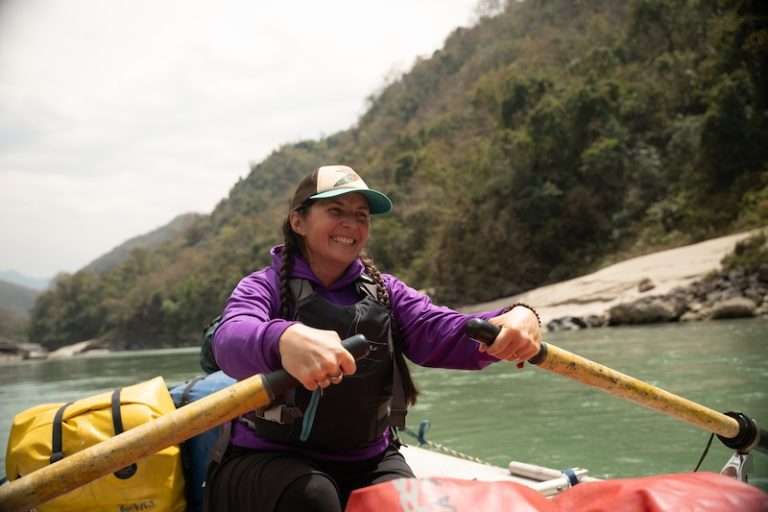
Anna Levesque
You may know my guest, Dane Jackson, as that guy in the pink boat, also known as the Goat of Whitewater Kayaking, or the multiple world champion, or the guy who not only runs the hardest drops in the world, but does tricks over them. In the world of Whitewater, he really doesn’t need an introduction, and I’m really excited for him to be here. Thanks, Dane. Thanks for being here.
Dane Thanks for having me.
Anna Levesque Yeah, and there’s so much more we could say in your bio and you essentially come from the royal family of whitewater kayaking, which is pretty awesome. But yeah, maybe we’ll get into that later. I like to start all of these with the same question, which is when I say discomfort zone, what does that mean to you or what comes up for you?
Dane
Comfort zone for me is probably the feeling of there was something that you were, you know, we always like build up, like you’re leading up to moments and you’re leading up to events, waterfall, rivers, life events, know, dates, whatever it is, you’re, leading up to it. For me, the comfort zone, particularly around kayaking is when there’s no more time to second guess choices or things like that. Like, you know, you’ve committed peeling out and you’re about to run the waterfall or you’re about to drop in for your final ride in the competition and things like that. I would say my comfort zone is right at that moment where you’re past the point of no return. So there’s no point on what after anything at that point you’re committed and you have to fully engage on whatever the challenge that you’re about to do, whether it’s
Anna Levesque Mm.
Dane
It’s, you know, the world championships or a waterfall or a back freewheel or something. It’s right at that moment where, okay, you’re locked in. And now, you know, I wouldn’t be in this position if I didn’t feel 100 % confident in my ability to do it right. And so the comfort zone for me is that moment where I locked into a challenge, freestyle, waterfall, first descent, whatever it is. And that for me is because all that’s ahead of me is whatever the challenge that I decided was worth to put myself in.
Anna Levesque Yeah, got it. That’s awesome. So that’s your comfort zone, right? Like that’s when you feel good. Yeah, right on. And then what would be like your discomfort zone? Like where you’re out of your comfort zone. What does that look like for you?
Dane Yeah. Yeah. Yeah.
Dane well, I try not to have moments like that as much as possible. Like I feel like I’m pretty, I adapt as much as I can. I try to handle whatever is thrown at me in the best way. I’d say the only, only discomfort zone if I had to put something on it would be where there’s something that isn’t going in a way that I would like it to go or something that’s happening that, but I
Anna Levesque Hahaha
Dane surely had no control over. Because a lot of times there are anything that’s, you know, we can control as much as we can. so I think the discomfort zone for me, there’s something that’s going in a direction that I’m not well done, but I actively cannot do anything about it. A lot of times you can do things, but I think that’s the only time I can really think of. But for the most part, I find that anything that’s, you know, bothering me or something I could do better, whatever it is, I find that there’s often ways that you you can find ways to approach it and fix the situation or whatever it is. So I would say, don’t, actually, I did get to have an easier answer for comfort zone than discomfort zone, because I try my best not to have those moments, but I guess that’s the only thing I could really say, but I’m not, yeah, I find that one harder to answer because I generally try to feel that if there’s something that’s not where I want it to be, to do the best I can to pivot or adapt or change it to.
Anna Levesque Mm.
Anna Levesque Love it.
Dane to be as good as it can be.
Anna Levesque Right. Yeah, that’s… So what are the strategies you use when something is going in a direction that you don’t want it to go in and you’re trying to shift or adapt? Like what is, do you have like, yeah, something you turn to, whether it’s a mental strategy or something you say to yourself or an action you take?
Dane I think, well, it really depends on what the situation is, whether, you know, it’s in, in kayaking or off water, like you have to react differently. I think. I mean, it depends on kind of the situation, I guess, but for me, I guess, for the most part, I just try to actually just, you know, a lot of the times when things aren’t going in a certain direction, we’re already past things that can’t be changed or controlled. So it’s more just seeing like if it was, you know, a bad situation on the river, you can’t just go back and say, hey, that person don’t run the rapid. Like things are happening real time. It’s to stay calm and assess and react as appropriately as you can and even off water and things like that. So I guess for me, it’s, it’s focused more on trying to react as good as possible and make this situation better as well as I can and not worry about.
Anna Levesque Mm-hmm.
Dane If only this like, you know, like I that this is a might be a really stupid example for somebody going to come to head is like, I really don’t care when flights are delayed, like or things like that, or there’s this inconvenience of flight being delayed, there’s all these people like, whatever. I’m like, well, there’s nothing we can do. Like, it’s it’s not like they wanted this to happen. Like, it just it happened. And so by just staying calm, it’s like, okay, the flight delayed, maybe it’s so delayed, you have to get a hotel, whatever it is, but I’m not sitting around going, this is the worst thing ever. It’s more just
Anna Levesque Right.
Anna Levesque Sure.
Anna Levesque Right.
Dane Okay, like now what, like how do I just adapt? And I’m not sure if that’s like the example that really funnels into what you’re referring to, but I think in the end for me, you know, it’s just more about like figuring out the position you’re in and just using any tools you have at your disposal, mentally, whatever, to try to pivot and just make the situation better in any way.
Anna Levesque Yeah.
Anna Levesque No.
Anna Levesque Yeah, what I hear is like presence. So being really present with what’s going on and not like resisting it. Cause that can be really tough. Like if you’re in a tough situation on the river or off the river in life, you know, a lot of our suffering comes from wanting things to be different when there’s like no control. You can’t make them different. The only thing you can do is respond like you’re saying. So yeah, I hear that you’re really like to be present and assess and yeah, not resist. the way things are and look at what you can control. Yeah, and you know, I really loved your description of your comfort zone of, because I love that feeling of like leaving the eddy and like you are like you’re in it, you’re going. There’s something really powerful about that. And it sounds like, I mean, I think we all prepare hopefully for the river situations when we’re like, running something or going into competition. What are, and it sounds like you prepare a lot like that. It sounds like that’s one of your superpowers or at least that’s what I heard in your answer. So what do you do to prepare like to run something big or to go into finals at the world championships? What are some things you do?
Dane I would say the, and I feel like it’s definitely something that comes up a lot because a lot of people want to push themselves and take that next step and things like that, whether an event or a waterfall or something that they feel like they’re progressing themselves. I would say for me, my strongest preparation comes from putting, like actually working through the things that will build up the foundation to have the skills I need to handle a situation as good as possible. So like, you know, for a waterfall, like, you know, the back freewheel, the waterfall, the hundred footer, the big white water that I run, things like that. I don’t learn how to handle that white water through running white water of the similar caliber or something like that. I learned by paddling more white water that I am comfortable on so I can focus on different techniques and things like that or ways the river behaves. Cause I find that when you’re really scared or you’re doing something that you’re actually
Anna Levesque Mm-hmm.
Dane nervous about you end up. You’re not you’re just focused on getting to the bottom safely and all that. So when you’re scared, you’re just focused on that. But when you’re not saying you’re not scared when you’re on the EJ whitewater, but you’re able to focus on what the river is doing, what you’re doing with the boat, like how the boat behaving. And, know, for things like big waterfalls, you know, you don’t learn how to run 100 footer by running 90 footers you
Anna Levesque Yep.
Dane get really good at dialing in that first 30 feet on 40 footers, 50 footers, things like that. And then you just get that foundation ready for when you run a hundred footer. And then the world championships, you know, there’s a reason why we practice the routine that we want to do before the event. that way, you know, we spend a week, two weeks, like you’re dialing in the feature. We come up with our routine ideally a couple of weeks before, and you might have to like adapt and change it.
Anna Levesque Yeah.
Dane but you need to start figuring out, need to feel like a rhythm. Like there’s a reason why, know, gymnastics, like floor routines, they’re not just winging it the whole time. They know exactly how they’re flowing move to move where it’s the same thing, like the best plan you could have in freestyle kiting, like waltz and stuff is a full plan. So that way, you know exactly what tricks you’ve done. You know, by practicing for weeks, you know where you usually end up in the feature after a certain trick, or as you start training your routine, you start to kind of figure out, I actually,
Anna Levesque Mm-hmm.
Anna Levesque Right.
Anna Levesque Right.
Dane realize that I can add this trick in between these two tricks or whatever it is. And that allows you to, even if you miss a trick, it allows you to flow through the routine. You’re like, okay, I go back to this, this sets me up for this trick and you flow through. for me, preparation is being in controlled environment to practicing that they will come up at time. There’s a reason why I practice dropping it a hole for fun or without a paddle, like growing up.
Anna Levesque Mm-hmm.
Dane You know, it always like we go hand surfing a rock island. And now if I lose my paddle, I’m not sitting there in panic. You’re not going to, you’re not going to be calm, cool, calm, collected when you lose your paddle and somewhere you don’t want to. That’s not where you learn how to hand paddle and things like that. So it’s, it’s more for me preparation is just is finding ways to kind of just incorporate it in your everyday. And that way you’re ready for when the real moment comes that you’re ready to help out or whatever it is.
Anna Levesque Yeah. Right.
Anna Levesque Yep.
Anna Levesque Yeah, sure. Yeah. And it sounds like through all of that prep and just it’s hard moves and easy water, it sounds like you’re probably pretty okay with failing, like trying stuff, missing it, you know, because I think it’s easy to see someone like you who paddles like exceptionally well, like the best. you know, you put stuff in, well, Andrew, my husband is like this as well to me. I watch him and it’s just like, you don’t always see the failures, right? Clay is the same way. When I had Clay on this podcast, I love that he talked about this, like trying stuff. Some days he’s practicing one part of a trick and he’s like, if someone didn’t know me, they might think I’m a terrible kayaker. But he’s like, I don’t let that get to me. I’m just trying stuff. Like you said, going into the hole, no paddle. He probably got
Dane Yeah, yeah. yeah.
Anna Levesque trashed a few times, like, you know, doesn’t matter.
Dane Yeah, I also think your husband’s a phenomenal father.
Anna Levesque Yeah, yes. So yeah, that’s cool. I think that that’s important. We’ve talked about this on my podcast before. And I think for paddlers out there or anyone doing whatever sport, and I’m talking to myself because I would get hung up on that. would, you know, throughout, that’s why I didn’t like competing actually. It was like my own hang up of, like feeling bad about myself if I failed or if something didn’t work out. And so I really think that that’s an important thing to just let go of. And I’m grateful that there’s so many folks out there doing that and just being like having fun, which is what you do. Like you have so much fun out there, you know?
Dane I do. do. mean, it can be the failure side of things. I think I’m trying to remember when I was I think Kobe Bryant had like, just one clip that I would love to see that was he was like, so you can you do the work you control, you can control. And if it goes great, great. Tomorrow, you’re gonna wake up and do the same thing over and over. If it doesn’t go well, they’re gonna wake up and do the same thing over and over. So like, that’s, I always like that kind of feel like an applied to 50 million different things. But
Anna Levesque Right.
Dane For me, like, it sucks to lose. It sucks when a rabbit doesn’t go well. All those things. as long as you actually put in the preparation that you felt that you could put in, but also you were doing it for the right reasons, not for the sake of bragging rights or just like the sake of being able to say you did it. If you did it for the idea that you actually liked the idea of the challenge, whatever it may be.
Anna Levesque Right.
Dane then if it goes great, it’s that much better. And of course having fun as well. But if it goes great, it’s that much better. If it goes wrong, you can then just be like, okay, clearly I need to work on this or that. And I always find that something with mainly like for competition, not so much like rap and stuff like competition, it’s so great to win. It’s so fun to win. And especially when you’re having fun, you’re hanging out with everyone, winning is awesome. I, and losing does suck.
Anna Levesque Yeah.
Dane And you’re like, okay, now I got to do better and I’m gonna do better next time. But what also sometimes is nice to remind yourself is that feeling that you were chasing someone else also got that someone you might like, love or like and hang out with. So and I’m not saying I enjoy losing, I want to win as much as possible. But I put in as much work to do the best I can. So that way, if I win fantastic and have the best time possible, and even when I lose, I’m still having the best time possible leading up to the event.
Anna Levesque Yeah. Hahaha
Dane And I’m also still thrilled for the other person that got to have that feeling that we were chasing and then get them in the next one and things like that. it’s, and that’s a big part of me. Why? Like I make sure to, to make the whole process of the preparation, the training, whether river running waterfalls or competition, the whole process for me is enjoyable. And the competing is enjoyable. I don’t find it that stressful. I just find it fun. Cause I’m out there having a great time with everyone. And then if it by when it’s just that much better. And if I lose, it’s a lot easier to digest because it’s like, I just didn’t put it together. Someone else did, happy for them and I’ll get them in the next one. But I have, the whole process is very fun rather than just the idea of completing something or winning something is the only time that I’ll enjoy myself.
Anna Levesque Yeah.
Anna Levesque Yeah, right. Because then competition would be really not fun if you were only stoked every time you won. Granted, you win a lot. But I know for myself, when I was competing in freestyle, I was in the top three a lot. And if I wasn’t, I would get all down on myself. I’m here to say it was not fun. It’s way more fun if you’re just enjoying the process. So yeah.
Dane Yeah. Yeah.
Dane Yup.
Dane In competitions they put a pressure and it’s so good. Sometimes just going joy kayaking is almost more enjoyable. I can’t blame you for that.
Anna Levesque Yeah.
Anna Levesque It’s all, yeah, well, I I loved everything around competition. I did, just like you’re saying, the people traveling. And when I was on the podium, yes, I enjoyed it. I did, you know, I think that having, yeah, anyways, that was my process and journey. you know, everyone’s different and I really found my voice with the instruction part, you know, and making an impact with that. So.
Dane Right.
Dane Yeah.
Dane Yeah, you can kill him with that.
Anna Levesque Yeah, sometimes fighting it also, if you’re not having fun doing something, like maybe look around, you know, what does light you up within the sport? Because so many different people enjoy this sport, you know, and there’s so many things you can do to have fun and have an impact also.
Dane Yeah, yeah, no, and and sometimes even just the not having fun doesn’t mean that the whole structure is broken for you. is maybe it’s just a mental shift or something like that. But yeah, no, it’s all I mean, it’s everyone likes what they like. There’s no there’s no right or wrong answer as long as you’re you’re just doing it because you actually enjoy it. And it’s not and then just because you enjoy something doesn’t mean that it’s always enjoyable. But
Anna Levesque Right. Absolutely. Yeah.
Dane you get through the time that it’s less enjoyable because you know overall that you’re excited about whatever you’re pursuing.
Anna Levesque Right?
Anna Levesque Yeah. Okay. So I want to come back to something you said earlier, because it is very interesting. You were saying how it’s rare that you feel that you’re in your discomfort zone. And so a while ago I saw on the internet, some folks were talking and they were really like,
Dane has no fear. Like there’s no way
Dane has fear. And I thought to myself,
Dane Listen.
Dane Right. Right.
Anna Levesque Wow, that’s very interesting thought because
Dane is human. So I would just like to hear from you. Like, do you experience fear? How do you face fear if you do? And if you don’t, that’s really interesting. I’d love to hear more about that. So do you want to speak to that?
Dane Is it?
Dane Yeah, no, I mean that it is always one of the funniest aspects of doing the stuff that I do is everyone even you know, like obviously non-kayakers they’re like, oh, he must not be afraid or but even like kayakers or vice versa, whatever it is, everyone’s always like, oh, he doesn’t have any fear and I’m like, no, I’m actually scared 99.9 % of time like maybe maybe it’s exaggeration but like I am scared even on the simpler days, there’s always, you know, is an extreme sport and even like in the competition, sometimes get a little nervous and things like that. But particularly when it comes to the bigger stuff like waterfall, big water and things like that, you know, there’s always that element of, know, what things that go wrong or maybe something you get hurt or maybe, you know, doing something that I haven’t pushed myself to do like a bigger back freewheel and things like that. But I’m scared. a lot more than people think. I would say, like I said, like 90 % of the time because, and I actually think that instead of it being like, just fearless, whatever the reason why I think a big part of what I’ve been able to do well and make the best decision possible is by being afraid because you know, for something like a big waterfall or a big rapid, the way I try to put it is I only run things not for the sake, or I only do things, run things, only because I actually like the idea of the challenge that it is, or there’s something about the puzzle of a waterfall or a rapid or something like that, and even the simpler things. And what I like, I look at a rapid and I look at a waterfall and I think I like the idea of trying to see if I can handle that challenge. And if it goes great, then, you know, that’s awesome. But it allowed me to feel like the fear allows me to look at it right and safely. Like, because if I wasn’t afraid, that means I’m probably not paying attention because as an extreme sport, we even the simplest things have a way of potentially going wrong or getting hurt. And a lot of the time, most of those big injuries, most of those big accidents and stuff on things that people get comfortable on is rarely on the things where people are going to the next level. And the reason for that is because you get comfortable and you let your guard down. So for me,
Anna Levesque Hmm.
Dane Fear allows me to make sure that I’m looking at something, giving it the respect it needs and looking at it like, okay, I’m fearful because of a reason. it’s because it’s a hundred foot waterfall. Once you get above a certain height, there’s a lot less room for error. Any height, there’s no room for error. Or, you know, I’m looking at them like I could end up going into that ship or I could get stuck in that hole or whatever it is. The fear allows me to look at everything and be like, okay, there are things that could go wrong, whether injury or worse.
Anna Levesque Right.
Dane But even though that’s there, the challenge of that rapid or waterfall or whatever I’m looking at, I’m still excited to approach that challenge. But what I’m going to do is, okay, accept, I’m accepting that risk, but I’m also going to do what I can to put the crew around me, put me in a position of the best success, even if things go wrong when it comes to safety and throw bags in certain places and surround myself with the people that can help out when the time comes.
Anna Levesque Mm-hmm.
Anna Levesque Mm-hmm.
Dane I think for me, like I’m feared a lot more, I’m fearful a lot more often than people think, but I generally feel like if there is something that actually looks like it could hurt me or worse, if I’m not afraid, that’s probably not a good thing because that means I’m not paying attention or I’m not just taking the time to really break everything down. So for me, I think the fear 100 % just make sure it puts you in position to make sure I’m making the best decision possible because we are in an extreme fort where things can happen. And I would be very scared for myself if I started to not be scared on 100 footers and big white water and things like that.
Anna Levesque Yeah.
Anna Levesque Right. What is your, do you have like a mental, do you visualize or do you visualize a lot or do you have some mindset practices that you use, breathing or anything when you’re nervous or scared?
Dane Not so much on the breathing side of things and things like that, but I definitely visualized a ton, whether beforehand, leading up to things or in the 10 minutes before, like I just saw the rabbit for the first time, something like that. And definitely those bigger things, something like Cobra on Scotch Drop. I was watching as much content of people running it as possible for a year or two beforehand and visualizing as much as possible and what the boat would probably do.
Anna Levesque Yeah.
Anna Levesque Mm.
Dane and constantly trying to figure out like if it would work or what could or could not happen. And so visualizing is a huge part of me being able to even freestyle, being able to like actually wrap my mind around what I’m looking to accomplish. But I also try to around the whole process, like whether events or waterfalls, again, the whole build up to that moment, I’m still. getting excited, running around talking to the crew that I’m with, whatever it is, make the whole process fun again, just to make even the buildup as enjoyable as possible. So that way that moment becomes even better when it goes well, or it’s easier to handle when it doesn’t go as well.
Anna Levesque Yeah, yeah, that’s wild. So you spent like two years watching Scott’s drop like different footage. Is that what you said? Two years or a year? Yeah. So.
Dane Yeah, yeah, yeah, it’s pretty much, I ran it for the first time in 2021. then, I, when you look at that waterfall ever since the Cobra foot really like came around and people started to do it more, which is really like, you know, 2020 into 2021, I was like, just looks like a drop you would do it. Like it just, it looks like it. But the, after I ran it for the, I wasn’t gonna like really think about that until I’d done it once. But then after I ran it for the first time in 2021,
Anna Levesque You’re…
Dane That right after that, was like, okay, I’m start thinking about like the feasibility of it. And over the next few years at the Cobra Flip, lot more people started to do it. Scott’s drop, think in the back of everyone’s minds, like that, it just looks amazing for it. Whether or not anyone else would do it, I don’t know. But, no, okay, maybe just mine, maybe just mine. Back of everyone’s mind that someone will do it. I don’t know how many people were thinking they would wanna do it. But I spent…
Anna Levesque Yeah, in the back of everyone’s mind. I love it.
Anna Levesque Right.
Dane Yeah, probably about two years or at least a year leading up to it when I really decided if I wanted to, because I really wanted to do a downriver freestyle lap down low gourd, but that was obviously going to be the main pinnacle of it. But even after being there for like two hours or whatever it was leading up to it, I realized that I needed to move away from this big, giant aerial boat disconnected epic Cobra flip and instead focus on completing the trip. And I went completing the trick.
Anna Levesque Yeah.
Anna Levesque Right?
Anna Levesque Mm.
Dane but it went better than I could have imagined in that sense. yeah, mean, you’re still just always adapting when it comes to visualizing for sure.
Anna Levesque Yeah. Yeah. That’s cool. I think it sounds like you have a lot of patience too. So maybe patience is also a superpower of yours. I don’t know. But in terms of like the preparation, right?
Dane You can’t ask me that. You have to ask my wife or the family on that one. I’m patient when needed to be, but when there’s really nothing I can be doing, I think it probably better be, but I’m patient when there’s absolutely nothing I can be doing. But a lot of the time I feel like there’s something I could be doing to make things, refatcher or something.
Anna Levesque Hahaha!
Anna Levesque It’s funny.
Anna Levesque Right. Yeah.
Dane You have to ask my wife about that. I’d like to think I’m patient, but I think most people say you can’t sit still. Or wait, hug that.
Anna Levesque Ha
Anna Levesque Right, got it. Right. That’s funny. Okay. Do you remember when you were your first river run with a spray skirt on?
Dane I don’t remember it. I know the first river run properly that I did was when I was two down Little Falls on the Potomac, like class two stuff. it was right before my third birthday or something like that. But not my first proper river run with the spray script. But my dad used to put me on his lap in the boat and things like that. But that was my first proper river run. And I ended up just getting stuck in a lot of little features and my dad would have to come pull me out.
Anna Levesque Yeah.
Anna Levesque Okay.
Dane I don’t remember it. The earliest memory I have of doing anything in a kayak is near the Potomac as well. There are canal falls. It’s just a canal, damn, not quite vertical drop, but it’s, I don’t know, eight feet, nine feet, 10 feet, whatever it is. did that when I was five. That’s the earliest memory I have.
Anna Levesque Yeah.
Anna Levesque Okay. That’s funny because I remember being at Wausau and this is back when I was competing and there was a freestyle competition and I was walking back up the trail, like the greenway or whatever with some friends and you and your dad came down. You were older, like I can’t remember how old you were, maybe, and you had your spray skirt on and your dad was like over the moon. It was either, I thought it was your first…
Dane Okay.
Dane A… A? Make eight? Yeah.
Anna Levesque Cause he was like, it’s his first spray skirt run. And, and we were like, woohoo, dang. You know, cause everyone was pumped for you. Cause you were like, as you know, of course your family was a staple on, but I just remember how pumped, how pumped he was especially. And you, looked happy, like stoked. And I just bring that up. maybe it was your first, maybe that’s what it was. Maybe that’s what it was. Okay. Your first.
Dane That would have been my first comment. was like, yeah. Yeah. Yeah.
Dane think that was our first combat role. Sorry, that was, yeah. Yeah, yeah, my first combat role, because Emily and I learned how to roll right before that, like at Warsaw, like the day before or whatever. And I think that was my first combat role below the big drops. That would have definitely made a lot of sense, which ultimately you’re there.
Anna Levesque Okay. Yeah. Yeah, I know. I think it’s hilarious. It was awesome. So I bring that up because I think, you mentioned how you’ve been in a boat since you were young. My sense of y’all is that your parents, your dad never pushed you to paddle. It was something that you all always had a choice. I know that was, I know Emily has expressed that before.
Dane in the
Dane Zzzzz
Anna Levesque Did you feel like you came to it like on your own? Like you were really excited to start kayaking?
Dane Yeah, I mean, in the end, there’s no denying that our lifestyle, know, moving in RV when we were four years old, when I was four years old, living full time for six years in an RV, just going wherever my dad wanted to kayak, wherever the family wanted to be constantly surrounded by kayakers and kayaking, foam boating, playing around the river. It’d be hard not to be intrigued and watching kayaking videos the whole time, not watching cartoons as much as stuff, just watching kayaking videos. Oh, like over the head falling down, all that. But I would say that, you know, the situation, you know, be hard.
Anna Levesque Right.
Dane not to want to be a kayaker because it just looked awesome. But I think what my dad did, least from my experience, was he never, he pushed us when we, when it was time to push us, to try to learn something new or something that maybe we didn’t quite feel comfortable, but he was like, no, no, you can do this. Like he didn’t push us, but he never was like, you need to be a kayaker and that’s it. He always just, like it always felt like a choice, but like,
Anna Levesque Hmm.
Dane Sounds like like Emily said, but what he did was, sure, you can go do something else, but I’m going to make it seem like this is the most fun thing that we could be doing. And it’s the most enjoyable thing, whether around the river, on the water, things like that. But if my dad was somebody that, because he’s obviously one of the most competitive people we all are. But if he had made it seem like, because a lot of the year is being around competitions, if he had made it seem like being around competitions wasn’t fun.
Anna Levesque Hahaha! Yeah.
Anna Levesque Yeah.
Dane I would have been like, God, is it just their stress, everybody’s stressed, like why? But instead, my mom collectively as well, they just made it seem like even around the most serious competition, everything’s still just fun. So even in the most serious of times, it, just seemed enjoyable, whether a day run or the world championship. So it never had a moment of, man, that just seems like a lot of work or stress or just everybody seems to not be enjoying themselves. Dude, like, this is, you can go do something else, but this…
Anna Levesque Mm.
Anna Levesque Right.
Dane I’m going to make it seem like this the most fun you could be having. And we get to do it as a family. And that was always, you know, a big part of it as well. It was like, yes, you go do whatever you want to do, but this is really, really fun. And we all get to do it together. And, you know, it wasn’t it wasn’t a hard sell because I got to see all the best paddlers be around my dad and everyone. Everybody’s having a great time. I’m foam boating around the river, having the time of my life, go skateboarding when I wanted like it was like, this is great. So it really and then as soon as I learned a combat role,
Anna Levesque Yeah.
Anna Levesque Yeah.
Anna Levesque Yeah.
Dane Like you were talking about wassup. know, as soon as it was like over that hump and I started to be able to actually paddle with my dad in more places, they would like, let’s just lock in and this is awesome. But I even kayaked a lot before that because I would go, when I was two years old, guess at the 97, or would have been four, but at the 97 World Championships in the Ottawa, I go to like steal people’s boats and try to paddle in the features. And then, you know, even before I learned how to roll, I was allowed, I don’t.
Anna Levesque Hahaha
Anna Levesque Yeah, that’s awesome.
Anna Levesque Yeah.
Dane understand exactly how the structure works. But basically people would be like, Dan can go paddling without a skirt because I didn’t know how to pull my skirt. I could go paddling around the river of my boat and I’ll surf little waves and things like that. If I flipped, I would just swim out. But I would try to kayak as much as possible in that sense, at least from my memory and the stories and things. But as soon as I learned how to roll, would just, you know, obviously being able to kayak way more year round with my dad as much as possible. That’s when things really, you know, what else would I want to do?
Anna Levesque Right.
Anna Levesque Yeah. Yeah. Do you think, and I’ve thought about this a bunch, like asking you this, I don’t know why, but I’m intrigued. Do you think that all of your time spent foam boating as a kid, do you think it helps you see the river in a different way? Because I can remember you at competitions, you would be as a kid, you would be foam boating and sometimes Andrew would join you, I think actually.
Dane Yeah, that was awesome.
Anna Levesque You know, because he grew up paddling too and he loves it. So do you think foam boating helps you read water? Like when you say like, yeah, the Cobra flip, you know, I could really see it off of Scotch drop. Do you think that all that foam boating helped you?
Dane 100%. I mean, even if I like subconsciously, there’s probably a lot of things, but I definitely think the phoneboating did a lot of things. You know, well, it was just awesome and so much fun. And I’m so stoked that even like Andrew and everyone that I kept forcing to come phoneboating with me. But I think a couple of the main things that definitely came from phoneboating, like playing in the creeks and stuff, a huge part was when you’re constantly changing the features and trying to build certain things, you can learn.
Anna Levesque Yeah.
Anna Levesque Hahaha.
Dane kind of what rocks, like why features are being formed in a certain way. you’ll, through years of kayaking, like actual kayaking, you’re gonna learn how to read by water and learn like certain features and things like that. But what was really cool about foam boating is by building the features, you actually can see like what is creating it, what certain rocks or these rocks pinch together to this or this type of rock makes this wave. And it doesn’t always directly translate, but it just gives more insight on. on when reading a piece of white water. Like, you know, if there’s a it’s more obvious to me, I don’t know what it is for everyone else, but it becomes pretty obvious to me when a pour over also has a rock in the backwash or it doesn’t you just kind of you notice the boils acting differently compared to something like that. So it’s I some people might learn that over time. I don’t know. But for me, I definitely feel like a lot of being able to read certain white water and certain types of white water and maybe
Anna Levesque Mm. Right.
Dane a part of some of the challenges that I’m willing to step up to that other people might not feel comfortable is being able to read more of the Whitewater and understand why certain things are happening for better or worse. So I definitely think phoneboarding had a huge part on my ability to, I would say reading Whitewater. Reading Whitewater is probably the main thing that came from it. And of course, like, you know, building a freestyle feature, like I can be like, this is what we need to do to build a good freestyle feature and things like that. So.
Anna Levesque Yeah.
Dane But I would say reading Whitewater probably has a big impact from phone book.
Anna Levesque Yeah, that’s fun. I figured it did, but I was curious on your thoughts about it. Yeah, I’ve never been a big phone boater. In fact, some of my friends will laugh because I was in Chile and we did a phone boat race and I was like kind of resisting it. I was like, I don’t want to make a phone boat.
Dane Yeah.
Dane It’s okay.
Dane Okay.
Anna Levesque But then once we were all in and we were doing it, I actually FaceTimed Andrew from Chile to see if he had any tips on how to build the phoneboat. And he did, of course. And he’s like, what are you doing? But I get competitive. I say that I’m not competitive, but I got really competitive. And my phoneboat podiumed twice, just saying. So.
Dane That’s awesome. Yeah. Yeah.
Dane Yeah, yeah, yeah, but then it’s like you’re like, if it didn’t go well, you can blame Andrew for the phone boat. So yeah. Although you’re the kind of design who still don’t know how to make a phone boat.
Anna Levesque Right, Yeah, your design sucked. Yeah, no, that’s right on. Dane, do you have any, do you have a question for me?
Dane Well, I mean, you’ve been killing it for long time just doing the instruction side of things. think, I guess one question I have is, you, because teaching requires a lot of patience and things like that. And you focus hard on that through a lot of things that you brought a lot of people into the sport. Do you see a lot of people over the years that very clearly came from the classes that you began teaching them or like, because you’ve been doing it for so long, is it like very clear like, oh, I
Anna Levesque Yes.
Dane instructed these people and now they’re off doing their own private events or ventures and things like that. Do you get to see the impact that you have because you spend so much time teaching that I think super cool and that again requires a lot of patience. So I hope that you’re able to see you know down the line people coming from where you began with them.
Anna Levesque Yes.
Anna Levesque you
Anna Levesque Yeah, I’m very grateful for that. And yeah, it does take patience and I love it. that’s, I love watching folks get better. And there’s, I love also being able to watch someone and it’s something that I’ve developed over the years. People are always like, wow, you can see the littlest things that make the biggest difference. And I love that. Like there’s something really satisfying about saying like, try this. I think if you try this,
Dane Thank you.
Anna Levesque it’s going to be a whole new world and they do. And it’s like a whole new world and they’re so excited and it’s like something clicked for them. And then I’m also grateful. I’ve had, you know, I’m grateful that I’ve had a lot of women in their fifties, sixties start kayaking. And like I had one woman who started in her late fifties, early sixties as a beginner. within six, six years, I think she was in my Creek week, which is class three, four.
Dane Yeah.
Dane That’s all for you.
Dane Wow.
Anna Levesque And she was doing, like she was having a blast. yeah, and then people, what I also love is that folks will meet on my trips, like whether it’s a trip to Costa Rica or Creek Week or Find Your Flow or whatever program, and they make friendships. And then they’re like, I went, you know, they organize a trip for themselves somewhere and they’re like going all over the place and doing different things together.
Dane That’s awesome.
Dane Right.
Anna Levesque And so building community is super cool. Cause I really want to create a space where people can show up as they are. As I mentioned earlier, like everyone’s different. Like we need you like to be doing like the cutting edge stuff. And then we need great instructors and great coaches and great junior programs for freestyle, you know, and great all the things, you know, and the, and the people like Andrew’s dad who’s 70.
Dane Thanks,
Anna Levesque or 78 maybe and he just ran, he’s still running the upper galley. And just from the, I just think, yeah, the sport encompasses many, and then there’s folks reaching out to underserved communities. There’s just so much, right? And I think that all of us finding what we’re passionate about is super great.
Dane Bounce.
Dane That’s awesome.
Anna Levesque Yeah, thanks. All right.
Dane And then when they podium, you get to be like, yeah, you guys, I did that, you’re welcome. You don’t have to get the stress yourself, you just get to take the credit when they do it.
Anna Levesque Right. Well, you know what I enjoyed at the World Championships in… my gosh, come on. Yes, thank you. In Columbus. I loved announcing on the live web stream. That was so fun. It’s just so fun to be around the…
Dane Spain. Okay, yeah.
Dane Mm-hmm.
Anna Levesque the competition. So just since we’re on that, where do you see, like I saw at the national championships this past weekend actually, and it was cool to see post your dad made of all of you and the family who meddled, which is really cool. And it looked like the junior divisions were pretty strong. It seemed like there were a lot of people or kids, Are you hoping that
Dane Okay. Yeah.
Dane Mm-hmm.
Anna Levesque Freestyle keeps, you know, cause it seems to come and go. It’s such a great part of the sport. Do you think it’ll be able to like maintain and get more and more people into it here in the U.S.?
Dane Mm-hmm.
Dane I mean, in the end, like you said, yeah, all the juniors at both the men and women at nationals were super strong in some of the more exciting finals and it was super fun to watch. think that the freestyle always have a place in it it doesn’t, and it not only has a place, but it actually, I think is a really important foundation of the skills required to, for any aspect of kayaking you want to pursue. I think that a big part right now is for between the idea of, you know, for less people, it feels less of a necessity to like, you know, to do freestyle, whether that’s just the way you kind of started. like so many of the world’s best paddlers come from freestyle, you know, whether it’s, you know, my dad, Nick, Evan Garcia won 2007 World Championships annual and Gerd used to be some of the top freestyle paddlers. Gerd got fourth at the 2011 World Championship in a whole annual was a 2008 World Cup in phenomenal freestyle modeler, like freestyle and you know, you got even like agent matters, know, like Caleb like all it’s like, it doesn’t matter. Like I guarantee you name someone they’re going to be like they came from from freestyle. And of course all the OGs as well. And it used to kind of be a lot more 50 50. I think there were more events. I think the big thing is with social media, like for all of its benefits, I think one thing is it’s less required to go and have those in face moments and events. it used to be like if you wanted to, from my understanding, it to be if you wanted to, you know, represent a brand, you needed to show up and have that in in person experience. But whether you were that good at freestyle, you still needed to be there to represent. And now with social media, you can go and travel anywhere you want to go and kind of be and still represent your brand, which is great because that provides a huge
Anna Levesque Right.
Anna Levesque Yep.
Dane foundation and platform to do that. But I think what happens is with freestyle, you learn so much that was required. Like I would not be able to do 90 % of the things that I do if it wasn’t for freestyle, whether it’s, you know, just awareness being upside down and just being upside down more all their hand surfing, but more importantly, like understanding features, like the more features you surf for fun, the more you learn.
Anna Levesque Hmm.
Anna Levesque Right.
Dane where the best place to get out of features are or just kind of feeling comfortable in the future. But then even beyond that, know, just boat control, body control, like understanding edging and all that. You’re not just working your way downstream. You actually have to figure out how the boat behaves and feel more comfortable on edge. And I think a big part about freestyle that really helped when it come to even the most extreme creaking and things like that is so much of it now, especially with the kayaks that we have are basically cheat codes at this point. You’re so focused on getting from point A to point B. If you ever get stopped, you’re just, it’s just sheer panic. And a lot of people swim in situations that they just don’t need to be swimming. It’s like, you can just surf out that side of the future, but they just don’t have the experience of being stuck in future. So like, and that comes back to the preparation thing, like just surfing featured for fun is how you learn how to get out of things like that wedding. You don’t want to be in it. And so I think freestyle has a so much that it can be applied to.
Anna Levesque you
Anna Levesque Mm-hmm.
Anna Levesque Yeah.
Anna Levesque Yeah.
Dane any aspect and you know even the down river freestyle back three wheeled and things like that I would not be able to have the boat control to do that or at least the boat control I want to have to do that if it wasn’t for freestyle so for me I think it’s a very key component regardless of what aspect of the sport you’re pursuing.
Anna Levesque Yeah.
Anna Levesque Yeah, I agree. I I started river running and freestyle. I love surfing. I love freestyle. And one time I was running cascades on the Nantahala and I was being lackadaisical and I ended up in that terrible hole at the top of like at the bottom, like right above Kahuna, you know? And I was like, I cannot get in. Like I flipped a couple of times. Like I cannot, I’m not going to get out of this. Or that’s how I felt. I was in my creek boat.
Dane Yeah, yeah. Yeah, yeah.
Dane Yeah.
Anna Levesque And I could see Jason McClure on the side and we made eye contact and I was like, I’m just going to surf this hole until he throws me a rope. And he threw me a rope and I caught it. I pulled my skirt and held onto the rope and he pendulum me to the side. So I didn’t go over Kahuna. My boat did, but I was the only reason I could do that is because I’ve surfed a lot of holes from freestyle. know I’m comfortable. I know I can hold an edge and just hang out. Yeah. That was my own personal anecdote.
Dane Yeah.
Dane Okay. That will not be fun.
Dane Thank
Dane Mm-hmm.
Anna Levesque And I was so grateful that we had, when we made eye contact, I knew what he was going to my gosh. Yeah, exactly. Awesome. Yeah. Okay. So one more, one last question before we get to the rapid fire. And this is a bit heavier of a question, so feel free to answer it or not.
Dane Nice. Yeah, yeah. I swimming immediately and then swimming over Kahuna. You’re like, if I work a little bit this way, I got a friend. That’s all.
Anna Levesque I know you’ve lost some friends kayaking and at the same time it’s been such an important part of your family life. How do you square or was there anything to square with losing, for instance, a really close friend like Bren with your passion for YY?
Dane Yeah, think, you know, over the years, you know, I’ve lost, you know, dozens of friends, however many through kayaking. The losing somebody through it’s like one thing to lose these close friends through other circumstances. But the amount of friends that I’ve lost through kayaking, whether, you know, to people I’ve known or someone as close as Bren or others, it’s very difficult to, you know, And Brent actually made a really amazing video on YouTube when we lost Robbie a few years ago that hit Brent really hard and he made a really amazing video kind of breaking down like how do you love something so much that takes away these people that we care about and that even became more relevant when Brent himself passed away, you know, to lose someone that close doing and again, not doing something that was the most insane thing it just was upside that cut out.
Anna Levesque Yeah.
Anna Levesque Yeah.
Anna Levesque You just froze for a second. You’re back.
Dane Yeah, ready. Yeah, it’s on it for us. just waited for a second. but yeah, so so to lose someone like Bren, like that, you know, we thought we were going to be doing this forever. To lose someone that close during the sport that you love and push yourself and much thoughtful. But on top of that, on something that isn’t the most insane piece of whitewater again, goes back to it’s always where you least expect it. I’d say the hardest part about that is it
Anna Levesque Mm.
Dane especially in this place where I am right now, I’m still, I love going to do joy kayaking freestyle, but there’s still things that I’m trying to push myself or run this harder piece of whitewater. is sometimes very difficult to see something like that happen on something where they were just trying to go and have a day run. And that happens a lot in kayaking, unfortunately. But I think the balance that I find is, you know, with someone like Bren, like they’re, it’s so cliche, but like they’re nowhere else. that he was pursuing kayaking, pursuing everything that he wanted. He wanted to do the best for the community, whether the things he was doing for the park jams or the videos he was making, the impact he was having and everything he was channeling through the sport. It happened during kayaking, at least I think for some people, I know for me, it’d be harder if someone got taken away doing something that was just stupid. It was completely unrelated. It was like they didn’t even get to be at the place that they
Anna Levesque Right.
Dane with the passion that they loved. So for me, I personally, I guess it’s so cliche, but it’s kind of, it has some truth to it. I know I keep leaving.
Anna Levesque I lost you again.
Dane Sorry. Sorry. Where did? Yeah.
Anna Levesque You’re back. It’s all good. Yeah, you were saying it’d be worse to lose someone doing something unrelated to kayaking, like something random or… Yeah.
Dane Yeah, think, yeah, yeah, like it’s just, it’s like if that someone was taken away from this life they were building through their passion for something completely unrelated, that’d be harder. Now I would much prefer to have them with us. Like there’s no good situation around, there’s nothing, it’s still one of the hardest things I’ve gone through. But I think the balance and still feeling like we can get back to it and still continue pushing ourselves and.
Anna Levesque course.
Dane for sport in our own way and run this hard stuff. He loved it. We still love it. We have always been aware of the risk and we’re grateful for the times that we got to have together. And now moving forward, we will continue to make sure we get the time that we want with our friends and family and continue just to be as safe as possible because in the end, you know, we try to be as safe as possible. Things can happen, but just to try to make the best it’s possible, be smart about it and just get the time together that we can because again, you just never really know even in this sport. So just try to get the time with everyone close to us and just make the best that didn’t possible and yeah, hug your friends. Yeah.
Anna Levesque Right, yeah.
Anna Levesque Hug your friends. Yep, exactly. Thanks for sharing that, I appreciate it. Okay, are you ready for rapid fire? Okay, what’s a morning ritual that sets you up for success?
Dane Sound quick.
Dane editing and looking at kayaking videos.
Anna Levesque Okay, awesome. What’s it? Yeah, you had to think about that.
Dane First kiss my wife. That should be the first one. Kiss my wife. And then no matter what happens after the day is gay.
Anna Levesque Is she giving you the eye from over there? Okay, what’s a non-negotiable self-care practice?
Dane No, she’s not even in the room.
Dane Not self-care practice. Learn to adapt. to, like for yourself in situations.
Anna Levesque Yeah.
Anna Levesque Okay.
Anna Levesque Yeah. Okay. What’s your favorite motivational quote, book, talk, or song?
Dane well, I don’t read, so book is probably not the right one. Song, I just have a wide variety. I guess I kind of like the quote, now my wife’s in the room and she’s trying to mouth the quote. Actually, there’s one quote that I always thought was kind of interesting. It’s the only one I can remember in my head. But it was, would you, who’s the happier person, the one that braved the storm?
Anna Levesque you Thanks, Chloe.
Dane on the sea and made it through or stayed on shore and merely existed. was like, I kind of feel like like that. I always kind of like that one.
Anna Levesque Yeah.
Anna Levesque I like it. Thanks. Okay. What do people get wrong about you?
Dane I think one thing sometimes, you know, I was given, you know, an incredible opportunity through my upbringing, my family, all the opportunities they gave me and things like that. But I think sometimes it’s understood that I feel like from my own perspective, the things that I have and the opportunities I have now came from what I was given when I was younger, but I work for what I’m able to do now through the. editing and the travel, the teaching, whatever it is, I feel like I work to continue to have the opportunities I have and not just, and I capitalized and did the best I can to run with the opportunity they gave me.
Anna Levesque Yeah, yeah, agree. Yeah, I think it, to me, when I look at all the stuff you do, it looks like you work hard and are really passionate about it. Okay, okay, this kind of plays, this question kind of plays into that. Throughout the course of your life, have you felt like the underdog or the favored to win?
Dane Yeah.
Dane I never really focused on that. I appreciate whenever there’s the, you know, I definitely never felt like the underdog because I just wanted to do the best I can growing up. And then in terms of, you know, there are people that come up and be like, I hope you win. Like I’m grateful for that. And that’s awesome. In the end, just here to go kayaking and have a great time. But never really focused on that side. But
Anna Levesque Okay.
Dane I always appreciate when someone, know, it’s like, I hope we win. And I think that’s good. I appreciate it.
Anna Levesque Right on. Okay, hard moves in easy water or flooding.
Dane Hard moves in easy water or flooding? Hard moves in easy water.
Anna Levesque Yep. Okay. What, what’s, I you’ve already described this, but could you describe your comfort zone in one word?
Dane focus.
Anna Levesque Mm, that’s good. Okay, freedom through discipline or I do what I want.
Dane freedom through discipline.
Anna Levesque In one word, what do you hope your legacy will be?
Dane Enjoy.
Anna Levesque Mm, awesome. Is there anything else you wanna say to our listeners, Dane?
Dane Well, this was great. Thanks for having me. Always love the opportunity to get to chat through some kayaking and fun things. And yeah, always appreciate the opportunity just to sit down and have a nice chat.
Anna Levesque Yeah, thanks. Well, I appreciate you being here. So this is great. Appreciate it.
Dane Yeah. Thanks, Fabby.